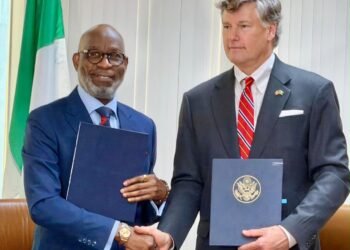



The Federal Ministry of Marine and Blue Economy says the World Bank Group has made a $200 million commitment to support fisheries and aquaculture projects run by state governments. Details of the financing terms have not been made public in the reports reviewed by NewsVelocityNG, and no World Bank statement on the commitment could be located.
The announcement was made in a press statement issued on Sunday, 8 November 2026, by the minister’s Special Adviser, Bolaji Akinola, according to New Telegraph. In the ministry’s description, as Vanguard reported, the money would be made available to state governments as concessional loans. That description has not been independently established. Published reports do not say who the borrowers would be, how the financing would be structured, or whether any state has applied for or received money.
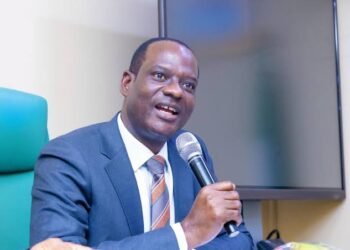
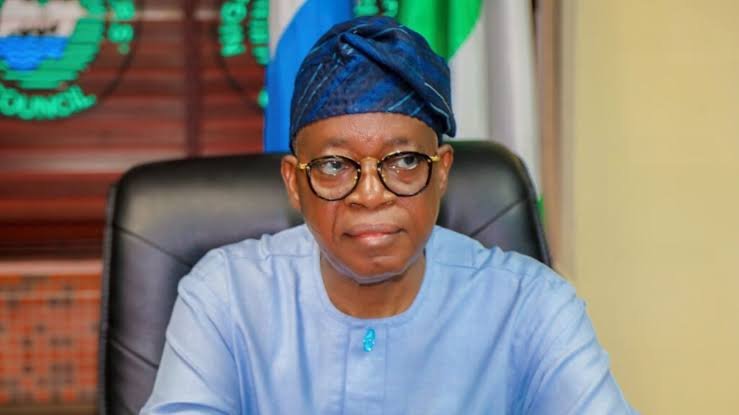
The statement said the position of the minister, Adegboyega Oyetola, was conveyed by Prof Busayo Fakinlede, a Senior Special Assistant to the President on Marine and Blue Economy. Prof Fakinlede spoke at an executive training on an Aquaculture Investment Guide in Abuja, organised by the ministry with the World Bank Group. BusinessDay reported that officials from Rivers, Bayelsa, Delta and Cross River states attended.



The gap the ministry cites
The ministry says Nigeria needs about 3.6 million tonnes of fish a year and produces about 1.4 million, The Sun reported. That leaves a deficit of more than 2.2 million tonnes, which imports largely fill at a cost it puts at close to $1 billion a year in foreign exchange.
The estimate is not new. Oyetola said in October 2025 that domestic output met about 38.9% of the 3.6 million tonnes required.
These are government figures. A July 2026 working paper from the International Food Policy Research Institute (IFPRI), which the CGIAR repository lists as internally reviewed, puts annual demand at 3.2 million to 3.6 million tonnes, the deficit at about 2.4 million tonnes and fish import spending at over $1 billion a year. That is the same order of magnitude but not the same set of figures. Most of its tables use domestic output of about 1.2 million tonnes. The paper compiles earlier studies and official data, including from the Federal Department of Fisheries and Aquaculture, which sits under the ministry, so it does not independently measure supply or imports. Neither the paper nor the reports of the ministry’s statement specify the reference year or methodology behind the import-expenditure estimate. NewsVelocityNG has not found independent data that confirms the ministry’s figures.
How the ministry says the money would be used
The ministry says it is pursuing a state-led approach in which each state identifies priority value chains, assesses investment readiness, builds a pipeline of bankable projects and commits to measurable production targets, Leadership reported. BusinessDay said the minister also plans a post-training stakeholders’ roundtable with state governments and investors.
What is not yet clear
Published reports of the statement do not say how the $200 million would be shared among states, on what terms, or at what stage of approval the commitment stands. They also vary in describing it as a World Bank Group commitment or as World Bank-backed financing.

A technical committee set up to propose ways to close the deficit was given eight weeks to report, Gazette Nigeria reported. NewsVelocityNG did not locate a published report from it, which does not establish whether one has been submitted.
Until the terms and the World Bank’s own confirmation are public, the $200 million is best read as an announced commitment, not a confirmed approval, loan agreement or disbursement.