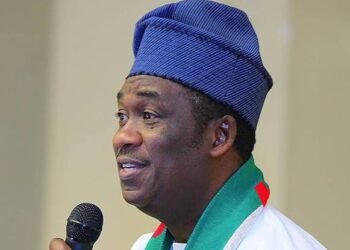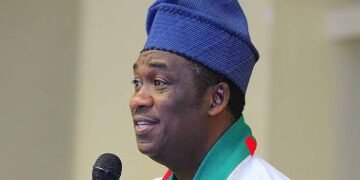



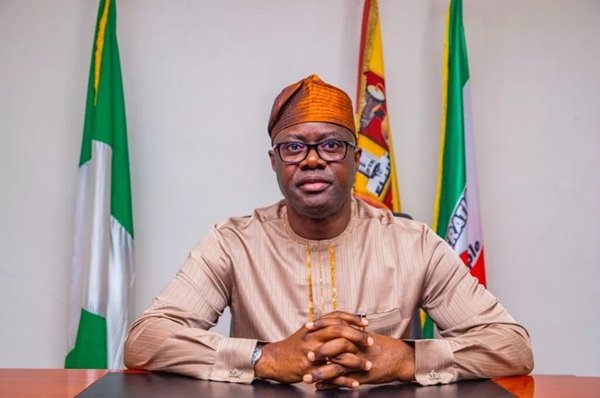
Oyo State Governor Seyi Makinde, the presidential candidate of the Allied Peoples Movement (APM), says Nigeria needs a reset rather than reforms, arguing that reform is inadequate where a system’s problems outweigh its strengths. He also backed state police, with safeguards against abuse.
Mr Makinde spoke on Sunday, 8 November 2026, during a live political programme on Jay FM 101.9 in Jos, Plateau State, Vanguard reported. He compared the process to shutting a system down and restarting it. NewsVelocityNG has not heard the broadcast, and his remarks are reported as Vanguard relayed them.
The party’s nationwide presidential campaign was formally flagged off in Bauchi on Saturday, Tribune reported. Vanguard separately described a presidential campaign flag-off scheduled for Monday in Jos. NewsVelocityNG could not establish how the two events differ.


On the economy, which he calls the first priority of his Reset Agenda, he said performance should be judged by whether ordinary Nigerians can afford food and meet basic needs.
State police, with safeguards
On insecurity, Mr Makinde advocated decentralising Nigeria’s security architecture through state police. He said states should be allowed to adopt the arrangement when they are ready and the necessary safeguards are in place, according to Vanguard.
He acknowledged concerns that governors could use state police to intimidate political opponents and ordinary citizens, and said appropriate safeguards could address those risks. The position is consistent with his acceptance speech as the APM candidate on 30 May 2026, in which he said decentralising security would be prioritised.
Vanguard also reported his account of the South-West’s alternative arrangement. He said governors in the region adopted the Western Nigeria Security Network, popularly known as Amotekun, as an alternative, which he described as a middle ground. He said its operatives gather intelligence and work with federal security agencies, and that it has helped improve security coordination in the region. That assessment is his, and NewsVelocityNG has not independently assessed Amotekun’s effectiveness.
Reset, but not without reform
Mr Makinde’s argument, as reported, is that reform alone is inadequate, not that reform has no place. As described at its unveiling in Abuja on Wednesday, 4 November, his Reset Nigeria agenda has four pillars: resetting the economy, restructuring the security architecture, reforming education and resetting the socio-political system, Leadership reported. On education, Vanguard reported that he praised the free-education policy of the late Chief Obafemi Awolowo, which he said expanded opportunities for generations. He also said his proposed administration would prioritise honesty, transparency and accountability in managing public resources.
Reports of the unveiling also attribute three proposals to him: channelling crude oil earnings above the national budget benchmark into citizens’ welfare, requiring a presidential winner to secure more than half of the votes cast, and setting performance targets within his first 100 days in office, Leadership reported. However, none of these three specific proposals appears in the published manifesto document reviewed by NewsVelocityNG. They should therefore be treated as proposals reported from the launch, not provisions confirmed in the published document. All three are campaign proposals, not commitments in force.