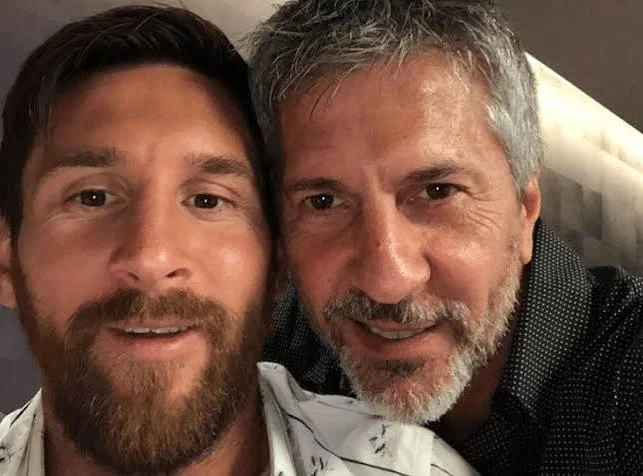
Jorge Messi, father and longtime representative of Argentina captain Lionel Messi, has died at the age of 68 in Rosario, Argentina, after a prolonged illness.
Jorge died at a medical facility in Rosario in the early hours of Saturday, according to reports from Argentina.
His death comes weeks after concerns about his health emerged during the 2026 World Cup, when Lionel Messi became emotional following one of Argentina’s matches.



At the time, Messi said his reaction was connected to a difficult family situation. The Messi family later confirmed that Jorge was receiving medical treatment and said he was progressing favourably within his condition.
Jorge’s death now brings an end to the life of a man who played one of the most important roles behind Lionel Messi’s remarkable football career.
Jorge was instrumental in supporting his son during his childhood in Rosario, particularly after Lionel was diagnosed with a growth hormone deficiency and required expensive medical treatment.
When efforts to secure the necessary treatment in Argentina proved difficult, Jorge helped arrange Lionel’s move to Barcelona at the age of 13.
The decision became a turning point.
Jorge stayed with Lionel in Spain during the early stages of his son’s European adventure while other members of the family remained in Argentina.
Lionel later recalled how his father stood by him through the uncertainty surrounding the move and allowed him to decide whether to continue pursuing his dream abroad.
“My old man was always by my side. We lived through many bad moments,” Messi recalled.
He added that his father asked him whether he wanted to continue or return home.
“I wanted to continue and he stayed with me,” Messi said.
Lionel went on to become Barcelona’s greatest player, win numerous domestic and international honours and establish himself as one of the most decorated footballers in history.
Jorge remained involved throughout that journey, serving as his son’s representative and helping oversee important aspects of his professional career, including negotiations and commercial affairs.
Despite his influence, Jorge largely stayed away from the spotlight.
He occasionally spoke about his son’s development and the sacrifices made by the family. In one emotional message, he recalled the difficult moments they had experienced together and told Lionel that he was proud of him not only as a footballer but also as a person.
Jorge had his own connection to football before becoming his son’s representative. He played as a midfielder in the Newell’s Old Boys youth system but eventually left the sport after being called up for military service.
He later worked as a chemical technician at Acindar, an Argentine steel company, eventually rising to become a manager.
Jorge was married to Celia Cuccittini, and they had four children — Lionel, Rodrigo, Matias and Maria Sol.
For Lionel, his father was more than an agent. He was the parent who stood beside him when his future in football was uncertain, travelled with him to Spain and helped him navigate the difficult early years of his professional career.

The influence of that support was repeatedly acknowledged by Messi throughout his career.
Jorge Messi’s death at 68 therefore represents a deeply personal loss for the Argentina captain and his family, while also marking the passing of a figure who played a pivotal role in the making of one of football’s most celebrated careers.