



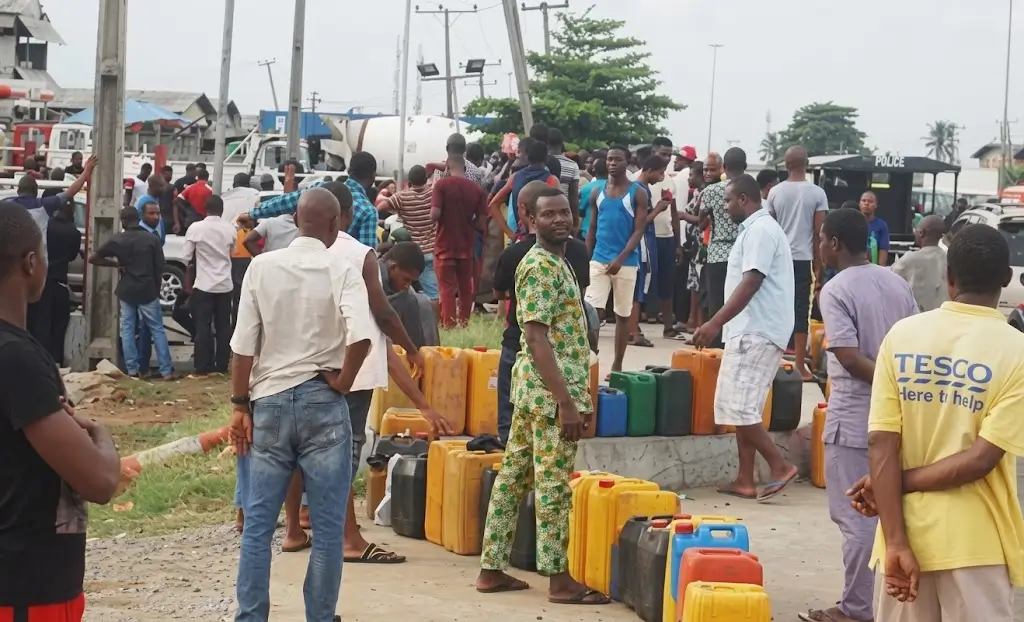
The price of Premium Motor Spirit, popularly known as petrol, has risen to about N1,500 per litre in parts of Nigeria, prompting the Nigeria Labour Congress to demand emergency measures from the Federal Government to cushion the impact on workers and households.
Recent checks showed petrol selling for about N1,500 per litre in parts of Kano, Yobe, Sokoto, Borno, Taraba and Zamfara, while prices in several other locations have climbed to N1,400 and above.
The NLC said petrol was selling for about N1,430 per litre in major cities, with prices higher in less accessible areas.




The latest increase followed a fresh adjustment by Dangote Petroleum Refinery, which raised its petrol gantry price from N1,265 to N1,350 per litre effective September 12.
The N85 increase was the refinery’s fourth upward adjustment since August 21, taking the cumulative increase over the period to N185, or about 15.9 per cent.
The increase has since filtered through to retail outlets, although pump prices vary according to location, supplier, transportation costs and individual filling-station pricing.

In several northern states, motorists have reported prices around N1,500 per litre, while other parts of the country have recorded prices within the N1,350-N1,470 range.
The higher fuel prices have also pushed up transportation costs.
In Kano, some commercial tricycle operators reportedly increased fares by about 50 per cent, while motorists and commuters in several states said the cost of fuel was forcing them to reduce vehicle use.
The NLC, in a statement titled “Save the Situation Now” and signed by its President, Joe Ajaero, called for immediate measures to protect workers and consumers from the latest price shock.
The union demanded reasonable wage awards for workers, sufficient crude oil supplied to local refineries in naira and an expansion of the country’s petroleum storage capacity.
The labour centre said rising transport costs would have wider effects on household expenses, including food, rent, school fees and other essential goods and services.
It also argued that government intervention should not be ruled out in an emergency, including measures to cushion consumers from the effect of higher fuel prices.
Fuel marketers have also called for government intervention, warning that continued increases in international crude prices could push domestic petrol prices higher.
Independent Petroleum Marketers Association of Nigeria spokesman Chinedu Ukadike said the government could consider supplying crude to domestic refineries under arrangements that would provide greater stability in their feedstock costs.
He also called for a review of some charges associated with the transportation and distribution of petroleum products.
Some industry representatives have warned that petrol could eventually reach N2,000 per litre if international crude prices continue to rise. However, that figure remains an industry forecast rather than an established future price.
The current pressure comes under Nigeria’s deregulated downstream petroleum market following the removal of the petrol subsidy in May 2023.
Under the current framework, pump prices are influenced by international crude prices, exchange rates, refining costs, transportation, logistics and other market conditions.
The Federal Government has continued to defend the subsidy removal as a means of reducing fiscal pressure. Finance Minister Taiwo Oyedele said in August that the reform generated N15.8tn in subsidy savings between June 2023 and December 2025.
The latest price surge highlights the tension between Nigeria’s position as an oil-producing country and its exposure to movements in the international energy market.
While higher crude prices can increase export earnings and government revenue, they can also raise the cost of petroleum products and transportation.
For motorists, commuters and businesses, the immediate concern remains the effect of higher petrol prices on daily expenses.
With petrol now selling for around N1,500 in some locations, further movements in global crude prices, domestic refinery supply and government policy are likely to remain closely watched across the downstream petroleum market.