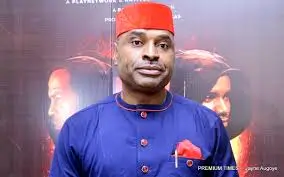
Politics:Fresh cracks have emerged within Nigeria’s opposition realignment ahead of the 2027 presidential election, with African Democratic Congress (ADC) chieftain Kenneth Okonkwo warning that former Labour Party presidential candidate Peter Obi may struggle to retain broad political support in the South-East, as tensions deepen following Obi’s exit from the ADC.
Speaking during an appearance on Channels Television on Thursday, Okonkwo criticised the increasingly popular “Obi or nothing” slogan among some supporters of the former Anambra State governor, describing it as politically dangerous and culturally inconsistent with Igbo values.
According to the lawyer and former Obi ally, the slogan contradicts the Igbo philosophy of collective advancement, which he described using the expression “Somadina” — loosely interpreted as a belief that success should be shared, not monopolised.
READ ALSO




“Have you not heard of the slogan ‘Obi or nothing’? First of all, that slogan is an abomination culturally in Igbo land,” Okonkwo said.
“Somadina means that I will not be the only person that will thrive. I will not be the only person that will succeed.”
His remarks mark one of his strongest public rebukes yet of Obi, whom he vigorously supported during the 2023 presidential election before parting ways politically.
Okonkwo referenced the 1979 political alliance involving late nationalist Nnamdi Azikiwe and former Vice-President Alex Ekwueme, arguing that Igbo political leaders have historically embraced coalition-building rather than exclusionary politics.
He said Azikiwe understood that South-East votes alone could not deliver the presidency and worked across party lines to ensure the region secured influence in post-war Nigeria, including the vice presidency and the speakership of the House of Representatives.
“And somebody here is telling me ‘Obi or nothing’? That is an abomination in Igbo land,” he added.
The comments come barely two weeks after Obi and former Kano State governor Rabiu Kwankwaso formally dumped the ADC for the newly formed Nigeria Democratic Congress, a move that has intensified debate over the future of opposition coalition politics.
Okonkwo accused both politicians of abandoning the ADC to avoid participating in competitive party primaries, alleging they had initially joined a broader coalition aimed at unseating President Bola Tinubu in 2027 before suddenly changing course.
“They said coalition is the best and the only method to send Tinubu packing. Then, on their own, without any reason, they left,” he said, accusing the pair of political inconsistency.
The ADC stalwart also took aim at some members of Obi’s support base, popularly known as the Obidients, describing sections of the movement as “toxic followers” and “street urchins” — even while admitting he was once among their ranks.
“I was. Why did I leave?” he said, explaining that his support for Obi in 2023 was driven largely by a desire to see a South-Easterner emerge as Nigeria’s president.
His disappointment, he said, grew after the election.
“After winning the election, what happened? He could not secure his own victory,” Okonkwo said, referring to Obi’s failed legal challenge after the presidential poll.
He disclosed that he spent more than 240 days in court and nearly two years campaigning because he genuinely believed Obi had won.
Okonkwo’s latest criticism underscores widening fractures within Nigeria’s opposition camp at a time when coalition talks are expected to shape the 2027 electoral battle.
While Obi remains one of the country’s most popular opposition figures, especially among younger voters and urban professionals, questions are increasingly emerging over whether his repeated party movements—from the Labour Party to ADC and now NDC—could weaken perceptions of political stability.
For many observers, the latest war of words signals that beyond defeating the ruling APC, the opposition may first need to settle its own internal battles.