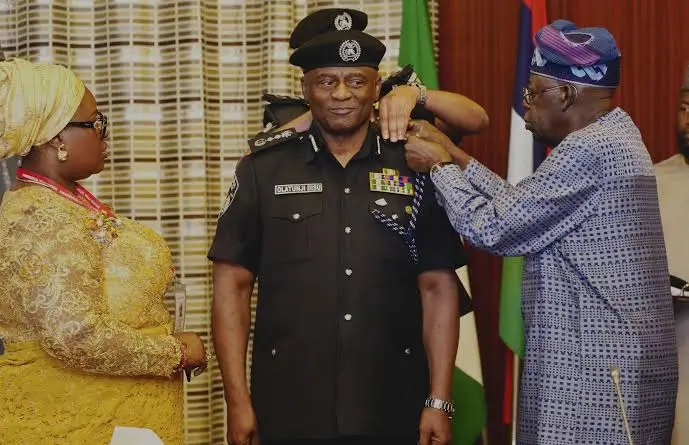
The Inspector-General of Police, IGP Tunji Disu, has thrown his weight behind the establishment of state police in Nigeria, asserting that decentralizing the nation’s security architecture will significantly deepen community policing and block intelligence-gathering gaps.
Speaking to the News Agency of Nigeria (NAN) in New York on Friday on the sidelines of the UN Chiefs of Police Summit (UNCOPS 2026) at the United Nations headquarters, Disu noted that moving policing closer to the grassroots is an essential step toward restoring public trust and ensuring proactive crime fighting.
He, however, cautioned that the transition would not happen overnight, revealing that full operationalization requires systemic patience, extensive legal consultations, and deliberate capacity building.
READ ALSO



“We are still at the teething stage,” Disu remarked while addressing global law enforcement stakeholders. “We need experience, education, and comparative studies from jurisdictions already practising state police.”
The police chief, who assumed office in February following the resignation of Kayode Egbetokun, emphasized that his administration has already submitted a preliminary state police framework to the Senate. He expressed optimism that localizing security commands will foster a healthier operational collaboration between federal and sub-national security institutions rather than create jurisdiction friction.
“It will bring policing closer to the people because officers will better understand the communities they serve,” the IGP added. “It will take us back to the era when almost everybody knew those policing their communities.”
The ongoing State Police Bill seeks a critical constitutional amendment to move policing operations from the Exclusive Legislative List to the Concurrent Legislative List. This legal alteration will constitutionally empower Nigeria’s 36 state governors to establish, fund, and manage independent state law enforcement structures alongside the centrally controlled federal police force. This development arrives on the heels of the recent zero-ransom extraction of 46 pupils and teachers in Oriire, Oyo State, which highlighted both the power of joint operations and the urgent demand for localized permanent security grids in rural areas.
Transitioning to global affairs, IGP Disu fiercely defended Nigeria’s historic sacrifices and outstanding track record in international peacekeeping. He proudly reminded the international delegation that since Nigeria deployed its pioneer police and military contingent to the Congo in 1960, the country has remained one of the United Nations’ most dependable allies.
“There is virtually no UN mission where you will not find Nigerian personnel serving with distinction,” Disu noted, paying solemn tribute to numerous Nigerian officers who paid the ultimate sacrifice on global shores. “The United Nations will never joke with Nigeria’s contributions because of our commitment and sacrifices.”