
The Committee for the Defence of Human Rights (CDHR) has described the successful rescue of the 46 abducted pupils and teachers in School in Oyo State as definitive proof that intelligence-driven collaboration can permanently dismantle the network of violent crime in Nigeria.
The rights group, however, cautioned that the trauma of the 56-day jungle ordeal requires massive, immediate state-backed psychological intervention.
In a joint statement co-signed by its National President, Comrade Yinka Folarin, and Publicity Secretary, Comrade Adewunmi Adesina, on Saturday, the CDHR heavily commended the tactical precision displayed by the Nigerian Armed Forces, the Nigeria Police Force, the Department of State Services (DSS), the Nigeria Security and Civil Defence Corps (NSCDC), and local hunter volunteers.
READ ALSO




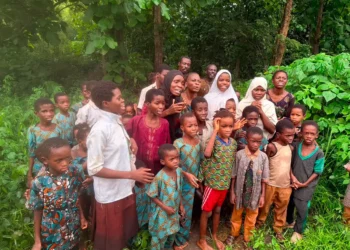
The 46 victims—39 pupils and seven teachers, including school principal Mrs. Alamu Folawe—were extracted cleanly on Friday without any form of state concession.
New operational details emerging from civil society networks indicate that the syndicate holding the victims had initially tried to enforce a radical four-point demand before consenting to any release. The terrorists aggressively demanded the immediate release of top detained terrorist commanders facing prosecution, a heavy financial ransom, the provision of two brand-new Toyota Hilux vehicles, and the sweeping implementation of Sharia law within the local jurisdiction.
However, the federal security apparatus and Governor Seyi Makinde’s administration completely neutralized the extortion plot, maintaining a strict zero-ransom, zero-swap stance that culminated in a lethal raid where several bandits were killed and eight arrested.
The CDHR noted that while the rescue has brought profound relief, it must serve as a foundational blueprint rather than a singular victory celebration.
“This successful rescue is not merely a victory to be celebrated; it is a lesson that effective collaboration among government, security agencies and communities remains the surest pathway to defeating insecurity in Nigeria,” the statement read.
The mass kidnapping, which occurred on May 15 across three schools—Community Grammar School, Ahoro-Esiele; Baptist Nursery and Primary School, Yawota; and L.A. Primary School, Esiele—had triggered immense civil unrest.
The crisis resulted in the brutal murder of two educators: Joel Adesiyan, who was shot dead while trying to escape the initial ambush, and mathematics teacher Michael Olugbade Oyedokun, who was horrifically beheaded inside the kidnappers’ den. The killings led the Nigeria Union of Teachers (NUT) to embark on a highly disruptive, month-long solidarity strike that paralyzed public basic education across Oyo State before its suspension earlier in July.
Addressing the post-extraction phase, the CDHR strongly demanded that the state government immediately establish an intensive rehabilitation camp.
“The trauma of abduction does not end with freedom; it must be addressed through deliberate and sustained government intervention,” Folarin insisted, calling for immediate medical checkups, clinical trauma assessments, and long-term psychosocial support.
The human rights body concluded by urging a total structural upgrade of rural educational institutions through advanced surveillance technology, fortified perimeter infrastructure, and rapid emergency early-warning systems, warning that local communities must stop being indifferent to suspicious movements in their domain.