




The Federal Government has expanded the Presidential Forest Guards Initiative to 10 states, with more than 9,000 trained personnel now set to reinforce security across forests, border communities and other ungoverned spaces frequently exploited by kidnappers, bandits and armed criminal groups.
The Office of the National Security Adviser announced the latest phase of the programme on Friday, revealing that over 2,000 newly trained forest guards in Kaduna, Edo and Kogi states have completed their training and will soon be deployed to identified security flashpoints.
The initiative, launched by President Bola Tinubu in May 2025, is coordinated by the ONSA and implemented under the operational leadership of the Department of State Services, with support from the National Intelligence Agency, Defence Headquarters, the Nigeria Police Force and the National Park Service.




According to the ONSA, the programme is being executed in partnership with participating state governments to improve surveillance and strengthen security in forests, remote settlements and border communities that have increasingly become hideouts and transit routes for criminal gangs.
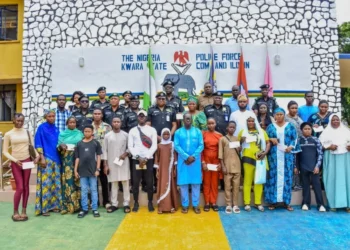
The latest deployment builds on the earlier graduation of more than 7,000 forest guards trained in Borno, Sokoto, Yobe, Adamawa, Niger, Kwara and Kebbi states under the first phase of the initiative.
The ONSA said many of the recruits were deliberately selected from communities worst affected by kidnapping, banditry and related crimes because of their deep understanding of local terrain, including forests, footpaths, rivers, remote settlements and routes connecting neighbouring communities and states.
The agency noted that the recruits’ knowledge of local geography is expected to significantly improve surveillance, intelligence gathering and the identification of routes and camps that may be difficult for security personnel unfamiliar with the terrain to access.
Before enlistment, all recruits reportedly underwent comprehensive screening, background checks and security vetting to verify their identities, community records and suitability for security duties.
The forest guards also received specialised training in arms handling, navigation, field craft, patrol operations, intelligence gathering and forest protection to prepare them for deployment within Nigeria’s broader security architecture.
According to the government, the initiative is designed to deny criminal groups unrestricted access to poorly monitored forest corridors often used to establish camps, hide kidnapped victims and move across state boundaries without detection.
The guards are also expected to strengthen intelligence sharing between rural communities and conventional security agencies through surveillance, early-warning systems and intelligence-led operations.
The governors of Kaduna, Edo and Kogi states welcomed the programme, saying it would complement existing security arrangements while extending government presence to areas with limited conventional security coverage.

They also pledged to support the welfare, deployment and operations of the forest guards in their respective states.
The Federal Government said the broader objective of the initiative is to restore government presence in vulnerable communities, protect rural residents and prevent criminal groups from using Nigeria’s forests as operational bases.