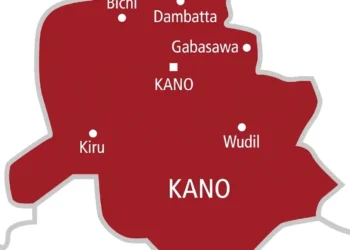

ABUJA — The Nigeria Hydrological Services Agency, NiHSA, has warned of a high riverine flood risk across Kaduna, Niger and 28 other states between August 19 and 25, urging communities on floodplains to relocate to safer, higher ground.
The warning was contained in the agency’s latest seven-day flood advisory issued by its Director-General and Chief Executive Officer, Arc Umar Mohammed.
Mohammed said rising river levels could trigger flooding in vulnerable communities during the forecast period.




“Rising river stages are expected to cause flooding. Communities on the floodplain should prepare to move to higher ground,” he said.
The states listed in the advisory include Taraba, Ondo, Oyo, Rivers, Abia, Adamawa, Akwa Ibom, Anambra, Bayelsa, Benue, Borno, Cross River, Delta, Ebonyi, Edo, Enugu, Gombe, Imo, Jigawa, Kogi, Kwara, Nasarawa, Lagos, Ogun, Osun and Plateau, alongside Kaduna and Niger.
NiHSA identified thousands of communities, schools, health facilities, markets, religious buildings and farmlands exposed to the threat.
In Kaduna, the agency listed 2,006 communities, 453 schools, 69 health facilities, 12 markets and 213 religious buildings.
Niger has 898 communities, 524 schools, 268 health facilities, 12 markets, 318 religious buildings and 23 hectares of farmland listed as exposed.
Delta was identified with 1,046 communities and 1,850 schools at risk, while Cross River has 2,508 communities, 756 schools, 406 health facilities and 1,862 hectares of farmland exposed.
In Imo, NiHSA listed 743 communities, 909 schools, 456 health facilities, 110 markets, 197 religious buildings and 244 hectares of farmland.
The agency urged state and local governments to move residents, livestock and valuables from floodplains to pre-identified higher ground.
Authorities were also advised to activate early-warning volunteers, clear blocked drainage channels and water outlets and pre-position relief materials, water-treatment supplies and first-aid equipment.
Residents were warned against attempting to cross flooded roads, bridges or fast-moving water, either on foot or in vehicles.
The latest alert comes as federal authorities intensify preparations for flooding during the 2026 rainy season. The National Emergency Management Agency has activated its National Emergency Operations Centre to coordinate information and strengthen preparedness and response to flood emergencies.
Abuja faces renewed flash-flood concerns
NiHSA has also assessed several flash-flood-prone locations in Abuja following recent flooding in parts of the Federal Capital Territory.
The assessment team, led by Mohammed, inspected affected communities, drainage systems, waterways, bridges and other infrastructure to determine the factors contributing to rapid accumulation and movement of floodwater.
At Efab Estate in Lokogoma, residents complained about recurring flooding, inadequate drainage infrastructure and development around flood-prone areas.
The team also inspected a major water channel linked to the Lugbe axis before visiting Gudu, where the Delight Event Centre was affected by flooding.
A customer at the event centre, Julius Okoro, said about 74 vehicles were submerged after heavy rainfall, although no lives were lost.
NiHSA said the flooding highlighted the need for better drainage infrastructure and stronger protection of natural waterways.
The agency identified rapid urbanisation, blocked waterways, inadequate drainage capacity, construction on floodplains and poor waste management as factors capable of worsening the impact of heavy rainfall.
Mohammed recommended channelisation of critical waterways, improved drainage, construction of bridges and stricter enforcement of planning regulations.
He also called for stronger cooperation among FCT authorities, urban planners, emergency agencies and communities.
With the seven-day warning now in effect, NiHSA urged residents to monitor official flood updates, keep drainage channels free of refuse, avoid settlements along waterways and take evacuation warnings seriously.