


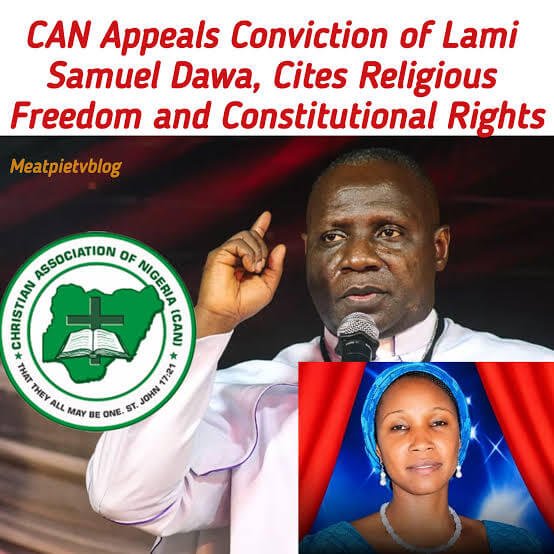
The Christian Association of Nigeria (CAN) has raised concerns over the 14-year prison sentence imposed on a Christian woman, Lami Samuel Dawa, in Borno State, questioning the implications of the case for religious freedom and the protection of fundamental rights.
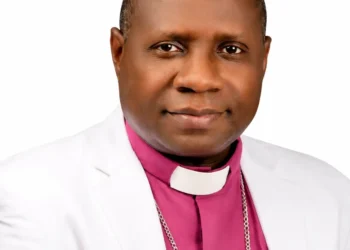
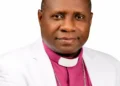
CAN President, Archbishop Daniel Okoh, disclosed that an appeal had been filed against the conviction, assuring that the association would allow the judicial process to run its course while monitoring developments.
In a statement issued on Saturday, October 31, 2026, the Christian body said the circumstances surrounding the case raised important questions about the constitutional rights of Nigerians to freely choose, change and practise their religion.



CAN expressed particular concern over reports linking the case to the conversion of an individual to Christianity, although it acknowledged that the precise facts and legal basis of the conviction were still being verified.
“The Association believes that every individual has the right to freely choose, change or practise their religion or belief without coercion, intimidation or unlawful punishment,” the statement read.
The association urged relevant authorities to ensure that the rights of all parties involved were protected and that justice was administered in accordance with the Nigerian Constitution and applicable laws.
It also pledged to continue monitoring the matter and engage relevant authorities through appropriate legal and institutional channels.
CAN reaffirmed its commitment to peaceful coexistence among Nigerians of different religious backgrounds, stressing that the fundamental rights and freedoms of every citizen must be protected.
Dawa was reportedly sentenced to 14 years’ imprisonment by a Borno State High Court in a judgment dated May 5, 2026.
However, the circumstances surrounding her conviction have attracted different interpretations, with the Christian Lawyers Fellowship of Nigeria (CLASFON) cautioning against reducing the case to an allegation that she was convicted simply for preaching to or converting a girl to Christianity.
The Chairman of CLASFON’s Maiduguri branch, Ephraim Yidawi, whose organisation represented Dawa and four other defendants during the trial, said the allegations against them went beyond religious conversion.
According to him, the charges included conspiracy to abduct a child, enticing a child to leave parental custody, removing the child from her parents’ lawful custody, depriving her of access to education and interfering with her religious practice and conversion.
Yidawi explained that the court convicted Dawa on the charge of depriving a parent of the lawful custody of his child, while the other four defendants were discharged and acquitted.
He also confirmed that an appeal had been initiated to challenge the judgment.
The Pentecostal Fellowship of Nigeria (PFN) had similarly urged Christians to exercise restraint and avoid drawing conclusions without examining the court proceedings and the circumstances surrounding the conviction.

The PFN and CLASFON maintained that public discussions should reflect the actual charges and findings of the court rather than unverified accounts circulating on social media.
The case has brought renewed attention to the relationship between religious freedom, parental custody rights and the protection of fundamental human rights in Nigeria.
While CAN has emphasised the constitutional right of individuals to choose and practise their religion, the pending appeal provides an opportunity for the circumstances and legal basis of Dawa’s conviction to be examined by the appellate court.
The Christian association said it would continue to follow the proceedings and pursue appropriate institutional engagement while advocating the protection of the rights of all Nigerians, irrespective of religious affiliation.