


The Supreme Court’s restoration of key provisions of the Electoral Act 2026 has opened a fresh legal dimension to Nigeria’s 2027 elections, with political parties facing renewed scrutiny over membership registers and the procedures used to nominate candidates.
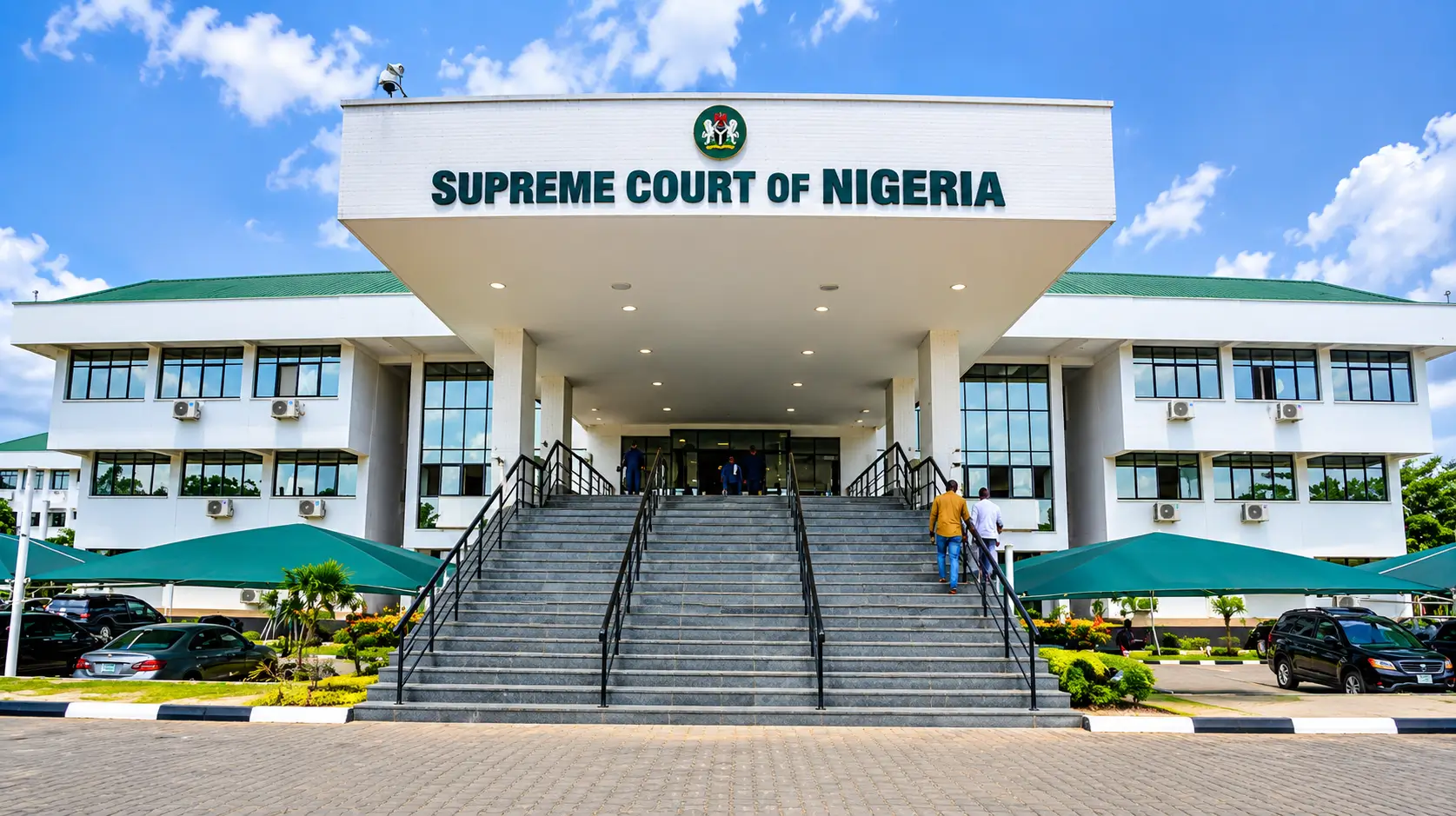
The apex court on Thursday upheld an appeal by the Independent National Electoral Commission and restored Sections 77(5), 77(6), 77(7) and 84(2) of the Electoral Act, overturning the July 16 judgment of the Court of Appeal that had voided the provisions.
The ruling did not cancel any existing presidential ticket, order political parties to conduct fresh primaries or disqualify any candidate.




Instead, it settled the immediate constitutional dispute over the provisions and returned them to the legal framework governing party membership and candidate nomination.
A seven-member panel led by Justice Adamu Jauro unanimously allowed INEC’s appeal and held that the disputed provisions were not inconsistent with the 1999 Constitution.
The court restored the position of the Federal High Court, which had dismissed the original challenge by the Zenith Labour Party, and awarded N2m in costs against the party.
Section 77(5) provides that only party members whose names are contained in the membership register submitted to INEC at least 21 days before a primary, congress or convention can participate in the exercise.
Section 77(6) prevents parties from using another register for the exercise, while Section 77(7) provides that a party that fails to submit its membership register within the stipulated period is ineligible to field a candidate.
Section 84(2), meanwhile, provides for direct primaries or consensus as methods of nominating candidates.
The restoration of the provisions could become relevant to nomination disputes involving major presidential candidates, including former Vice President Atiku Abubakar of the African Democratic Congress and former Anambra State governor Peter Obi of the Nigeria Democratic Congress.
However, the Supreme Court has not ruled that either nomination is defective.
Any challenge would have to be brought by an aggrieved party through a competent legal action and supported by evidence showing non-compliance with the law.
The same statutory framework applies to President Bola Tinubu and candidates of other political parties contesting the 2027 elections.
This means the ruling does not create a special legal vulnerability for opposition candidates. Rather, it restores a common statutory standard against which party nomination processes can be examined.
One potential flashpoint is the membership register.
Party officials may now have to demonstrate when their registers were submitted to INEC, which register was used during a primary and whether the members or delegates who participated were properly listed.
Consensus nominations could face similar scrutiny, particularly where questions arise over whether the required consent was obtained and whether the process complied with the Electoral Act and the party’s own rules.
The timing of the judicial decisions could also become significant.
The Federal High Court upheld the disputed provisions on May 5. The Court of Appeal subsequently voided them on July 16, before the Supreme Court restored them on September 24.

Political parties conducted nomination-related activities during that changing legal environment.
The Supreme Court did not issue a blanket order cancelling primaries conducted while the Court of Appeal judgment was operative. As a result, the legal status of any individual nomination will depend on its specific facts, timing, applicable law and whether a competent challenge is filed.
The ruling could nevertheless encourage defeated aspirants and rival factions to examine nomination records for possible breaches.
Membership registers, accreditation records, notices, voting records, result sheets and evidence of compliance with party guidelines could become important in any ensuing litigation.
The development comes against a wider debate about the increasing role of courts in Nigeria’s electoral process.
Former Nigerian Bar Association president Afam Osigwe, SAN, warned at the 22nd Annual All Nigeria Editors Conference in Enugu that the judiciary should not gradually replace voters in determining who represents the people.
For the 2027 election cycle, the immediate question is therefore not whether the Supreme Court has cancelled existing tickets. It has not.
The emerging issue is whether the processes through which candidates emerged can withstand scrutiny under the Electoral Act provisions now back in force.