


The Institute for Peace and Conflict Resolution (IPCR) has called on religious leaders, policymakers and other stakeholders to reject divisive narratives capable of worsening religious tensions and undermining national cohesion.
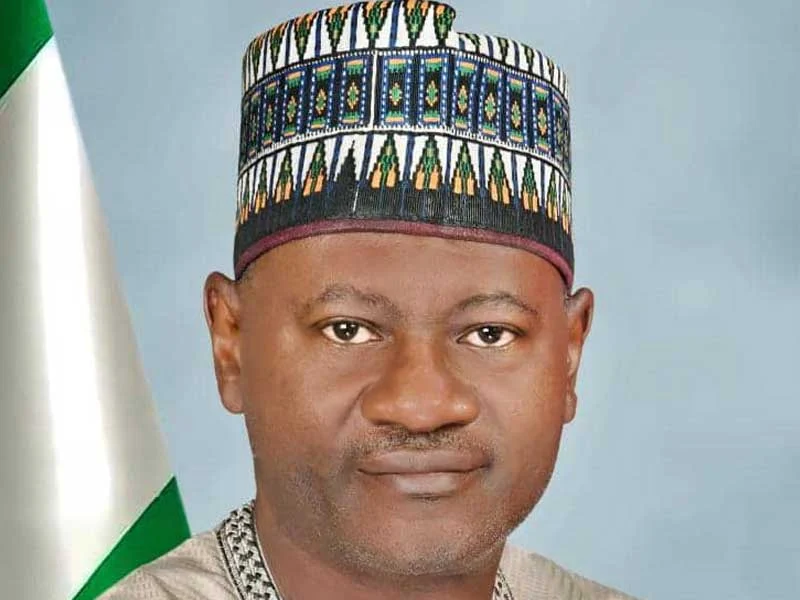
The institute’s Director-General, Joseph Ochogwu, said discussions about insecurity and religious freedom must be guided by facts and evidence rather than interpretations that present the country’s complex security challenges exclusively through religious identities.
Ochogwu spoke on Friday in Abuja at the Quarterly Policy Review Dialogue of the Network of Policymakers and Religious Leaders to Support Peace, Security and Reconciliation in Nigeria.



The dialogue was organised by the IPCR in partnership with the King Abdullah bin Abdulaziz International Centre for Interreligious and Intercultural Dialogue.
It was themed, “Moving Beyond ‘Us versus Them’: Strengthening Local Governance, Security and Foreign Relations to Protect Freedom of Religion or Belief in Nigeria.”
The IPCR chief said protecting religious freedom required accountable institutions, impartial security operations, evidence-based public discourse and stronger cooperation between government, religious institutions and communities.
He acknowledged concerns over attacks on Nigerians, including communities targeted because of their religious identities, as well as the international attention generated by the United States’ designation of Nigeria as a Country of Particular Concern.
However, he warned that exaggerated or polarising accounts of insecurity could deepen mistrust and reinforce divisions.
“While we recognise the legitimate concerns surrounding attacks, insecurity, religious intolerance and the protection of vulnerable communities, it is equally important that public discourse on these matters remains factual, balanced and informed by evidence,” Ochogwu said.
He stressed that legitimate advocacy for religious freedom must be distinguished from narratives capable of encouraging further polarisation.
According to him, victims of violations must receive justice and protection, while public discussions should promote national understanding.
Ochogwu identified local governance, security administration and foreign relations as three critical areas requiring stronger policy interventions.
He called for responsive local government institutions, traditional rulers and community leaders to address grievances, prevent discrimination and resolve conflicts before they escalate into violence.
He also urged security agencies to adopt professional, intelligence-driven and impartial approaches that respect constitutional guarantees and human rights.
On foreign relations, he advocated stronger bilateral and multilateral partnerships to improve international cooperation on religious freedom, intolerance and identity-based conflicts.
Presenting the lead paper, a Professor of Law at Nile University of Nigeria, Shehu Zuru, blamed Nigeria’s social divisions on hatred, weak moral values, poor leadership and the erosion of common humanity.
Zuru argued that the “Us versus Them” mentality thrived in societies where hatred and social acrimony had weakened shared values.
He also linked insecurity to poor governance, widespread poverty, weak local leadership and the failure of successive administrations to establish a national consensus on development priorities.
The professor urged the Federal Government to address local government autonomy, describing effective grassroots administration as essential to tackling insecurity and other social problems.
“The Federal Government, if it is serious about effective public policy governance at the rural level, must stop playing the ostrich on the issue of local government autonomy and confront the issue head on,” he said.
Zuru further called for stronger international cooperation to tackle terrorism, banditry and organised insecurity, noting that such threats often had transnational dimensions.

He advocated diplomatic partnerships with countries capable of providing advanced military equipment and intelligence support for counter-insurgency operations.
Also speaking, the Chairman of the Northern Christian Association of Nigeria, John Hayab, warned against framing Nigeria’s security challenges solely as conflicts between Christians and Muslims.
He identified impunity, weak institutions, economic marginalisation and elite manipulation as factors sustaining divisions and insecurity.
Hayab said such framing could prevent authorities from identifying the actual causes of violence. He urged Nigerians to expose criminality regardless of the religious affiliation of perpetrators.
He also called for stronger grassroots engagement involving traditional rulers, religious leaders, local government officials and community stakeholders to improve early warning and conflict prevention.
Citing peacebuilding efforts in Kaduna, Hayab said community engagement had helped sustain relative stability in the state between November 2002 and April 2011.
He urged security agencies to incorporate human rights and freedom of religion training into their operations, insisting that nobody should enjoy immunity from prosecution because of religious or ethnic identity.
“Anybody that violates the general law is not above the law, whether he’s a Christian or a Muslim, a Southerner or a Northerner,” he said.
Hayab maintained that insecurity and attacks against any community should be treated as a national problem rather than the concern of a particular religious group.