


Journalism at a crossroads: Press Freedom, Professionalism And Public Trust In The Digital Age
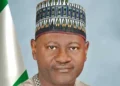
(Being a Public Lecture delivered by Festus Adedayo PhD on the occasion of the 60th anniversary of the Nigerian Union of Journalists (NUJ) Oyo State Chapter at the NUJ Centre, Iyaganku, Ibadan on November 6, 2026)
Introduction


I want to begin this lecture by extolling the journalism of Ibadan or journalism in Ibadan. The baton of the history of that journalism trajectory has been placed in your hands and our hands as a collective. In addressing this topic today, I will be dwelling on the crossroads faced by our forefathers of the pen, especially here in Ibadan and the unique crossroads we, successors of that huge legacy, face today.
Yes, as a student at the University of Ibadan in 1965, J. P. Clark paid tribute to Ibadan in that famous short poem of his with the title, “Ibadan”. In the words of this Ijaw poet, Ibadan was a city “running splash of rust and gold — flung and scattered among seven hills, like broken china in the sun.”
For 61 years now, that John Pepper Clark-Bekederemo’svivid portrayal of the ancient city, done as a five-line tribute, has cleaved to Ibadan like a glue.
However, for the Nigerian journalism and its history, Ibadan was and is more than rust, gold, seven hills and broken china. Ibadan is a city of history, the birthplace of active and activist journalism.
Before talking about journalism’s crossroads today, we will be putting the cart before the horse if we do not talk about the road journalism trod to get here. After all, Marcus Garvey, Jamaican political activist, once told us that “A people without the knowledge of their past history, origin and culture is like a tree without roots.”
In this lecture today, let us remind ourselves aboutIbadan’s past journalism history. Using mostly relatable narratives in history, I will, in this paper, do a portrayal of the press of the First Republic, the role the press played during military rule and its role, from 1999 to the present, to explain the crossroads of the journalism profession.
Crossroads: The Newspaper press in the First Republic
Yes, Nigerian journalism predated the country called Nigeria, having started in Abeokuta, Ogun State, in 1859. The country called Nigeria only became a country 55 years after when the Southern and Northern protectorates were soldered into one by Sir. Lord Lugard. In that year 1859, Rev. Henry Townsend, a British missionary of the Church Missionary Society (CMS), established Nigeria’s first newspaper, Iwe Irohin fun awon Ara Egba ati Yoruba (meaning The Newspaper for the Egba and Yoruba People).
Yes, by the late 19th and early 20th centuries, the center of journalistic activity shifted to Lagos. The colonial seat of government thus had in it newspaper publications like The Lagos Times (1880) and The Lagos Weekly Record(1890), both of them evolving into a vehicle for anti-colonial advocacy and nationalist movement.
It is also true that newspapers circulated in Ibadan, long before the Nigerian Tribune was founded in November 1949. The truth however also is that, though most of those newspapers were printed and published in Lagos or Abeokuta, rather than locally in Ibadan, all of them were actively brought, sold, and read by the educated elite, political groups, and traders in Ibadan. Ibadan was a major hub for newspaper consumption in Nigeria.
The newspapers in this regard range from Henry Townsend’s Iwe Irohin, circulated widely across Yoruba-speaking interior towns like Ibadan; to publications printed in Lagos like the Lagos Daily News (founded by Herbert Macaulay in 1925), the Nigerian Daily Times(1926), and Nnamdi Azikiwe’s West African Pilot,(1937).
However, from November 16, 1949, when Chief Obafemi Awolowo established the Nigerian Tribune at Yemetu Alaadorun, Ibadan, making the newspaper a historic major daily based in Ibadan, journalism shifted its attention, almost totally, to Ibadan.
For example, you have heard about how the whole of Nigeria stood still at the feet of Ibadan in the First Republic and how the newspaper press played a major role in the theatre of the political battle of that era. Ibadan’s journalism thus became Nigerian journalism in that war, with many critics claiming that journalism in Ibadan of that period contributed to the collapse of Nigeria, and that the newspaper press’ narratives of that time was a catalyst for the first coup de tat that struck in January, 1966.
The crossroads that the press of this period found itself was that, it was a megaphone for politicians, many of whom were its owners.
One interesting dimension of the political war of the First Republic which took place between 1962 and 19666 is the role played by the newspaper press in the process of relating the crisis to the outside world. From whichever prism you may look at it, the press of this era was highly partisan in its reportage.

Then Premier of the Western Region, Chief Samuel Ladoke Akintola, was once editor of the Daily Servicenewspaper. Thus, as Premier, he knew the power of the press and that it was/is a weapon of building hegemony. He knew that, through what it publishes and what it refrains from publishing, the press could make and unmake. Unfortunately, either because he was overwhelmed by the war since it broke out in 1962, he could not get to own a newspaper of his own until it was almost too late.
On March 31, 1964, Akintola’s government eventually founded The Sketch newspapers. It was aimed atcountering the heavy attacks coming from the Tribuneand allied newspapers loyal to Chief Obafemi Awolowo,former Premier of the region and who was then Leader of Opposition. By this time, it was too late because the battle had been fought and won.
On the reverse, even before he went into full politicking,Awolowo and his group in the Action Group had established a newspaper press of their own. It was because they understood the dimensional power of the press in building hegemony and how instrumental it would be in the building of legitimacy in the impending crisis.
Chief Bola Ige, in his book, People, Politics and Politicians of Nigeria (1940 – 1979), succinctly explained the Awolowo group’s manifest understanding of the behemoth power of the press in building hegemony. He said:
“SLA (Akintola) did not have any newspaper support to back him in 1962 when he went to war against Awo. He may have been a veteran journalist, but the Daily Servicewas now a weekly magazine; and, worse for him, it was being edited by L. K. Jakande, one of the group whom SLA so much disliked. The other newspaper sympathetic to the AG and its government of the West was the very popular Daily Express. But the editor-in-chief was Bisi Onabanjo who had never liked SLA. In addition, the financial backer of that paper was Chief S. O. Shonibare whom SLA was planning to put into trouble with Awo. In Ibadan, there were three newspapers – Southern Nigerian Defender which was as good as dead, and the Nigerian Tribune and Irohin Yoruba which were Awo’s newspapers. When SLA and his group started Morning Star and Imole Owuro in 1963 for NNDP purposes, it was too late and his new government newspaper, Daily Sketch, which started publishing in 1965 (sic), could not help him much… “
In his book with the title, The Nigerian press, hegemony and the social construction of legitimacy (1960 – 1983)Political communication scholar, Professor Adigun Agbaje, explained the role that the press of the time played in the political war. According to him, the politicians virtually cast virtually national institution, including the media, “in the role of instruments for the continuation of political warfare”.
Let us consider some newspaper narratives during this First Republic war. Remember that the political war between erstwhile Premier of the Western Region, Chief Awolowo and his successor, Chief Akintola was said to have erupted over the administration of the region. It subsequently led to a full-scale political war called Operation Weti e. To douse the tension, Prime Minister Sir Abubakar Tafawa Balewa then appointed his personal physician and doctor, Dr. Moses Majekodunmi, as the Sole Administrator of the Region.
Majekodunmi then set up a judicial panel to look into the political crisis. It was chaired by Justice George Baptist Ayodola Coker. The panel also had Mr. Oladiran Booyamin Kassim and Mr. Akintola Williams as members.
In the theatre of war was the Daily Express newspaper. The voice of the paper, though printed in Lagos, sounded out loud in Ibadan, Western Region capital and Nigeria as a whole. The newspaper had evolved from the Daily Service which was established in 1938 to represent the Nigerian Youth Movement.
At the thick of his Emergency administration of the Western Region, the Daily Express became a major enemy of the Administrator, Dr. Majekodunmi. Immediately he came on board, the newspaper did an editorial comment where it attacked him for assuming that his “stop-gap” appointment was an indication that he was the Premier of the Western Region. In an editorial comment it published on September 8, 1962, on its page 4, with the title, Why all the fuss? the newspaper reported that Majekodunmi sacked two management committees instituted by the old government, as if it was running a government. It wrote:
“The way this gentleman and his troop of commissioners go about their business in the West gives us the impression that they do not consider themselves as a temporary regime – stop-gap at that”.
At the Coker commission, Chief Awolowo cross-examined counsel to the panel, Chief M. E. R. Okorodudu. That encounter became the lead story of theDaily Express on September 6, 1962. Under the title, “Awolowo lams (sic) Okorodudu!” Awolowo alleged that Okorodudu had sent some detectives to a Lagos goldsmith to find out the worth of the jewellery purchased by his wife. He also alleged that Okorodudu wrote a letter to the Accountant of the National Bank to query cheques drawn by Mrs. Awolowo and her trading business, Dideolu Stores. The former Premier furtheralleged that Okorodudu as the commission’s counsel was out on a vendetta against him. He then finally submitted that “Okorodudu will think it proper as a man of honour to withdraw from this inquiry.”
Another newspaper report from the Daily Express was an encounter between the Premier, S. L. Akintola and Chairman of the Western Nigerian Development Corporation, Alfred Ogbeyiwa Rewane, at the Coker commission. It became its lead story of October 31, 1962, with the title, Inquiry shock: ‘You are corrupt’ – Rewane tells Akintola.
While being cross-examined by the suspended Premier, Rewane told Akintola: “I believe you are corrupt and I can substantiate this with facts if the Commissioners will permit me. I have three reasons to believe that you are corrupt and I have said this to you before.”
The Nigerian Tribune was also at the forefront of the business of attacking Akintola, his allies and the policies of the Western Region government of the time. As the trio of the Tribune, Daily Express and Daily Service were doing this, immediately the Sketch was midwifed, it began returning the salvos.
For instance, the Akintola government banned the scathing song called Yoruba Ronu by Chief Hubert Ogunde. The song was an indirect attack on the Akintola-led Western Region government and its attempt to destroy Awolowo. In a backpage report published by the Sketch on April 16, 1964 with the title, Six reasons for ban on Ogunde, the newspaper said:
“The Yoruba Ronu play stage by Ogunde theatre was a calculated contempt for (against) the judiciary; The play was designed to distort and falsify the Action Group crisis of 1962; It ridiculed and put the region’s natural rulers in bad light; It constituted a source of potential danger to public order and tranquility; It was a subtle attempt to boost the prestige of a party whose members were found guilty of planning to overthrow the Government of the Federation and Ogunde was offered £500 to twist the original version of the play commissioned by the ‘Egbe Omo Olofin’ to bring about unity among the Yorubas”.
While the Tribune and other Action Group newspapers tried to portray Akintola as an undesirable leader, the Sketchpositioned him as a saint. A defence of Akintola’s evidence against Awolowo at the Coker commission of enquiry was stealthily conjured in a piece written by one Israel Ogah.The piece was published with the photograph of the Premier pounding away at a typewriter and published on April 11, 1964, with the titled, SLA – The living saint. In it, the writer said:
“This is why it should be universally accepted that Chief Akintola did right in revealing for the first time publicly last Friday, the real cause and the one man in Nigeria who violated the people’s trust and plunged Western Nigeria into chaos to satisfy his pet ambition.”
The reference that was being made was to Awolowo.
In an editorial comment published on August 21, 1964:3with the title, “Deliberate falsehood”, the Sketch wrote:
“The regime of Chief Awolowo was marked with a number of atrocities particularly against the Obas. If Mrs. Awolowo has today found that her husband committed a number of errors of commissions and omissions during his regime in Western Nigeria, it is for her to go back to Calabar to tell her husband that she had now discovered that he was too ruthless when he was in power in Western Nigeria. It is penitence that is required of Chief Awolowo… There is a gulf of difference between penitence and finding a scapegoat.”
When the Federal Supreme Court confirmed the earlier sentence of nine years handed to Awolowo and some of his colleagues, the Sketch edition of July 2, 1964 led its front page with the headline, End of sensational trial: Awo, TKO, nine others lose: 3 freed. Its language of report pointed towhere the paper stood in the crisis. The newspaper wrote:
“It was a total knock-out for Chief Obafemi Awolowo… who will now push on with the ten-year jail term passed on him at a Lagos High Court last year for offences of treasonable felony and conspiracy to overthrow the Federal Government and for contravention of the Firearms Act.”
The newspapers loyal to the AG will seem to have had a last laugh in the crisis. A few weeks before the January coup, the Tribune wrote an editorial comment that some people have called futuristic, with the title, Akintola, get out! In it, the newspaper called on “those who have eyes” to learn “a big lesson” from the ousting of the David Dacko government of the Central African Republic. It wrote:
“Today, we say to Akintola, Get out! We say he should get out today for the sake of Nigeria, for the sake of Western Nigeria and for the sake of his family.”
Two days before the coup, specifically in its edition of January 13, 1966, the Tribune wrote another editorial comment criticizing the police for haranguing opponents of the Akintola government. It wrote:
“The people can never be tired, they can never be silenced. The Akintola clique must bear this in mind constantly. And when the clique is ousted by the people, those who helped to protract the struggle will gnash their teeth. We shall not weep for them.”
I must say that this sabre-rattling posture posture of Ibadan-based newspaper press of the period was also the same posture for virtually all others based in Lagos. It was same posture of the radio and television of the period. This trio together made the Nigerian media of the Second and Third Republics. All you needed to do was to change the names of the political parties, the politicians involved and you were back to the scenario of the First Republic of partisan media reportage.
Crossroads: The Newspaper press under the military
The military phenomenon is central to an analysis of Nigerian politics. When the military struck in January, 1966, claiming to have intervened in the First Republic crisis as salvationists, it received applause from the newspaper press which saw its intervention as redemptionist.
Don’t forget that Kaduna Nzeogwu, in his coup speech, said the coup plotters came to remove those he called the ‘ten-percenters, homosexuals and feudal lords.”
The Aguiyi Ironsi regime, upon taking over during the coup chaos, instantly promulgated Decree 33. It prohibited eighty-one political parties in operation (the largest percentage of which were interest groups), as well as 26 tribal and cultural organizations. The military government also promulgatedDecree 1 (Constitution, Suspension and Modification) whichvested executive and legislative powers of the federation in the hands of the Head of State and military governors in the region. The Ironsi government also instituted commissions of inquiry into some major parastatals like the Electricity Corporation of Nigeria, Nigeria Railway Corporation and Nigerian Ports Authority, as well as the ‘corrupt’ Lagos City Council.
In the Western Region, there were popular supports for the new military government, especially with the majority of the people who were UPGA (Awolowo) supporters seeing it as a government that had come to rescue the region from Akintola’s NNDP. In the North, however, there were widespread dissents against it. The people’s animosity for Ironsi and his government was propelled and reinforced by some factors. The first was the pattern of the killings of the political leaders which was in the disfavour of the region. Its two most powerful politicians, in the person of the Prime Minister, Balewa, as well as the Northern Premier, Ahmadu Bello, and its leading military officers, were killed.
When General Yakubu Gowon came into office, he ordered the release of Chief Awolowo from prison. The government also made the sage Commissioner for Finance and Vice Chairman of the Supreme Military Council.
Generally, the media of this period was sympathetic to the military. This went on until it kept on postponing the date of handover to the civilians and the press-military relationship totally became adversarial after the 1979 elections. By then, the military government of General Olusegun Obasanjo had shown itself as remarkably against Chief Awolowo. Newspapers loyal to the sage then descended on the military government.
By the time the military returned to power in December, 1983, it met a Nigerian media that had almost totally seen it as the people’s adversary. From 1983 to General Abdulsalami Abubakar’s exit in 1999, the Nigerian press held the military by the jugular, with its operators getting jailed and killed in the process.
Crossroads: The Newspaper press 1999 to the present
In what would look like a systematic but gradual decimation of the Nigerian press, governments have since 1999 corroded the powers of the press. The ostensible aim is to ensure that the Nigerian press barks but bites seldom. For those who can recall, the battle to wean Nigeria of military rule was largely fought on the pages of Nigerian newspapers. The military era press literally yielded its space for democracy activists to make use of it for their campaign for democracy.
In the process, many journalists were sacrificed. Many were jailed and maimed. Bagauda Kaltho of The News signposted the clan of journalists who paid the ultimate price, in anticipation of liberty for Nigerians. The newspaper press was so formidable that both Generals Ibrahim Babangida and Sani Abacha had to roll out tanks to extinguish its irritating flame. At the end of the day, the Nigerian press was largely responsible for the rout of military rule in Nigeria and its replacement with civil rule.
By 1999 when Nigeria returned power to civilians, the Nigerian newspaper press was still firing from all cylinders. Its armaments were still potent and media practitioners retained their energy which seemed to be bursting at its seams.
For instance, not long after the commencement of the Fourth Republic, the newspaper press made public examples of the carried-over rots of Nigeria’s governmental dysfunctionality. One after the other, even at a time when its tools were analogue, the press made mincemeat of public officers who, as it was later revealed, were opposite of what they claimed to be in public.
Salisu Buhari, the young Kano State legislator, who became Speaker of the House of Representatives, had his bubble burst by the media. So also did Evan Enwerem. But for his street craftiness, the man who is the Nigerian president today would have been drowned by that hyper-ventilating press energy of the early 4th Republic.
The press of this military era had an investigative acumenthat was top-notch. It could compete with any newspaper press anywhere in the world. My haunch is that, alarmed by the enormous power at the disposal of the Nigerian pressand the system-purifying but dirty people-destroying powers within its grips, governments since 1999, either deliberately or otherwise, perfected plans to castrate the deadly watchdog that is the Nigerian press.
Today, the powers-that-be of the 4th Republic have made a huge success of their plan to destroy the newspaper press. Their success is such that, the wily politicians in agbada, babariga and Ishiagu can thump their individual cheststoday that they have made a success of the battle to rid the Nigerian governance space of the irritancy of the Nigerian press. This was a battle which the military, with their tanks and artillery, couldn’t win in decades.
Today, journalism practice is at a greater crossroads than it was, beginning from the First Republic. For instance, the Nigerian newspaper press has been so mercilessly attacked by the Nigerian government of the 4th Republic, so much that it is barely existing today. Gradually, an underground and sustained battle was waged on it. What is left today is its decimated carcass.
Many of Nigeria’s erstwhile crusading press houses, where the warriors who fought military rule to a standstill operated from, are desecrated and abandoned.Their print-runs are caricatures of those noble eras when they proudly bore the tag “mass” in their media operations. I shudder when the Nigerian newspaper press is today referred to as a mass media. What mass? Government after governments since 1999 would seem to have deliberately jerked up costs of running newspapers, so highly that that amount would buy nukes to prosecute the Iran-American war. The newsroom has emaciated so terribly that you would imagine it was afflicted by a weight-pining cancer.
For broadcast journalism in Nigeria, the National Broadcasting Commission (NBC) has become a major weapon that curtails the freedom of the press. Its policies of restricting broadcast journalism, political commentary and editorial independence have received widespread criticism and legal pushback. In doing this, NBC has periodicallyissued formal notices to broadcast stations. They do this totarget political broadcasts, current affairs programmes and anchors ahead of the 2027 general elections. The commission has been reported to have prohibited TV and radio presenters from sharing personal opinions or presenting opinions as facts. It also mandated that opposing views be included in all debates.
Stations that flouted these orders have received impositions of heavy fines, suspension threats and license revocations. Airing critical media content coverage that expose government inadequacies earns such media sanctions.
The only hope came from some Nigerian courts which have repeatedly ruled against NBC’s punitive and government-centric measures. For instance, a Federal High Court ruling in Abuja recently declared that the NBC lacks the constitutional power to act as accuser, prosecutor, and judge by arbitrarily imposing financial fines on broadcasting stations.
The truth is that journalism has always been at crossroads, whether in the First, Second and Third Republics or even under the military. It is just that the crossroads differ.
While, unlike in the past, there are fewer physical barriers limiting the operations of journalism today, yet the journalist is not free. It reminds me of that evergreen Bob Marley line where he said, there are no chains around my feet but I am not free. As I said earlier, the economic barrier which have ensured that print media are almost out of business; which has denied even the purchasers of hardcopy newspaper from accessing it, is a major unfreedom to journalism practice.
The challenges of the digital age are also another. Truth be said, the 24-hour accessibility to news in a twinkle of an eyeand its availability across boarders, all over the world, is a remarkable effort of the digital age. But it has its challenges. Though huge, they are not insurmountable.
The first challenge is that the digital age has fundamentallyaltered the structural, economic, and moral foundations of journalism. Through the digital age, the world has witnessed what is called a democratization of press freedom. You can publish what you want, whenever and wherever, without the editor breathing down your neck. Its flipside is however that, professional integrity and public trust face unprecedented, interconnected threats.
Also, mainstream reporting is suffering from a shift of attention due to the influx of the digital media.
In Nigeria, cybercrime legislation has become an enemy of journalism. It is one of the most critical press freedom battlegrounds globally and Nigeria in particular. While cybercrime laws are targeted at legitimate digital offences like hacking, identity theft, phishing, and online fraud,Nigerian authorities and wealthy Nigerians frequently use cybercrime laws as a legal weapon for harassment, detentionand silencing of investigative journalists.
Cybercrime laws, anti-disinformation mandates, and national security statutes are routinely turned into weapons to criminalize independent digital reporting under the guise of maintaining order.
Thus, while digital technology gives unlimited speech, it hassucceeded in creating sophisticated tools for censorship, surveillance and suppression.
The strongest of the ills of digital technology is the advent of”Fake News”. In those days when mainstream media was the only media outlet, it was difficult to pin that tag on the media. Today, political actors label critical reporting as “fake news” with the aim of undermining accountability and discredit independent outlets.
Thus, while information has been democratized, press freedom, professional integrity and public trust face unprecedented, interconnected threats.
Also, in this age of what is called Click-Through Rate (CTR) where the percentage of followers who click on a link, headline, or thumbnail after seeing a story is monetized, and financial survival depends on click counts,there is a high rate of sensationalized headlines, leading toblurred lines between public-interest news and entertainment. The frenzy of online content creators has also blurred the lines between genuine commentators and citizen media, thus lowering standards of accuracy and balance.
Ultimately for the journalist, he battles the mistrust of the public and a river of journalism practice where there are no standards and everybody is a journalist.
What is the way out for the journalist? He needs to be armed with transparency as a major weapon of reporting Nigeria. Once we do this, the people can make their informed choices and in the process, a larger truth will emerge.
Yes, there are pressures to subjugate journalism to several publics because of the nature of the world today, chief among which is the global economic realities. However, the media has a very critical yet delicate role to play. Due to vanishing funds, the advertiser has become a major public in the media. Government is another major public because it has a huge war chest from which media houses can benefit. So also are the politicians as a public. However, our ultimate allegiance must be to the people of Nigeria. We must strive to ensure that we place the public interest – and the truth – above all these publics, no matter our individual or organizational self-interests. No matter the push, the media must be committed to the people and do its job without fear or favour.