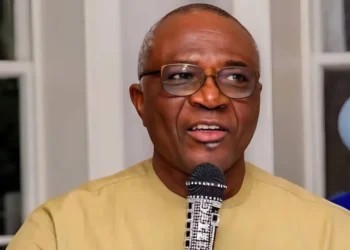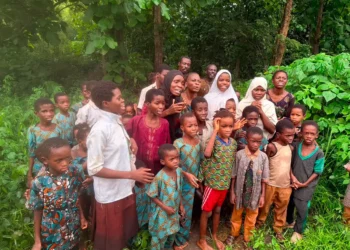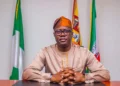
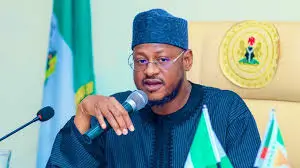
Governor Dikko Radda has reaffirmed his administration’s commitment to child welfare, inclusive education and safer learning environments in Katsina State, declaring that every policy under his government is designed with the future of children in mind.
Radda made the remarks in a statement issued on Wednesday by his Chief Press Secretary, Ibrahim Mohammed, to commemorate the 2026 National Children’s Day celebration themed, “Future Now: Promoting Inclusion for Every Nigerian Child.”
The governor described children as the “most sacred trust” of society and said his administration would continue investing in education, protection and opportunities aimed at securing a better future for young people across the state.
READ ALSO


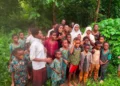
“Today belongs to our children. They are not merely the leaders of tomorrow, they are the heartbeat of today,” Radda said.
“Every policy we make, every naira we invest, and every structure we build is ultimately for them.”
The governor’s latest comments come amid renewed national concerns over the rising number of out-of-school children in northern Nigeria, insecurity affecting schools and growing calls for stronger government investment in basic education and child protection.
Katsina is among states heavily impacted by school disruptions linked to insecurity and poverty in recent years, particularly in rural communities where access to quality education remains limited.
Highlighting measures introduced by his administration, Radda pointed to the appointment of Faruq Umar Lema, a young boy from Batagarawa Local Government Area, as Special Assistant on Children’s Affairs.
According to the governor, the appointment reflects his administration’s commitment to giving children a voice in governance and policy discussions affecting their future.
Radda also disclosed that Katsina state established three multi-million naira Model and Smart Secondary Schools located in Radda, Jikamshi and Dumurkul communities.
The schools, he said, were created to provide quality education for gifted children from poor and rural backgrounds who ordinarily may not have access to modern learning facilities.
The governor said the facilities feature 24-hour electricity, internet connectivity, robotics and artificial intelligence laboratories, alongside a fully digital learning ecosystem.
He further revealed that 996 students are expected to begin studies in the schools following what he described as a transparent admission process commended by European Union diplomats and international education observers.
Radda said the administration also partnered with the Gwagware Foundation to launch a Back to School Programme aimed at reducing the number of out-of-school children in the state.
“No child in Katsina should be roaming the streets when there is a classroom waiting for them,” the governor stated.
“We are not just talking about inclusion, we are funding it, staffing it, and tracking it.”
The governor additionally recalled the recent launch of the Katsina State Policy on Safety, Security and Violence-Free Schools, introduced to protect students and teachers from insecurity, bullying and gender-based violence.
“We declared war on school violence because our children deserve peace in their classrooms,” he said.
“And we paid their examination fees because no child’s future should be held hostage by an invoice.”
Stakeholders in the education sector have repeatedly urged northern state governments to prioritise inclusive education policies and improve access to technology-driven learning, particularly in underserved rural communities.
Radda’s administration has continued to place education among its top priorities since assuming office, with increased focus on school infrastructure, security and child-centred social interventions across Katsina State.