
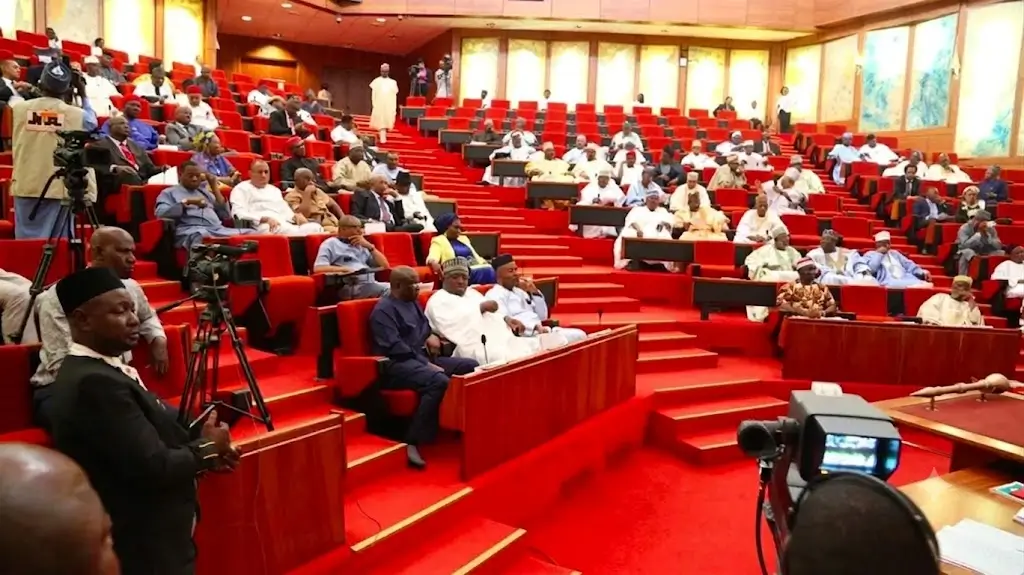
The Senate has defended the passage of the proposed State Police Bill, insisting that the initiative is a product of national consensus and a response to Nigeria’s growing security challenges rather than political considerations.
The upper chamber said the legislation emerged from years of constitutional discussions, nationwide consultations and extensive stakeholder engagements, dismissing concerns that it was designed to advance partisan interests.
The Constitution of the Federal Republic of Nigeria (Alteration) (State Police) Bill, 2026, was passed by the Senate on Wednesday after securing support from more than two-thirds of lawmakers.
READ ALSO




The development has been welcomed by many stakeholders, including the Speakers of the 36 State Houses of Assembly, although some groups have warned that state police formations could be abused by governors or worsen insecurity.
Reacting to the criticisms, Senate Leader Senator Opeyemi Bamidele said the proposal was informed by the country’s security realities and should not be viewed through a political prism.
In a statement issued on Sunday by the Directorate of Media and Public Affairs, Office of the Senate Leader, Bamidele described the legislation as “a child of necessity and not of political expediency as well as a product of national consensus and not of cynicism.”
According to him, the proposal originated from memoranda submitted to the Senate Ad-hoc Committee on the Review of the 1999 Constitution.
He said extensive consultations were held because of the sensitive nature of the issue.
Bamidele disclosed that the National Assembly engaged the executive arm of government, the Nigeria Governors’ Forum, the Conference of Speakers of State Legislatures of Nigeria, the leadership of the Nigeria Police and other stakeholders before approving the bill.
He added that participants at public hearings conducted across the six geopolitical zones in July 2025 overwhelmingly supported the establishment of state police.
“At each level of our consultation, nearly all stakeholders embraced the State Police Bill in the light of stark realities we are facing today,” he said.
Bamidele noted that recommendations from the Nigeria Police influenced several provisions in the bill, particularly those dealing with oversight, accountability and safeguards against political abuse.
He argued that the backing of the police institution demonstrates the national importance attached to the proposal as a mechanism for addressing insecurity at state and grassroots levels.
The Senate leader also highlighted the bipartisan nature of support for the bill.
According to him, lawmakers from opposition parties voted alongside members of the ruling party in support of the legislation.
“Even though the APC is the majority, there are members of opposition parties — PDP, ADC, NDC and Labour Party — that exercised their discretion in favour of the Bill, mainly in the national interest and not on parochial basis.
“In the Senate, for instance, 84 out of 109 members voted clause by clause in support of the Bill. This accounted for 77.06 per cent approval at the Senate alone,” he stated.
The debate over state police has remained one of the most contentious issues in Nigeria’s constitutional reform process, with advocates arguing that decentralised policing would strengthen local intelligence gathering and improve responses to insecurity.
Critics, however, maintain that adequate safeguards must be put in place to prevent political interference.
Bamidele urged opposition parties and stakeholders to contribute ideas that would enhance peace and stability, stressing that national security should transcend partisan interests.