
Minister of Education, Dr. Tunji Alausa, has called for renewed efforts to preserve Nigeria’s indigenous languages, describing them as essential pillars of the nation’s history, identity and cultural heritage.
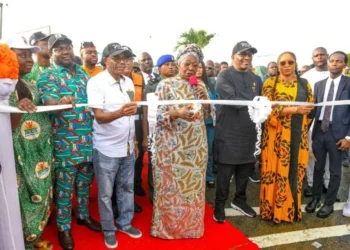
Alausa made the appeal at the unveiling of Yorùbá: A Tonal Language Homophones, a book authored by renowned Nigerian linguist and writer Bankole Awosika, at Moonstone Hall, Billings Way, Ikeja, Lagos.
The minister described the publication as a timely intellectual contribution that highlights the role of indigenous languages in national development and cultural preservation.




“The preservation of our indigenous languages is not merely about communication; it is about preserving history, identity, knowledge systems, and our collective heritage,” Alausa said.
“Publications like this deserve to be encouraged because they bridge education and culture in a meaningful way.”
According to him, protecting indigenous languages is crucial to ensuring future generations remain connected to Nigeria’s rich cultural heritage.
Awosika’s publication examines the tonal structure of the Yoruba language through homophones, offering readers practical insights into pronunciation, meanings, vowels, consonants and the cultural philosophy embedded in Yoruba expressions.
The launch attracted scholars, cultural enthusiasts and stakeholders in the education sector who described the work as a significant contribution to Yoruba language scholarship.
Also speaking at the event, the Permanent Secretary of the Lagos State Ministry of Tourism, Arts and Culture reiterated the state government’s commitment to promoting indigenous languages through education and cultural initiatives.
The official said publications centred on native languages remain valuable resources for preserving culture and passing knowledge from one generation to another.
Guests commended Awosika for his decades-long dedication to Yoruba studies, noting that the publication further strengthens efforts aimed at safeguarding one of Africa’s most vibrant linguistic traditions.
Event planner Mrs. Ebunoluwa Akinwale described the gathering as a celebration of heritage, knowledge and intellectual excellence.
Representing the family, Mr. Akinyinka Awosika thanked dignitaries, friends and supporters for identifying with the project and encouraged schools, researchers, cultural organisations and language enthusiasts to embrace the book as an educational resource.
The event featured literary discussions, goodwill messages and cultural performances celebrating Yoruba traditions.
Nigeria is home to more than 500 indigenous languages, making it one of the most linguistically diverse countries in the world.
Experts have warned, however, that many of these languages face extinction due to urbanisation, migration, the growing dominance of English and declining transmission of native languages within families.
The Federal Government’s National Policy on Education supports mother-tongue instruction in the early years of schooling, while UNESCO continues to advocate multilingual education as a means of preserving cultural heritage and indigenous knowledge.