



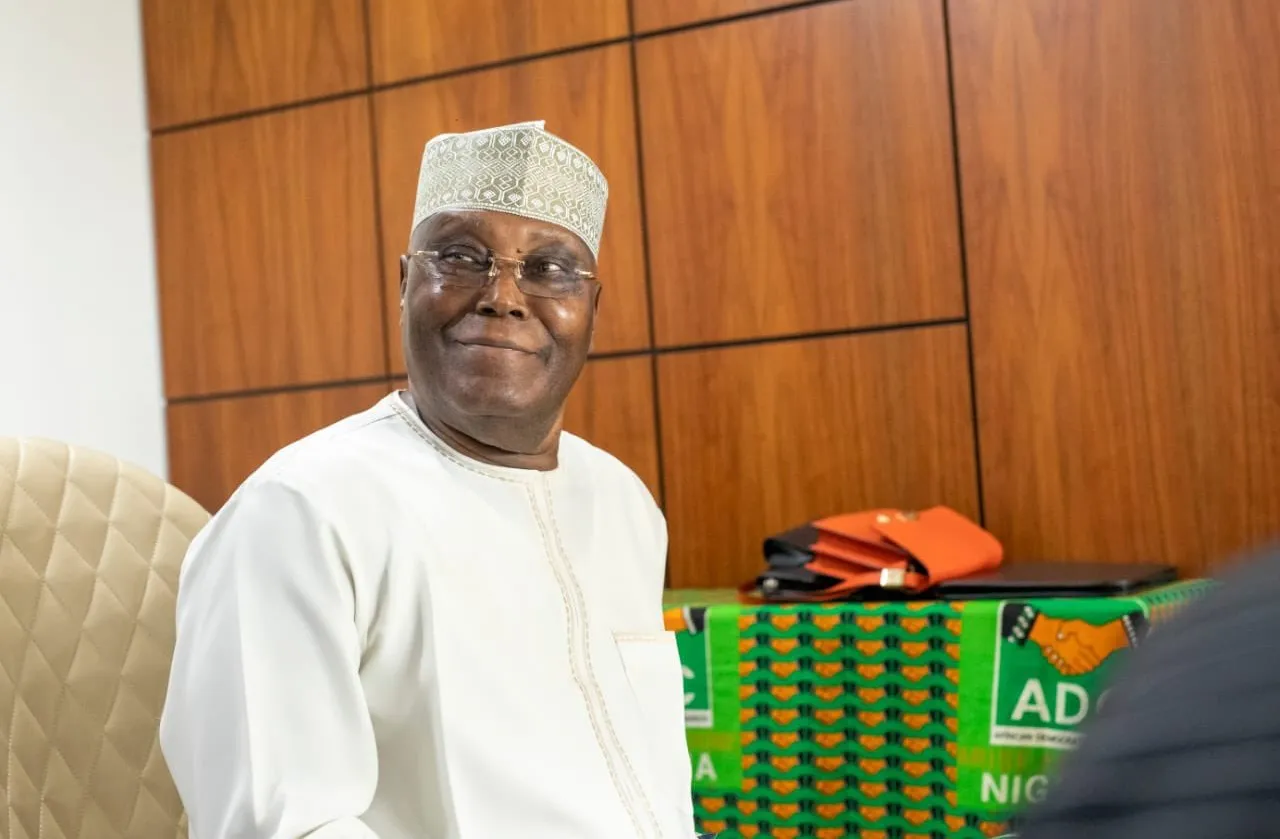
Former Vice President and African Democratic Congress (ADC) presidential candidate, Atiku Abubakar, has urged the Federal Government to shift away from an import-driven economic model, saying Nigeria’s recovery depends on boosting domestic production, reviving manufacturing and expanding exports.
In a statement issued by his Senior Special Assistant on Public Communication, Phrank Shaibu, Atiku argued that years of policies favouring consumption over production had weakened the economy and increased dependence on imports.
“Nigeria cannot borrow, import and tax its way to prosperity. For too long, we have celebrated importation while neglecting production,” he said.



The former vice president called for greater investment in agriculture, manufacturing, solid minerals, technology and value addition, insisting that Nigeria must “produce what it eats, manufacture what it uses and export what it makes.”
He said local processing of agricultural produce and raw materials would create jobs, strengthen the naira and reduce pressure on foreign exchange.
Atiku also outlined what he described as the economic priorities of an ADC administration, including improved security for farmers, affordable financing for businesses, competitive electricity and fuel pricing, lower import duties on industrial machinery, tax reforms that encourage production and sustained infrastructure investment.
He referenced the economic reforms implemented during the administration of former President Olusegun Obasanjo, saying they helped restore investor confidence and stimulate economic growth.
In a separate statement, Atiku criticised the 2026 Appropriation Act, questioning the increase in the Service-Wide Vote from N638 billion in 2025 to N12.8 trillion in 2026.
He called on the Tinubu administration to provide full details of the allocation, including its legal basis, beneficiaries and spending framework.
Atiku also urged the National Assembly to demand greater transparency, arguing that Nigerians deserve accountability over public spending.

The criticism comes as the Federal Government continues to defend its economic reforms—including fuel subsidy removal, exchange-rate liberalisation and tax reforms—as necessary measures to stabilise the economy and support long-term growth.