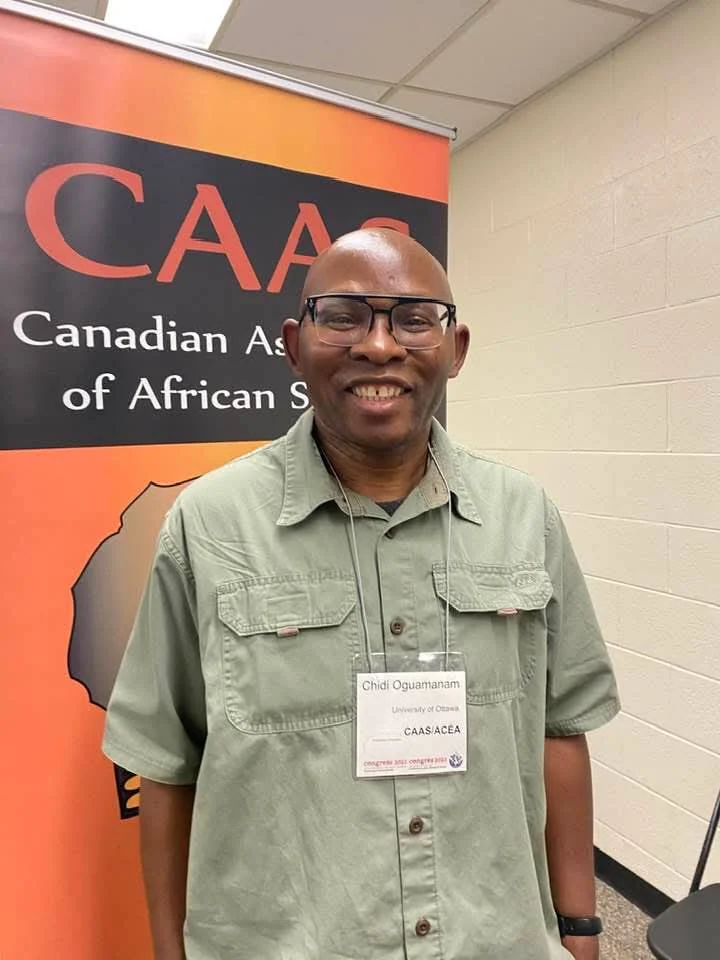
Nigerian scholar and legal academic, Prof Chidi Oguamanam, has been invited to serve on the United Nations Educational, Scientific and Cultural Organisation’s World Commission on the Ethics of Scientific Knowledge and Technology.
The reported appointment covers a four-year period from 2026 to 2029 and recognises Oguamanam’s contributions to the ethics of science and technology and related disciplines.
The invitation was reportedly conveyed in a letter from UNESCO on Saturday, with the organisation describing the commission as an independent advisory body and forum for reflection on major ethical challenges arising from advances in science and technology.



Known as COMEST, the World Commission on the Ethics of Scientific Knowledge and Technology was established by UNESCO in 1998.
The commission brings together experts from different regions and disciplines to examine ethical questions arising from scientific and technological developments, climate change and environmental challenges.
UNESCO says its membership comprises leading scholars from scientific, legal, philosophical, cultural and political disciplines, with geographical distribution and diversity of expertise considered in the appointment of members.
The commission provides guidance and recommendations to UNESCO, member states, policymakers, the scientific community, civil society and other stakeholders.
Its work has addressed a broad range of emerging ethical issues, including environmental ethics, climate change, biodiversity, emerging technologies and information-society technologies.
The body has also contributed to UNESCO’s broader normative work on science and technology ethics, including the organisation’s Recommendation on the Ethics of Artificial Intelligence adopted in 2021.
The latest areas of concern for UNESCO’s ethics bodies include rapidly developing technologies such as artificial intelligence, quantum computing, synthetic biology and space technologies.
Oguamanam’s academic work places him at the intersection of several of these fields.
He is a full professor in the Faculty of Law at the University of Ottawa and has worked extensively on intellectual property, technology and innovation, biotechnology, agricultural law, traditional knowledge, biodiversity and global knowledge governance.
His recent research has examined the digitisation and governance of traditional knowledge and the relationship between information systems, intellectual property and emerging technologies.
The reported UNESCO appointment therefore brings his expertise into an international forum where legal, scientific and policy perspectives are considered in assessing the consequences of technological advancement.
According to the supplied account, UNESCO expects Oguamanam to contribute to forthcoming reports and participate in the commission’s “horizon scanning” of emerging ethical challenges.
That role involves helping identify new issues that could require international attention as science and technology evolve.
The commission’s forthcoming work is particularly significant as governments worldwide grapple with questions around responsible artificial intelligence, data governance, biotechnology and other emerging technologies.
COMEST is scheduled to hold its 14th Extraordinary Session in September 2026, with the ethics of knowledge in the age of artificial intelligence among the areas under discussion.
Oguamanam’s reported four-year tenure would place a Nigerian academic within one of UNESCO’s key international forums for debating the ethical boundaries of scientific and technological progress.
Editorial note: UNESCO’s current public COMEST membership page has not yet listed Oguamanam, so the appointment is presented as reported from the invitation cited in the source material pending an updated official membership record.