



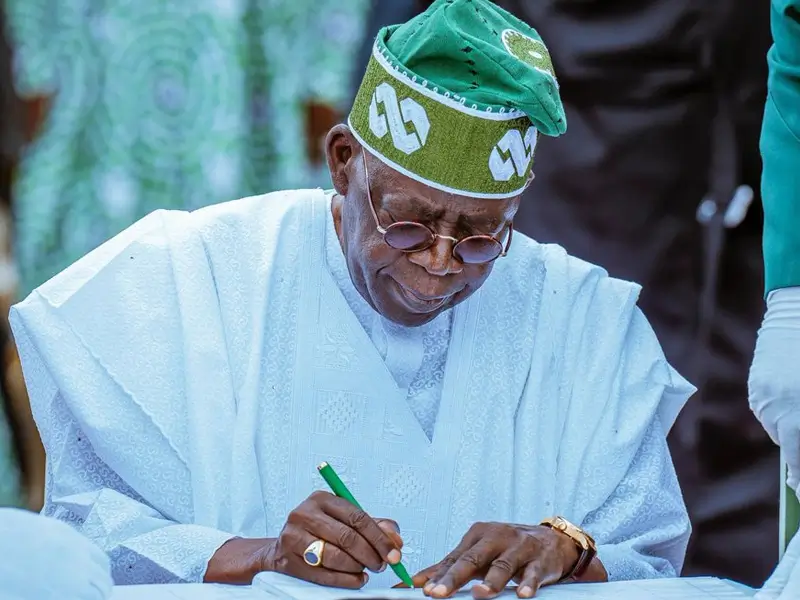
President Bola Tinubu has approved a ₦3.3 trillion payment plan to clear long-standing debts in Nigeria’s power sector, in a major move by the president, aimed at stabilizing electricity generation and improving supply across the country.
The approval was disclosed in a State House statement issued on Sunday by the President’s Special Adviser on Information and Strategy, Bayo Onanuga, who said the settlement covers debts accumulated between February 2015 and March 2025.
Following a final verification process, the Federal Government confirmed ₦3.3 trillion as the full and final settlement figure.
Implementation of the repayment framework has already commenced, with 15 power plants signing settlement agreements valued at ₦2.3 trillion.
The government said it has so far raised ₦501 billion to fund the first phase of the intervention, out of which ₦223 billion has already been disbursed, while additional payments are ongoing.
The latest intervention is expected to improve liquidity across the power value chain, particularly for generation companies and gas suppliers whose operations have been affected by years of unpaid obligations.
In the statement, Olu Arowolo-Verheijen, Special Adviser to the President on Energy, said the programme goes beyond debt settlement and is central to the administration’s wider electricity reform agenda.
“This programme is not just about settling legacy debts. It is about restoring confidence across the power sector, ensuring gas suppliers are paid, power plants can keep running, and the system begins to work more reliably,” she said.
She added that the Federal Government is also pushing reforms around metering and service-based tariffs to align electricity billing with service quality.
According to her, the administration is prioritizing power supply to homes, industries and small businesses as part of efforts to support economic growth and job creation.

“The goal is simple: more reliable power for homes, stronger support for businesses, and a system that works better for all Nigerians,” she added.
President Tinubu also commended stakeholders involved in the reform programme and directed that the next phase, tagged Series II, should commence within the current quarter.
The development comes amid renewed concerns over persistent grid instability, weak distribution infrastructure and liquidity challenges in Nigeria’s electricity sector.
Analysts say the debt settlement could help restore investor confidence and improve generation capacity if payments are sustained.