
The All Progressives Congress(APC) and the Accord Party have come under scrutiny over allegations that more than N100bn was deployed in the August 15 Osun governorship election.
The alleged expenditure, contained in an investigation published by Saturday PUNCH, reportedly covered vote buying, party agents, canvassers, security personnel, electoral officers and other election logistics across the state’s 3,763 polling units and 332 wards.
If established, the spending would be far above the N3bn legal ceiling for a governorship candidate under the Electoral Act 2026.

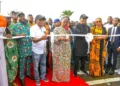
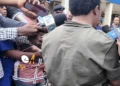
The controversy followed Governor Ademola Adeleke’s victory over APC candidate Bola Oyebamiji. Adeleke, who contested on the Accord platform, polled 511,067 votes against Oyebamiji’s 444,815, winning by 66,252 votes. He secured 19 local government areas, while the APC candidate won 11.
The investigation alleged that APC polling-unit agents received N100,000 each, while Accord agents were paid N20,000, alongside payments to agents of other parties recruited by Accord.
Based on 3,763 polling units, the reported payments would put the combined APC and Accord agent bill at about N752.6m.
The investigation further alleged that APC ward collation officers received N120,000 each, while security personnel were allegedly paid by the APC, Accord and the state government.
The biggest figures, however, relate to alleged vote buying.
An APC source claimed the party’s template involved N40,000 for targeted voters, with the money reportedly distributed before and on election day. The investigation estimated the party’s alleged vote-buying expenditure at N22.578bn.
For Accord, the report estimated that 150 voters per polling unit were targeted at N20,000 each, translating to N3m per polling unit or about N11.289bn across the state.

Both parties were also alleged to have deployed 30 canvassers per polling unit, with each receiving N10,000. That would amount to about N1.129bn for each party if the reported arrangement applied across all polling units.
Some individual cases were said to involve significantly larger sums, including allegations that voters received N70,000 and N80,000 at separate polling units.
The claims, however, have not gone unchallenged.
Accord campaign spokesperson Pelumi Olajengbesi denied that the party engaged in vote buying, saying, “Accord party did not distribute, share money or buy a single vote.”
The APC also rejected the allegations, with its Osun spokesperson, Kola Olabisi, demanding evidence to substantiate claims of massive vote buying.
The spending controversy has nevertheless intensified calls for an investigation into campaign finance and electoral inducement.
SERAP has urged INEC, the EFCC and ICPC to investigate alleged vote buying, illegal election financing, violence and other electoral offences linked to the election.
The Electoral Act 2026 places the governorship spending limit at N3bn, making the allegations potentially significant if financial records eventually establish that either candidate exceeded the threshold.
The dispute also places renewed attention on the financial regulation of Nigeria’s political parties as the country moves towards the 2027 general elections.