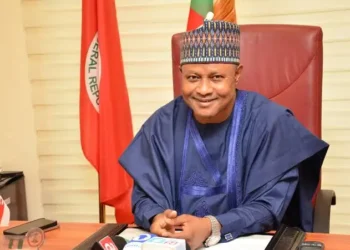




ABUJA, NIGERIA — Former Vice President Atiku Abubakar has linked Nigeria’s worsening child malnutrition crisis directly to escalating food, fuel, and transportation costs, warning that economic pressures are severely stripping households of their ability to feed young children.
In a statement issued on Thursday by his Senior Special Assistant on Public Communication, Phrank Shaibu, the presidential candidate of the African Democratic Congress (ADC) described the country’s malnutrition numbers as the most devastating outcome of the ongoing cost-of-living crisis.
“Behind every statistic is a Nigerian mother struggling to decide what her children can eat, how much they can eat, and how often they can eat,” Atiku stated. “A child does not understand inflation figures. A child only knows whether there is food on the table.”




CHILD MALNUTRITION & ECONOMIC INDICATORS
┌──────────────────────────────────────┬────────────────────────┐
│ Metric / Indicator                   │ Figure                 │
├──────────────────────────────────────┼────────────────────────┤
│ Stunted Children Under 5 (National)  │ 41.1%                  │
│ Severely Stunted Children (National) │ 19.2%                  │
│ Stunted Children (North-West Region) │ 58.2%                  │
│ Severe Acute Malnutrition Cases      │ ~2,000,000             │
│ Treatment Access Rate                │ 2 out of 10 children   │
│ Food Inflation Rate (NBS)            │ 19.57%                 │
└──────────────────────────────────────┴────────────────────────┘
The former Vice President cited data showing that 41.1 per cent of Nigerian children under five suffer from stunting, while 19.2 per cent are severely stunted. In the North-West geopolitical zone, the stunting rate spikes to 58.2 per cent. Furthermore, recent findings from the Nutrition Society of Nigeria reveal that nearly two million children suffer from severe acute malnutrition, with only about 20 per cent receiving medical treatment.
Atiku emphasized that high petrol prices have created a ripple effect across the nation’s supply chain, directly increasing the cost of moving food from rural farms to urban markets. The National Bureau of Statistics (NBS) currently reports food inflation at 19.57 per cent, while World Bank reports highlight that lower-income households spend as much as 70 per cent of their earnings on food.
“When fuel becomes expensive, transporting tomatoes from the farm becomes expensive. Taking rice to the market becomes expensive,” Atiku added. “And eventually, the additional cost arrives at the dinner table.”
To counter these systemic cost pressures, Atiku reiterated his economic proposal for a targeted “production subsidy” in the petroleum sector. Unlike previous consumption subsidies on imported fuel, his plan provides financial incentives exclusively tied to crude oil refined within Nigeria.
“My position is straightforward: support what Nigeria produces and refines, lower domestic production costs, and ensure that the benefit reaches the Nigerian consumer,” he explained. “This is not an import subsidy. If you do not refine in Nigeria, you do not qualify. The subsidy follows the barrel refined in Nigeria.”
He noted that the intervention would be capped, transparently budgeted, and independently audited to lower logistics expenses for farmers, traders, and commercial transporters.
The ADC candidate’s critique comes amidst lingering public debates over the economic reforms initiated in 2023, including petrol subsidy removal and foreign exchange unification. While the World Bank notes that these policy shifts aimed at macroeconomic stability, it acknowledged that they triggered immediate, severe pressures on household purchasing power.
Atiku urged the Federal Government to scale up funding for emergency child nutrition programs, expand access to therapeutic treatment, and prioritize social welfare interventions.
“We cannot build a strong country on the bodies of hungry children,” Atiku warned. “Economic policy must ultimately answer a very simple question: Can the ordinary Nigerian afford to live?”