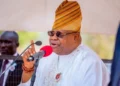
Former President Olusegun Obasanjo and Bayelsa State Governor Douye Diri have called for an increase in the 13 per cent derivation allocation to oil-producing states, arguing that the Niger Delta deserves a greater share of the wealth generated from its natural resources.
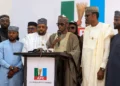
The two leaders made the call on Monday at the inauguration of the Crude Distillation Unit of the $1bn Azikel Refinery at Obunagha, in Yenagoa Local Government Area of Bayelsa State. Obasanjo also challenged the refinery’s promoter, Dr Azibapu Eruani, to complete the facility within 12 months.
Diri said oil-producing communities had endured decades of environmental and social challenges associated with petroleum extraction without receiving benefits commensurate with the resources taken from their territories.


The governor argued that the region’s agitation for resource control was rooted in the perception that other parts of the country had benefited more from its petroleum wealth.
“As people of the Ijaw ethnic nationality, we have protested and fought because we feel that God gave us something in our land, but we are not benefiting from it. Others are benefiting and see us as second-class citizens,” Diri said.
He criticised the existing framework for resource ownership and revenue allocation, particularly the Land Use Act and the derivation formula, insisting that oil-producing states should have a greater role in decisions concerning their resources.
“The Land Use Act is unfair. Surface resources belong to states, but what lies underneath belongs to the Federal Government. That law is obnoxious and not good for any just society,” he said.
Diri added that the Niger Delta was not seeking to appropriate all the revenue generated from petroleum production but wanted a greater role in determining how the resources were managed.
“We do not want to take all to ourselves. We just want to be co-players in determining how it is done. Thirteen per cent is not enough for the states,” the governor said.
Obasanjo backs higher derivation
Obasanjo endorsed the governor’s position, describing the existing 13 per cent derivation allocation as a starting point rather than a final settlement.
“You are right that the states and oil-producing communities have not got a fair deal so far. Thirteen per cent is the beginning. You can continue to talk,” the former president said.
He also urged oil-producing states to demonstrate prudent management of the funds they currently receive, commending Diri for supporting development projects in Bayelsa.

The debate over derivation is part of the wider discussion about how Nigeria distributes revenue from natural resources. Section 162(2) of the 1999 Constitution provides for the allocation of at least 13 per cent of revenue accruing directly from natural resources to the states from which the revenue is derived.
The provision is intended to recognise the contribution of resource-producing states, although disputes over the adequacy of the allocation and the distribution of the benefits of oil production have persisted.
$1bn refinery targets local value addition
The event also highlighted efforts to expand domestic petroleum processing through the Azikel Refinery, owned by Azikel Petroleum, a subsidiary of the Azikel Group.
The facility is designed to produce 2.5 million litres of petrol and two million litres of diesel daily, alongside other refined petroleum products, when completed and operational. The Crude Distillation Unit is a key component of the refinery, separating crude oil into different fractions for further processing.
Obasanjo commended Eruani for sustaining the project since the former president laid its foundation stone eight years ago.
He urged the industrialist to complete the refinery within the next 12 months, expressing hope that it would be operational before his 90th birthday in March 2027.
“My challenge to you, Dr Eruani, is to ensure that the refinery is completed within the next 12 months. With this done, you can even double the capacity,” he said.
Eruani described the project as an attempt to transform the Niger Delta from a region primarily associated with crude oil extraction and export into a centre for refining and industrial development.
He thanked President Bola Tinubu, Diri, the African Finance Corporation, the African Export-Import Bank and the project’s technical partners for their support.
Diri also urged young people in Bayelsa to acquire technical and vocational skills to prepare for employment opportunities expected to emerge from the refinery and associated industries.
He called on oil companies operating around Gbarain and Obunagha to rehabilitate the road leading to the facility, saying improved infrastructure would support industrial activity.
If completed and operated as planned, the refinery could create jobs, stimulate supporting businesses and increase the amount of petroleum processing undertaken within the Niger Delta. Its eventual impact will depend on completion, commissioning and sustained commercial operations.