


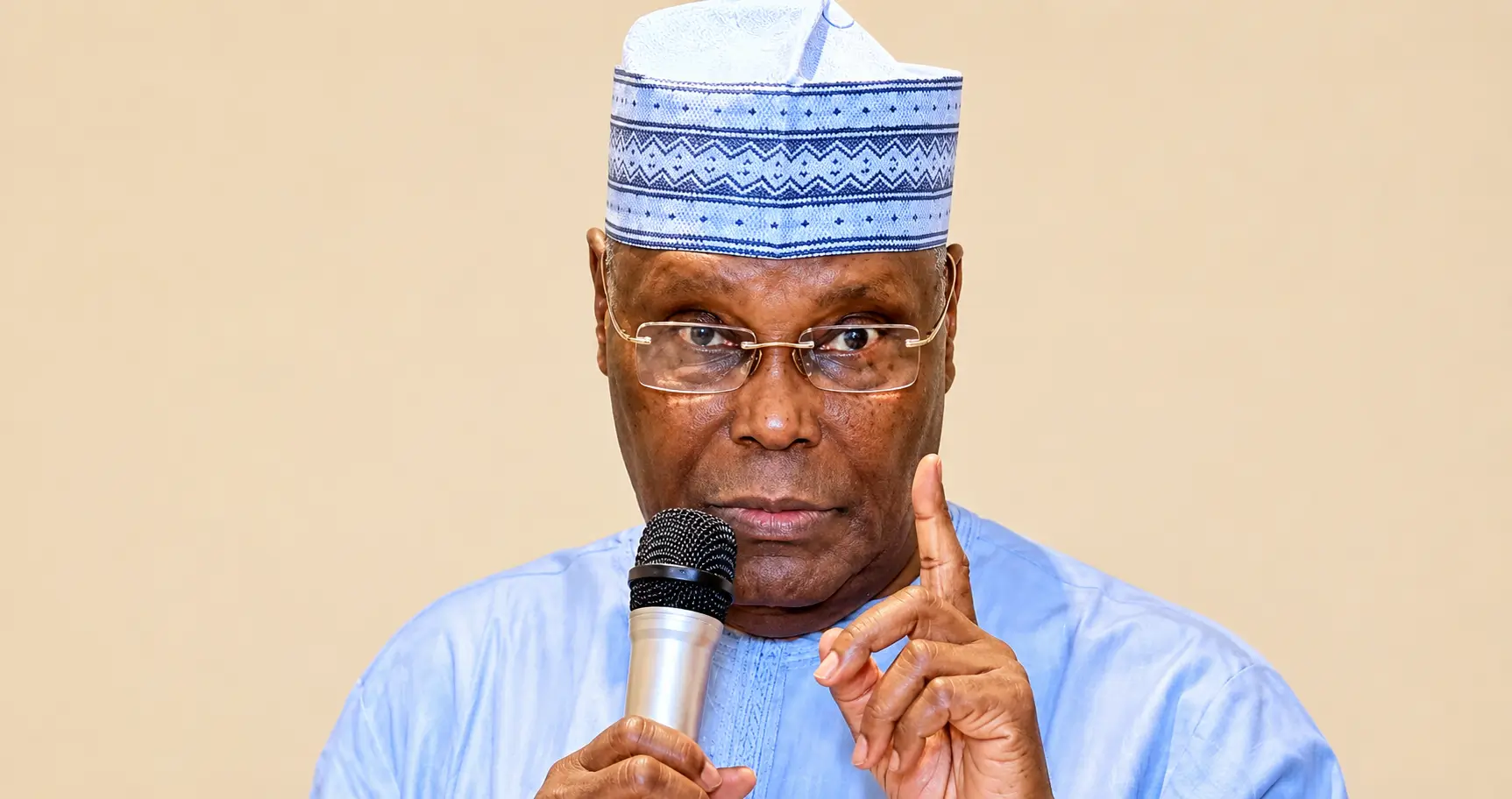
Several leaders of the African Democratic Congress (ADC) in the South-West have expressed dissatisfaction with former Vice-President Atiku Abubakar over his alleged failure to involve the party’s structures in his political activities ahead of the 2027 presidential election.
The aggrieved members, including some governorship candidates, state chairmen and other party officials, accused Atiku of relying on personal friends and political allies to coordinate his activities in the region while leaving established party structures on the sidelines.
The development has reportedly generated discontent within the party and contributed to the slow pace of mobilisation for Atiku across the South-West, a region considered a stronghold of President Bola Tinubu.
Atiku’s alleged exclusion of party leaders was reportedly discussed at a meeting involving ADC governorship candidates and other stakeholders in Ibadan, Oyo State, on September 4.
At the meeting, the participants reportedly complained to the party’s National Secretary, Rauf Aregbesola, demanding clarification on whether Atiku intended to work with the existing party structures or continue relying on his personal political associates.

One of the governorship candidates who attended the meeting told Sunday PUNCH that almost all the leaders present expressed concerns about their exclusion.
According to the candidate, who spoke anonymously, the stakeholders insisted that the party structures responsible for producing its governorship, National Assembly and state assembly candidates should be recognised in Atiku’s political engagements.
“We told the national secretariat, through Aregbesola, that Atiku must respect the party structure and channel his campaign through it.
“We rejected his practice of using his friends and loyalists to run political activities that the party should ordinarily have been engaged in,” the candidate said.
An ADC leader who attended the meeting disclosed that Atiku subsequently held a virtual meeting with South-West stakeholders on September 5, promising to address their grievances.
The former vice-president reportedly requested five names from each state for appointment into his campaign committee.
However, some party insiders claimed that little had changed since the intervention.
An ADC official also alleged that Atiku had refused to provide financial assistance to party officials, citing a September 17 meeting in Abuja attended by chairmen from the six South-West states.
The official claimed the chairmen were disappointed that the presidential candidate did not provide transport allowances for their trip.
An ADC House of Assembly candidate in Ekiti State similarly complained that Atiku’s campaign lacked visibility in the region because party members had not been adequately involved.
In Lagos, the Chairman of ADC Local Government Chairmen, Adewole Ijaogbomo, accused some individuals of taking over Atiku’s political activities for personal interests, urging the presidential candidate to address the situation.
However, the South-West ADC Chairman, Akin Omole, defended Atiku, describing the party as a coalition involving politicians with different political backgrounds and longstanding relationships.
He acknowledged the Ibadan meeting but said it was primarily organised to discuss strategies for securing victory in the region.
Omole also dismissed expectations that Atiku should personally shoulder the financial responsibilities of party officials, insisting that the ADC should develop independent funding structures.
Similarly, the Lagos State ADC Chairman, George Ashiru, argued that the absence of state campaign committees did not amount to the marginalisation of party executives.
He explained that Atiku had yet to announce his state campaign coordinators, adding that campaign councils were strategic organisations that did not necessarily have to comprise party executives.
Meanwhile, the Osun State ADC chapter dismissed speculation about a strained relationship between Atiku and Aregbesola following the omission of the former Osun governor from the presidential campaign council announced on September 25.
The party’s Publicity Secretary, Oluwaseun Abosede, maintained that there was no disagreement between the two political figures.
He said Aregbesola and other South-West leaders were implementing a political roadmap involving consultations, relationship-building and efforts to strengthen the party’s structures across the region.
Atiku’s Director of Strategic Communication, Phrank Shaibu, also rejected the allegations, describing claims that the presidential candidate had sidelined party executives as untrue.
Shaibu argued that state campaign coordinators and their respective campaign councils had not been announced or inaugurated, making claims of exclusion premature.
He maintained that Atiku respected the party’s leadership and structures, describing suggestions that the former vice-president was bypassing established party channels as opposition speculation.
The disagreements come as the ADC prepares to strengthen its political presence in the South-West, where Tinubu secured victories in Ogun, Oyo, Ekiti and Ondo states during the 2023 presidential election.
Atiku, who contested under the Peoples Democratic Party in 2023, won Osun, while Labour Party candidate Peter Obi secured victory in Lagos.
With the South-West expected to play a significant role in the 2027 presidential contest, the ability of the ADC leadership to reconcile internal differences and coordinate its political structures could prove important to the party’s electoral ambitions.