The Miyetti Allah Cattle Breeders Association of Nigeria (MACBAN) has declared support for President Bola Tinubu’s re-election bid in 2027, citing the establishment of the Federal Ministry of Livestock Development as a major step towards addressing longstanding challenges in the sector.
The association’s National President, Baba Othman Ngelzarma, said pastoralists, cattle breeders and other livestock stakeholders across the country were prepared to support Tinubu for a second term in appreciation of his administration’s recognition of the economic importance of livestock production.
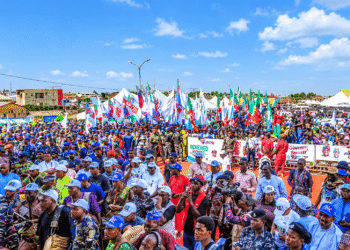
Ngelzarma spoke at a rally in Kaduna organised by the Fulbe APC Forum and Tinubu Yeso-Yeso Political Forum (TYPF), in collaboration with the Coalition of Pastoralists and Traders Associations and the Amalgamated Union of Livestock Dealers, Butchers and other stakeholders.




The rally, themed “United for Inclusion, Representation and Prosperity”, attracted Fulani organisations, pastoralists, cattle breeders, livestock dealers, butchers, processors and political stakeholders from different parts of the country.
Ngelzarma said the creation of the livestock ministry in July 2024 fulfilled a longstanding demand by pastoralists and livestock operators for a dedicated government institution to address challenges confronting the industry.
“We are here today to extend our appreciation and support to the administration of President Tinubu.
“The creation of the livestock ministry is something we have been advocating for and looking forward to for decades,” he said.
He added that the initiative had encouraged some state governments to establish similar institutions to coordinate livestock development, describing the development as an opportunity to address persistent challenges in the industry.
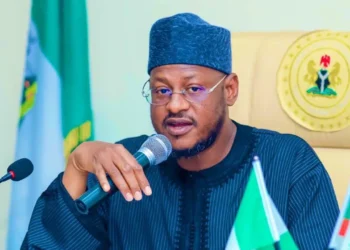
The Minister of Livestock Development, Idi Mukhtar Maiha, urged pastoralists, livestock farmers and other stakeholders to take advantage of government programmes to improve productivity, expand their businesses and increase their earnings.
Maiha identified inadequate veterinary services, limited access to pasture and water, high feed costs, poor market infrastructure and low productivity as some of the factors that had hindered the growth of Nigeria’s livestock industry.
He said Nigeria had an estimated 58 million cattle, 124 million goats, 70 million sheep, 9.3 million pigs, 3.2 million donkeys, 700,000 camels and 300 million birds, describing the figures as significant economic opportunities that could be harnessed through deliberate investments and improved management.
The minister disclosed that seven veterinary hospitals had been completed and equipped under a World Bank-supported programme, while additional facilities were at various stages of completion.
He said the Federal Government planned to expand veterinary services across the 36 states and the Federal Capital Territory, with primary veterinary facilities also envisaged for the 774 local government areas.
Maiha challenged livestock associations to work with the ministry and state governments within three months to identify challenges confronting their members and develop practical proposals for investment and improved service delivery.
The minister also said the government was working to strengthen Nigeria’s participation in regional and international livestock trade through improved animal health standards, traceability systems and market infrastructure.
Addressing recurring tensions between farmers and pastoralists, Maiha stressed the need for peaceful coexistence, dialogue and responsible management of land and water resources.
He noted that sustainable livestock development depended on harmonious relationships between farming and pastoral communities.
He also encouraged young Nigerians to embrace livestock production as a viable business capable of generating employment and wealth.
In his remarks, Kaduna State Governor Uba Sani, represented by the Commissioner for Agriculture, Murtala Dabo, said the state government was complementing the Federal Government’s initiative through investments in livestock infrastructure and services.
Dabo disclosed that Kaduna State’s budgetary allocation to livestock development had increased from N1.48bn in 2023 to more than N100bn in 2026.
He said the state government had provided solar-powered water facilities in pastoralist communities, expanded livestock vaccination programmes and introduced artificial insemination services to improve animal productivity.
According to him, improved feeding and breeding practices had increased milk production among some cattle from about 1.5 litres to between three and four litres.
He added that the government was upgrading slaughter facilities and improving infrastructure across the livestock value chain to boost production, processing and marketing.
The political endorsement comes as Tinubu’s supporters and political organisations intensify mobilisation efforts ahead of the 2027 presidential election.