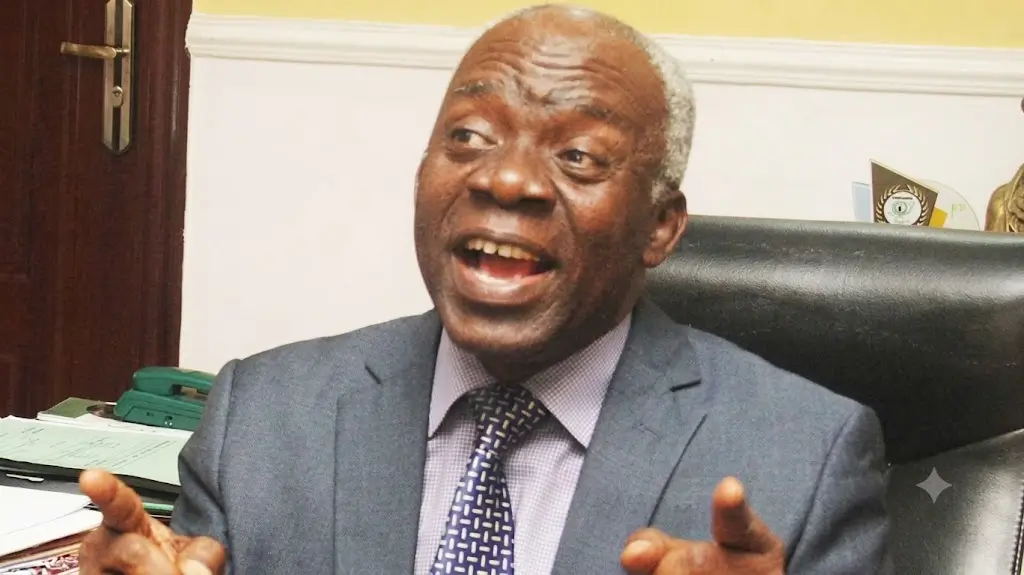
Human rights lawyer and Senior Advocate of Nigeria, Femi Falana (SAN), has said the Federal Government is legally bound to provide cash transfers, grants and other social protection interventions to poor and vulnerable Nigerians under the National Social Investment Programme Agency (NSIPA) Act, 2023.
Falana warned that the Federal Government could face legal action if it fails to adequately fund poverty reduction programmes in the 2026 budget.
In a statement issued on Sunday, the senior advocate said discussions on poverty alleviation should focus on the government’s statutory obligation to support vulnerable citizens rather than treating social interventions as acts of generosity.




“It has become necessary to direct the attention of the Nigerian people to the National Social Investment Programme Agency (Establishment) Act, 2023, which has imposed a legal obligation on the Federal Government to reduce poverty and unemployment,” he said.
Falana maintained that assistance to poor households should no longer be viewed as politically motivated handouts.
“Giving grants to poor and vulnerable people in society is no longer borne out of political interests. It has become the government’s legal obligation to citizens, not acts of charity or generosity,” he added.
His comments come amid ongoing conversations about poverty and economic hardship following remarks by First Lady Oluremi Tinubu encouraging Nigerians to embrace small businesses such as selling akara, roasting corn and producing kulikuli as alternative sources of livelihood.
The First Lady had also said her empowerment programmes focus on grants rather than loans to enable beneficiaries to establish businesses.
Falana, however, argued that beyond individual initiatives, the central issue remains the government’s constitutional responsibility to guarantee social welfare.
According to him, the National Social Investment Programme Agency Act established a legal framework for coordinated poverty reduction efforts through four flagship programmes.
These include the N-Power Programme, the Conditional Cash Transfer scheme for vulnerable households, the Government Enterprise and Empowerment Programme comprising TraderMoni, MarketMoni and FarmerMoni, and the National Home-Grown School Feeding Programme.

He noted that the law requires collaboration between the federal agency and state social investment agencies to implement social protection initiatives nationwide.
Falana also recalled that allegations of financial irregularities in previous social intervention programmes prompted President Bola Tinubu to seek amendments aimed at transferring oversight from the Ministry of Humanitarian Affairs and Poverty Reduction to the Presidency.
The proposed reform, he said, is intended to improve transparency, strengthen accountability and ensure beneficiaries are verified through the National Social Register.
While the amendment bill remains before the National Assembly, Falana urged the Ministry of Humanitarian Affairs and Poverty Reduction to provide regular updates on the implementation of social welfare initiatives.
He further called on Nigerians to demand periodic reports from state social investment agencies on measures being taken to support vulnerable households.
Quoting available data, Falana said the National Bureau of Statistics estimates that about 133 million Nigerians are multidimensionally poor, while projections by PwC Nigeria suggest the number could rise to 141 million people.
He warned that failure to provide adequate funding for social intervention programmes in 2026 would compel ASCAB to seek judicial intervention.
“The refusal of the Federal Government to fund poverty reduction programmes in 2026 in line with the provisions of the National Social Investment Programme Agency Act will be challenged by ASCAB at the Federal High Court,” he said.