


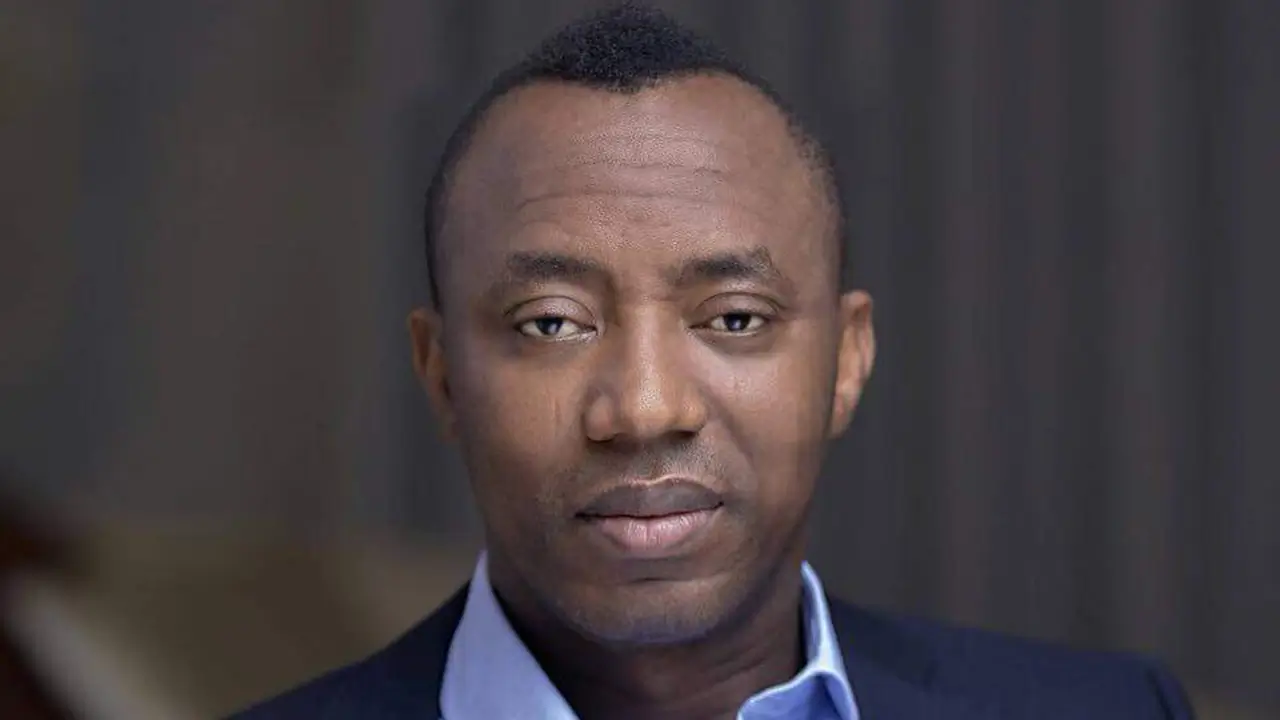
African Action Congress presidential candidate and activist, Omoyele Sowore, has stirred fresh debate over Nigeria’s security architecture after declaring that a drone would serve as his minister of defence if he became president.
Sowore made the remark during a live interview on Arise Television on Thursday while outlining what he described as a technology-driven strategy to combat terrorism, banditry and violent crime across the country.
“If I become Nigeria’s president tomorrow, my minister of defence will be a drone. That’s how much I believe in technology,” the former presidential candidate said.



The statement immediately triggered reactions online, with supporters describing the comment as symbolic of a modern warfare approach, while critics questioned its practicality and political messaging.
Explaining his position, Sowore argued that Nigeria’s prolonged insecurity crisis could not be solved through conventional tactics alone, insisting that technology, artificial intelligence and real-time surveillance systems should become central to national defence operations.
According to him, the country’s military and security agencies require not only sophisticated equipment but also disciplined leadership willing to confront insecurity directly.
“We have to have honest leaders and supervisors and officers who are not staying in Abuja fighting over land but actually fighting wars, generals who can actually strategise and do what is right,” he said.
The AAC flagbearer also criticised the role of the police in Nigeria’s internal security system, accusing officers of abandoning core policing responsibilities.
“A police force that can carry out internal security of the country, not escorting people or arresting people for insulting others on Facebook,” he stated.

Sowore described a future security structure built around drones, command-and-control systems and artificial intelligence capable of tracking criminal networks across the country.
“I’m just going to have a control centre where people sit down and track terrorists and liquidate them,” he said.
When the interviewer suggested that artificial intelligence could effectively become his defence minister under such a system, Sowore responded affirmatively.
“That’s part of it. And that drone will fly everywhere,” he added.
Despite his strong emphasis on military technology, the activist maintained that insecurity in Nigeria was also tied to social and economic conditions affecting millions of young people.
He argued that long-term peace would depend on job creation, access to education and economic opportunities capable of discouraging recruitment into violent groups.
“Ultimately, you must create a society where people can find jobs and go to school, and not be willing to take up arms,” he said.
The comments come as insecurity remains one of the dominant issues shaping Nigeria’s political discourse ahead of the 2027 general election.
Armed attacks, kidnappings and terrorism-related violence continue to affect several parts of the country despite repeated military operations and increased defence spending by successive administrations.
Nigeria has in recent years expanded its deployment of drones and surveillance technology in military operations, particularly in the North-East and North-West regions battling insurgency and banditry.
Sowore had earlier floated the same idea during an interview on Channels Television in January 2026, where he first suggested that technology and autonomous systems should drive Nigeria’s future defence strategy.
Political observers say the latest remarks reflect growing conversations globally around artificial intelligence, drone warfare and digital security systems, although questions remain about implementation, oversight and accountability in Nigeria’s security sector.