
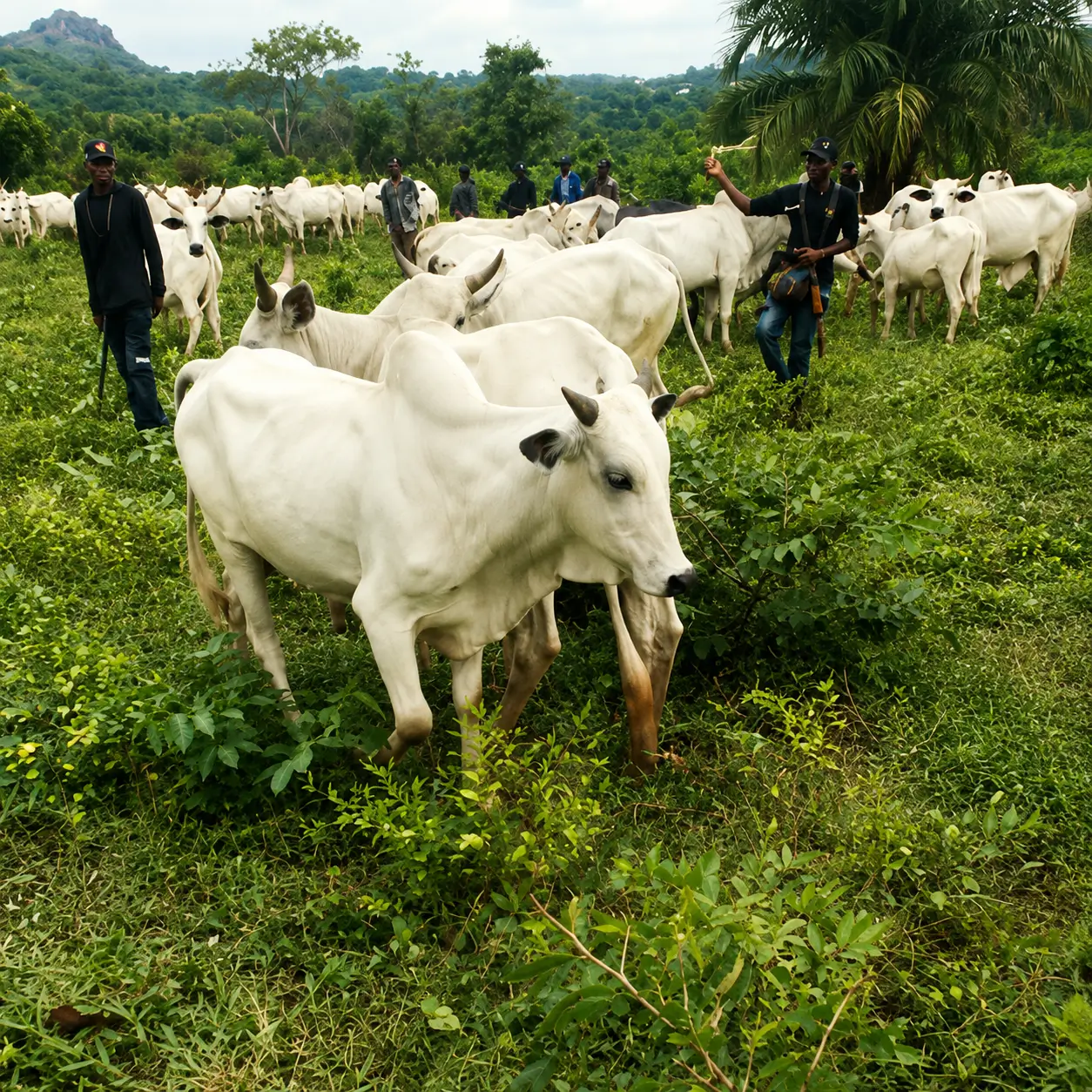
Security agencies in Kogi State have recovered about 1,000 rustled livestock in a series of coordinated operations targeting cattle-rustling syndicates and remnants of the criminal network of slain bandit leader Kachalla Ibrahim Battijo.
The latest operation, involving the military, intelligence agencies, police operatives, local vigilantes and hunters, is being viewed by authorities as another major breakthrough in ongoing efforts to disrupt criminal logistics networks across the North-Central region.
Kogi State Commissioner for Information and Communications, Kingsley Femi Fanwo, disclosed the development in a statement issued on Saturday, saying the recovered animals included more than 200 linked directly to Battijo’s criminal network.




According to the commissioner, the remaining livestock were recovered from armed groups engaged in cattle rustling within Kogi and neighbouring states.
Authorities said intelligence reports indicated that the syndicates intended to transport the stolen animals through Kogi for sale, with proceeds expected to finance the purchase of weapons, food supplies and other operational logistics.
Fanwo explained that credible intelligence sharing among security agencies enabled operatives to track the movement of the suspects and intercept them before the livestock could be sold.
The operation was carried out jointly by the 12 Brigade of the Nigerian Army, Hybrid Forces from the Office of the National Security Adviser, the Department of State Services, the Nigeria Police Force, local vigilantes and hunters.
Security operatives reportedly engaged the criminal elements in gun battles at various locations, forcing several suspects to abandon the rustled animals while attempting to escape.
“Acting swiftly on the intelligence, security operatives engaged the bandits in fierce gun battles at different locations. Several of the criminals were neutralised, while others fled with varying degrees of bullet wounds, abandoning the rustled livestock in their desperate attempt to escape the superior firepower of the security forces. Those who escaped are currently being trailed,” Fanwo said.
The commissioner noted that remnants of Battijo’s network had become increasingly vulnerable following the killing of the notorious bandit leader, as sustained offensives continue to weaken their operational capabilities.
“I can confirm that many of the flies that chose to follow the corpse to the grave have now been buried alongside it, while those who escaped with varying degrees of bullet wounds are being actively tracked by our security forces. They will not escape justice,” he added.
The recovered livestock are currently being kept in a secured facility in Kabba/Bunu Local Government Area pending identification and verification of their rightful owners.

State authorities said arrangements were underway to facilitate the return of the animals to affected communities and individuals.
The operation comes amid heightened efforts by Kogi State to curb trans-border crimes, cattle rustling and bandit activities along major corridors linking the North-West, North-Central and South-West regions.
Kogi has in recent years intensified collaboration with federal security institutions due to its strategic location connecting several states and serving as a transit route frequently exploited by criminal groups.
Fanwo commended the Office of the National Security Adviser, the Chief of Army Staff, the Inspector-General of Police, the Director-General of the Department of State Services, security personnel, vigilante groups and hunters for what he described as exceptional professionalism and cooperation.
“Our feet will remain firmly on the pedals until we rid Kogi State of criminal elements and restore the confidence of our people to sleep with both eyes closed,” he said.
He also reaffirmed the commitment of the administration to sustaining security operations, noting that the state would continue leveraging federal support under President Bola Tinubu’s security agenda to safeguard lives and property.
Residents were urged to continue providing timely and credible information to security agencies, with assurances that intelligence supplied by members of the public would be treated confidentially.