




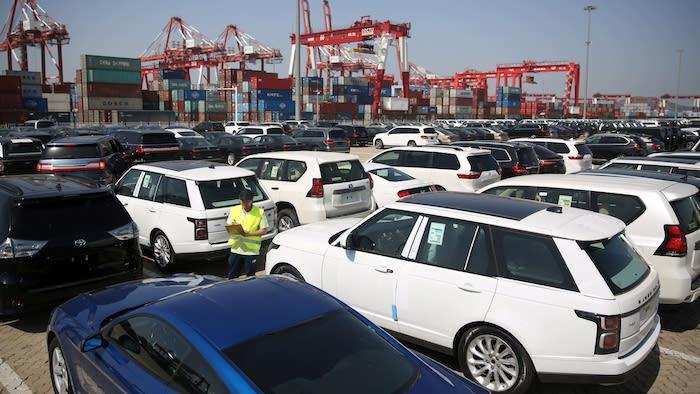
Nigeria’s importation of used vehicles surged by 91.92% to N249.84 billion in the first quarter of 2026, even as the federal government rolled out a stricter certification regime designed to tighten controls on vehicle imports and curb the influx of substandard automobiles.
Data from the National Bureau of Statistics’ Foreign Trade in Goods Statistics for Q1 2026 showed that imports of used vehicles with diesel or semi-diesel engines above 2,500cc rose sharply from N113.36 billion recorded in the corresponding period of 2025 to N249.84 billion in the first three months of this year.
The figures highlight sustained demand for imported vehicles, commonly known as “Tokunbo” cars, despite economic pressures and new regulatory requirements introduced by the government.




An analysis of the trade data showed that the United States remained Nigeria’s largest source of used vehicle imports during the period, accounting for N217.56 billion worth of shipments, representing about 87.1 percent of the total value imported in the quarter.
The United Arab Emirates followed with N10.32 billion, while Canada accounted for N8.72 billion. Imports from Italy stood at N6.64 billion, while China supplied vehicles valued at N6.60 billion.
Compared with the same period in 2025, imports from the United States increased by 132.67 per cent, rising from N93.51 billion to N217.56 billion. Imports from the UAE also grew by 21.65 percent, from N8.48 billion to N10.32 billion.
The latest figures suggest that the United States has further strengthened its grip on Nigeria’s used vehicle market. In Q1 2026, the value of vehicles imported from the US was about 6.7 times the combined value of imports from all other countries, compared with 4.7 times in the corresponding period of last year.
The NBS report also showed that imports of passenger motor cars under the Broad Economic Categories classification climbed by 145.94 per cent year-on-year to N552.34 billion in Q1 2026 from N224.58 billion recorded in the same period of 2025.
The rise in vehicle imports comes barely months after the federal government launched the Standard Organisation of Nigeria–National Automotive Design and Development Council Vehicle Conformity Assessment Programme, a new framework that makes certification compulsory for all imported vehicles.
The programme, unveiled in Abuja on March 31, requires all new and used vehicles entering Nigeria to obtain pre-shipment certification before Form M approval, customs valuation, PAAR processing, import clearance, and market entry.
Speaking at the launch, the minister of state for industry, trade, and investment, Senator John Enoh, said the policy had become an official government framework rather than a pilot program.
“This is not a proposal or a pilot. This has become government policy,” Enoh said, adding that all imported vehicles must secure certification before entering the Nigerian market.
The government has maintained that the new regime is intended to prevent the importation of unsafe, accident-damaged, and environmentally non-compliant vehicles. director-general Earlier in the year, the director-general of the National Automotive Design and Development Council, Joseph Osanipin, disclosed that the government was moving to regulate vehicle importation and automobile dealerships nationwide as part of efforts to reduce the inflow of condemned and accident-prone vehicles into the country.
The latest trade figures indicate that demand for imported vehicles has remained resilient despite the tighter regulatory environment, underscoring the continued dependence of Nigeria’s automotive market on foreign-sourced vehicles.