President Bola Tinubu says Nigeria is on course to attract nearly $20 billion in foreign direct investment in 2026, citing ongoing economic reforms, regulatory changes, and efforts to stabilize the macroeconomic environment.
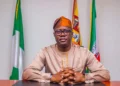
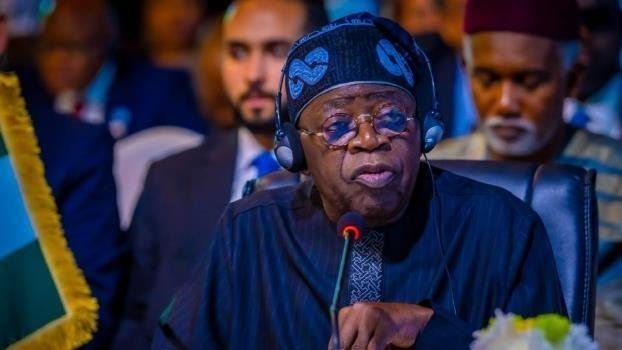
Tinubu spoke on Thursday at the Africa CEO Forum in Kigali, Rwanda, where he joined a presidential panel moderated by British broadcaster Zainab Badawi alongside Gabonese President Brice Clotaire Oligui Nguema.
The Nigerian leader said his administration’s removal of regulatory bottlenecks and emphasis on transparency had begun restoring investor confidence in Africa’s largest economy.

“Removing all the bottlenecks gives you the necessary incentives for direct foreign investment into the country,” Tinubu said.
“This year alone, I can beat my chest that Nigeria is attracting close to $20 billion in foreign direct investments.”
Nigeria has intensified efforts to attract foreign capital following major reforms introduced since Tinubu assumed office in May 2023, including fuel subsidy removal, exchange-rate liberalization, and tax reforms.
At the Kigali forum, Tinubu argued that Africa must move away from exporting raw materials without local value addition, insisting that Nigeria would no longer allow its mineral resources to leave the country without processing.
“No one can take metal out of Nigeria without adding value,” he said.
“I can produce batteries for cars with my minerals.”
The president also defended government support for the Dangote Petroleum Refinery, describing the 650,000-barrel-per-day facility as critical to Nigeria’s energy security.
According to him, strategic collaboration between government and the private sector made the refinery possible.
“Nigeria could not survive with over 200 million people in peace without a refinery. A risk-taker like Dangote must be encouraged by the government,” he stated.
“What I did was support him, give him free trade, his own license, and support him in sourcing the crude that is necessary.”
Tinubu also defended the Federal Government’s decision to supply crude oil to domestic refiners in naira, saying the arrangement was designed to reduce pressure on foreign exchange demand and stabilize local refining operations.
On taxation, the president said his administration was simplifying tax administration using technology and digital payment systems, citing reforms previously implemented during his tenure as governor of Lagos State.
“Tax reform must be written in English, understandable, and not Japanese in English,” Tinubu said.
“You can pay your taxes from your telephone.”
He also criticized international credit rating agencies for what he described as the persistent undervaluation of African economies despite growth opportunities across the continent.
Tinubu used the forum to push for stronger implementation of the African Continental Free Trade Area, saying African countries must stop operating in isolation if the continent hopes to compete globally.
“The African Continental Free Trade Area should not be left on the drawing board; it should be activated properly,” he said.
The president disclosed that Nigeria had already laid over 90,000 kilometers of fiber optic infrastructure to support digital connectivity, e-commerce, artificial intelligence, and modern agricultural systems.
He added that his administration was investing in mechanized agriculture, rural infrastructure, and storage facilities to improve food security and strengthen supply chains across the country.
The Africa CEO Forum, held annually in Kigali, is regarded as one of the continent’s largest gatherings of political leaders, investors, and corporate executives focused on economic integration and private sector growth.