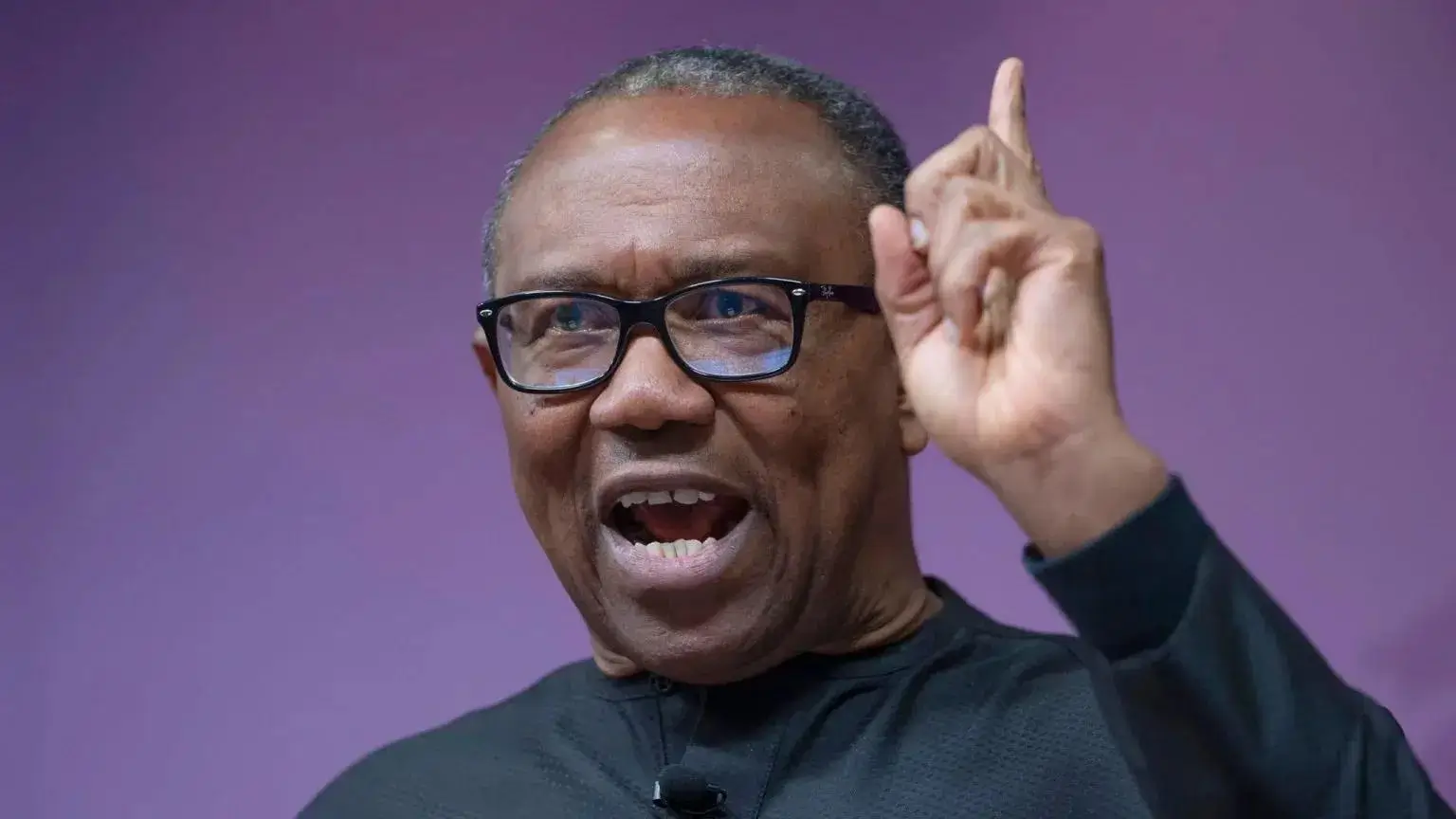
Former Labour Party presidential candidate Peter Obi has resigned from the African Democratic Congress, citing deepening internal crises, political hostility and what he described as state-backed interference in opposition politics.
Peter Obi announced his decision in a strongly-worded statement on Sunday, saying his exit was not because of personal differences with the party leadership but because the ADC was beginning to experience the same problems that forced him out of the Labour Party.
The resignation is a major political development ahead of the 2027 general election and could significantly alter the shape of Nigeria’s opposition coalition.
READ ALSO




Peter Obi said the political environment in Nigeria had become increasingly toxic, where systems meant to protect the people now often work against them.
He described an atmosphere of intimidation, insecurity and endless scrutiny, saying it had become harder for sincere political actors to function.
In the statement, Obi cleared former Senate President David Mark and former Vice President Atiku Abubakar of any blame, insisting both leaders treated him with respect.
He said his decision was based on principle and not personal conflict.
According to him, the same political forces that created instability within the Labour Party had now found their way into the ADC.
He cited endless court cases, internal suspicion, factional battles and growing divisions as signs that the party was drifting away from service and nation-building.
His departure comes at a delicate moment for the ADC, which has recently emerged as a major opposition platform attracting political heavyweights and coalition talks ahead of 2027.
Peter Obi’s exit now raises fresh uncertainty over the coalition’s future and the possibility of new political alignments.
Beyond party politics, Obi used the statement to reflect on the emotional burden of public life.
He said many people do not understand the private struggles public figures endure while trying to serve sincerely in difficult circumstances.
He lamented that even among political associates, genuine support is often difficult to find.
According to him, some people who publicly identify with him privately withdraw support or become part of the pressure.
Obi said Nigeria had become a society where humility is mistaken for weakness and compassion treated as foolishness.
He defended his political philosophy, insisting he had never used power or resources to oppress others.
For him, leadership remains about service, sacrifice and lifting others.
The former Anambra governor also moved to address recurring speculations about his political ambition.
He insisted he was not desperate for political office.
According to Obi, his greater concern is building a country where mothers are not left grieving over children lost to insecurity, where citizens can sleep without fear and where Nigerians do not go to bed hungry.
He lamented the growing insecurity crisis and the increasing number of displaced Nigerians forced into camps instead of living in their homes.
Political observers believe Obi’s exit may deepen opposition fragmentation at a time when a united front was seen as critical for the 2027 presidential race.

Still, Obi ended his statement with optimism.
He said he remains convinced that Nigeria can still be transformed by leadership rooted in justice, compassion and equal opportunity.
And with his now familiar closing line, he declared: A new Nigeria is possible.