



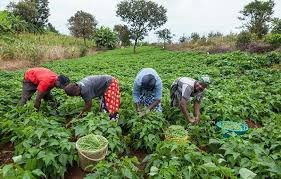
The World Bank Nigeria agriculture initiative has received a major boost following the approval of a $500 million credit aimed at transforming the country’s agricultural sector. The funding, approved by the World Bank, will support a new programme designed to improve productivity, strengthen agricultural value chains, and enhance food security across Nigeria.
The financing, provided through the International Development Association, will fund the Nigeria Sustainable Agricultural Value Chains for Growth Project (AGROW). The initiative is expected to benefit smallholder farmers, agribusinesses, and rural communities over six years.
The approval, which took place on March 30, 2026, marks one of the latest efforts to address structural challenges affecting Nigeria’s agriculture sector.




The AGROW programme is designed to strengthen agricultural productivity and create new opportunities for farmers and agribusiness operators. According to the World Bank, agriculture remains Nigeria’s largest employer but continues to face several constraints.
These challenges include:
- Low agricultural productivity
- Limited access to improved seeds and fertilisers
- Climate-related risks
- Weak market connections
- Poor post-harvest infrastructure
Despite employing millions of Nigerians, the sector continues to struggle with inefficiencies that limit growth and food availability. Many smallholder farmers remain trapped in subsistence farming, producing primarily for household consumption rather than commercial markets.
The World Bank Nigeria agriculture project aims to address these challenges by supporting modern farming practices and improving access to markets.
Key Developments Under the AGROW Programme
The AGROW project will introduce several initiatives to transform agriculture across Nigeria. One of the key features is a results-based matching grant system designed to support agribusinesses sourcing produce from smallholder farmers.
The programme will focus on:
- Aggregation of farm produce
- Post-harvest handling improvements
- Agro-processing expansion
- Better market access for farmers
Priority crops under the programme include:
- Rice
- Maize
- Cassava
- Soybeans
These crops were selected due to their importance in Nigeria’s food system and economic value.
Additionally, the World Bank Nigeria agriculture initiative will strengthen research institutions and agricultural extension services. This is expected to help farmers adopt improved farming methods and modern technologies.
Digital Transformation for Nigerian Farmers
A major component of the project involves digital innovation. The programme will establish a national digital farm and farmer registry, which aims to improve planning and resource allocation.
Farmers will also receive digital advisory services, including:
- Weather forecasts
- Climate risk alerts
- Farming recommendations
- Market price information
These services are expected to improve resilience against climate shocks and boost productivity.
The project will also promote access to climate-resilient seeds and improved farming inputs. By enhancing seed systems, the initiative aims to increase crop yields and reduce food shortages.
Another major aspect of the World Bank Nigeria agriculture programme involves strengthening seed and fertiliser systems. The project will:
- Improve seed regulatory systems
- Expand early-generation seed supply
- Increase private sector participation
- Improve fertiliser quality and availability
The initiative also aims to encourage responsible land-based investments to support long-term agricultural growth.
Why the World Bank Nigeria Agriculture Funding Matters
The funding is significant for several reasons. Nigeria continues to face food insecurity challenges, driven by population growth, climate change, and supply chain disruptions.
The AGROW programme is expected to:
- Boost food production
- Create employment opportunities
- Strengthen rural economies
- Improve nutrition outcomes
According to Mathew Verghis, the initiative represents a transformative step for Nigeria’s agriculture sector.
He explained that the project will empower farmers, attract private investment, and strengthen food security.
The programme is expected to benefit up to one million smallholder farmers across participating states.
The six-year project, scheduled to run from 2026 to 2032, is also expected to attract additional investment from agribusiness companies.
The World Bank estimates that the programme could mobilise up to $220 million in private investment. This could significantly expand agribusiness operations and improve value addition across agricultural supply chains.
The initiative aligns with Nigeria’s broader economic goals, including job creation and industrial growth.
By transitioning farmers from subsistence to commercial production, the programme aims to create sustainable livelihoods.
Nigeria’s Growing Dependence on Development Financing
Nigeria has increasingly relied on concessional financing from international institutions to support development projects.
Data from the Debt Management Office shows that Nigeria’s exposure to the World Bank Group stood at $19.54 billion as of September 30, 2025.
This includes:
- $18.18 billion from the International Development Association
- $1.36 billion from the International Bank for Reconstruction and Development
This represents approximately 40.34 per cent of Nigeria’s total external debt stock of $48.46 billion.
The data highlights the World Bank’s significant role in supporting Nigeria’s development initiatives.
The World Bank Nigeria agriculture project is expected to shape the future of farming in the country. If successfully implemented, the programme could:
- Improve agricultural productivity
- Strengthen food security
- Increase rural incomes
- Boost export potential
Experts say the focus on value chains and private investment could help modernise Nigeria’s agriculture sector.
As implementation begins, stakeholders will closely monitor outcomes and impact across participating states.
The success of the AGROW programme could serve as a model for future agricultural transformation efforts in Nigeria.