



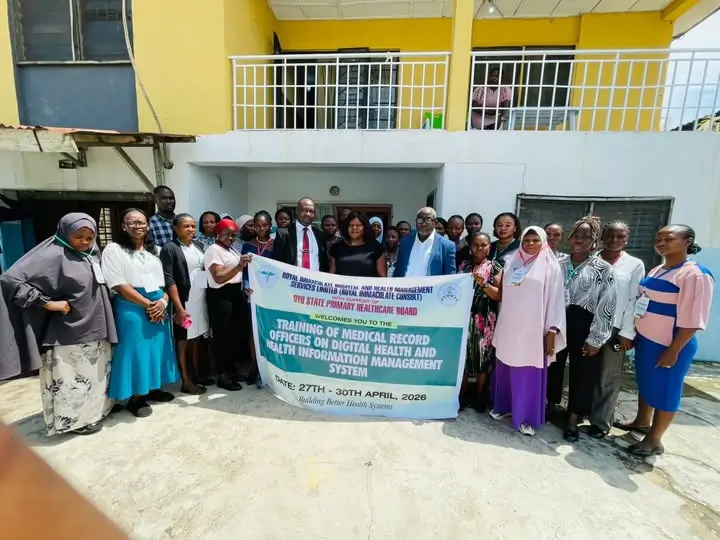
The Oyo State Government has intensified efforts to modernise healthcare delivery with the commencement of a digital health training programme for 66 medical record officers and technicians across the state’s 33 local government areas.
The two-day capacity-building programme, organised by the Oyo State Primary Health Care Board, is part of a broader strategy to strengthen healthcare systems, improve data management, and fully transition health facilities from manual to electronic record systems.
The training, which drew two representatives from each local government, is focused on health information management, telemedicine, digital healthcare systems, artificial intelligence in healthcare, and data quality management.


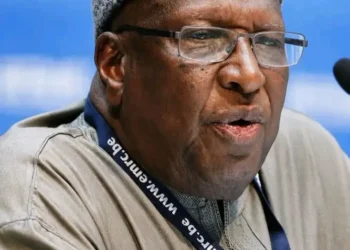
Declaring the programme open in Ibadan, the Executive Secretary of the Board, Dr Muyideen Olatunji, said the initiative was aimed at preparing health workers for the evolving realities of healthcare administration in a digital age.
He stressed that healthcare professionals must continually update their knowledge and adapt to modern systems to remain effective.

Olatunji disclosed that the state government had already invested significantly in digital health infrastructure, including the procurement of laptops and electronic data tools for more than 350 primary healthcare centres across Oyo State.
According to him, the government has made notable progress in migrating from paper-based records to electronic data systems, describing the transition as gradual but effective.
“This is not the first training we are conducting, and it will not be the last. We are building capacity in phases to ensure our workforce can effectively utilise the digital tools already deployed in our facilities,” he said.
He added that digital transformation remains central to the government’s broader healthcare reform agenda, especially at the primary healthcare level, where most residents first access medical services.
The programme is being facilitated by Royal Immaculate Consult.
Speaking during the training, the Chief Executive Officer of Immaculate Hospital and Health Management Service Limited, Dr Abass Gbolahan, said the initiative became necessary because of persistent gaps in healthcare data management.
He noted that heavy dependence on paper records had, over the years, created challenges ranging from data loss to poor record accessibility and delayed clinical decisions.
“Globally, digital health is the direction healthcare systems are moving towards, and Nigeria cannot afford to lag. Reliable grassroots data remains critical to effective planning and policy implementation,” he said.
Gbolahan explained that digital health systems would improve the quality of patient care by enabling faster retrieval of medical records, better continuity of treatment, and more informed clinical decisions.
He also said the transition to electronic systems would improve disease surveillance, maternal healthcare documentation, immunisation records and emergency response coordination.
The latest training aligns with Oyo State’s wider healthcare improvement plan, which has seen increased investments in primary healthcare infrastructure, including the ongoing upgrade of 66 primary healthcare centres spread across the 33 local government areas.
Health experts say the combination of infrastructure upgrades and digital workforce development could significantly improve healthcare efficiency, accountability and patient outcomes.
The consultant revealed that the 66 participants represent the first batch of trainees, with additional phases expected to accommodate more healthcare workers across the state.
For the Oyo government, the programme signals a deliberate shift towards building a more technology-driven healthcare system capable of meeting growing public health demands and improving service delivery at the grassroots.