


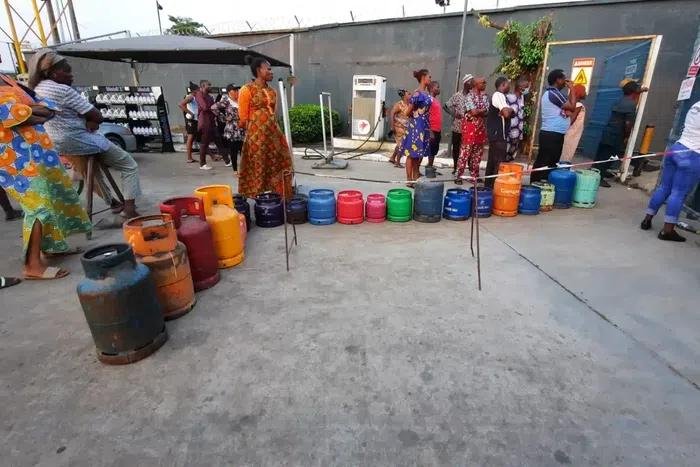
Liquefied Petroleum Gas prices have climbed sharply across Nigeria, with retail costs now edging close to N2,000 per kilogramme in several cities, as households brace for heightened demand ahead of the 2026 Eid-el-Kabir celebrations and tightening supply conditions across the downstream market.
A market survey across Lagos, Ogun, Ibadan, and northern states showed that cooking gas, which sold below N1,000 per kg in previous months, now ranges between N1,500 and N1,800, with some border communities in the South-West recording prices as high as N2,000 per kg.
In Lagos, Ibadan, and Abeokuta, consumers reported buying LPG between N1,600 and N1,700 per kg, while prices in parts of the North have climbed to between N1,800 and N2,000.
READ ALSO




One consumer, reacting to the development, blamed rising economic pressure and weak regulatory control for the persistent increase in energy costs affecting households.
The price surge marks one of the most significant increases in 2026 and follows earlier market disruptions linked to industrial tensions in the oil and gas downstream sector in late 2025, which affected supply stability and distribution flows across depots and retail outlets.
The Nigerian Association of Liquefied Petroleum Gas Marketers (NALPGAM) has raised concerns over what it described as erratic supply and rising landing costs, warning that the situation could worsen scarcity and deepen hardship for millions of Nigerians.
According to the association, LPG is now being sold above N1,500 per kg at retail level, while marketers reportedly pay between N25.2 million and N26.2 million for 20 metric tonnes of the product, depending on location and logistics costs.
In a statement attributed to its leadership, NALPGAM described the situation as “sad and rather very pathetic,” noting that both households and small businesses are bearing the brunt of the price volatility.
The marketers warned that continued price escalation could trigger public frustration if not urgently addressed, especially as demand rises during festive periods when household consumption typically increases.
They also cautioned that many Nigerians are beginning to revert to firewood and charcoal due to affordability challenges, a development they say undermines years of progress in clean energy adoption and environmental sustainability efforts.
NALPGAM further warned that persistent instability in the LPG market could lead to job losses, business closures, rising food inflation and reduced investor confidence in the downstream energy sector.
Beyond pricing concerns, some residents also report growing difficulty accessing cooking gas in neighbourhood retail outlets, raising fears of localized scarcity in parts of the country.
Authorities are yet to issue a fresh intervention on the latest price movement, but stakeholders continue to call for improved supply coordination and market stabilisation ahead of the festive season.





















Comments 1