Electricity consumers in Lagos have thrown their weight behind the state government’s proposed plan to abolish electricity band classification, intensifying pressure on distribution companies over what many residents describe as exploitative billing under the current Band A tariff regime.
The consumers, under the umbrella of the All Electricity Consumers Protection Forum, said the existing service-based tariff structure had failed to deliver improved electricity supply despite repeated tariff increases across the country.
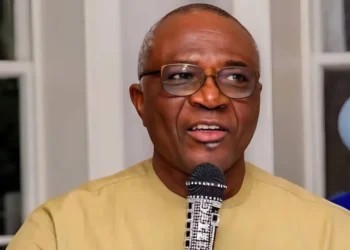
The debate followed comments by Lagos State Commissioner for Energy and Mineral Resources, Biodun Ogunleye, who recently disclosed that the state government was working towards eliminating electricity customer banding and pursuing stable electricity supply for residents.
READ ALSO


Nigeria’s electricity regulator, the Nigerian Electricity Regulatory Commission, introduced the Band A to E classification system in April 2024, categorizing consumers based on the number of electricity supply hours received daily. Under the arrangement, Band A customers are expected to enjoy a minimum of 20 hours of supply and are charged cost-reflective tariffs, while lower bands receive subsidized rates with fewer supply hours.
Some electricity distribution companies had criticized Lagos State’s proposal, warning that removing the banding framework without significant improvements in generation and supply could destabilize the power market and trigger public backlash.
Reacting to the concerns, National Coordinator of the All-Electricity Consumers Protection Forum, Adeola Samuel, accused the DisCos of prioritizing profit over consumer welfare.
“It is quite disingenuous for the DisCos to suggest that consumers will protest against the removal of the electricity band classification. Nigerians have endured years of exploitative billing under the band system, and many consumers see it as a framework designed mainly to enrich operators,” he said.
Samuel argued that consumers had continued to pay higher tariffs without enjoying corresponding improvements in electricity supply.
“The reality is that consumers are paying more without enjoying commensurate improvement in power supply. What we have seen over the years is a continuous increase in tariffs without stable electricity,” he stated.
He also recalled previous legal and public resistance against tariff increases, citing the 2016 court ruling that nullified a cost-based tariff adjustment and opposition to the service-based tariff introduced during the COVID-19 lockdown in 2020.
The consumer group further accused electricity distribution companies of exploiting estimated billing and failing to meet the minimum supply hours tied to Band A classification.
“The band system allows DisCos to charge consumers based on projected supply hours even when many customers do not receive up to a quarter of the promised electricity,” Samuel said.
He argued that the Lagos electricity law imposed stricter obligations on operators regarding metering and consumer protection, warning that the state regulator would not tolerate poor compliance by distribution companies.
Samuel urged the Lagos State Electricity Regulatory Commission to proceed with the proposed reforms, insisting that many households across the state would benefit from the removal of the banding system.
Speaking earlier, Ogunleye said the Lagos government’s long-term target was uninterrupted electricity supply rather than a structure built around rationing power through bands.
“What we are saying is, is it impossible to have a continuous power supply? The governor has thrown the challenge… Is it impossible to have a 24-hour power supply? I strongly believe that we can do it,” the commissioner said.