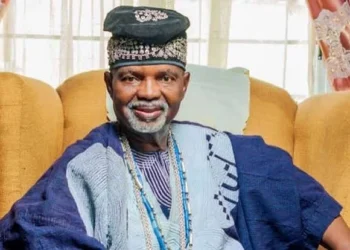
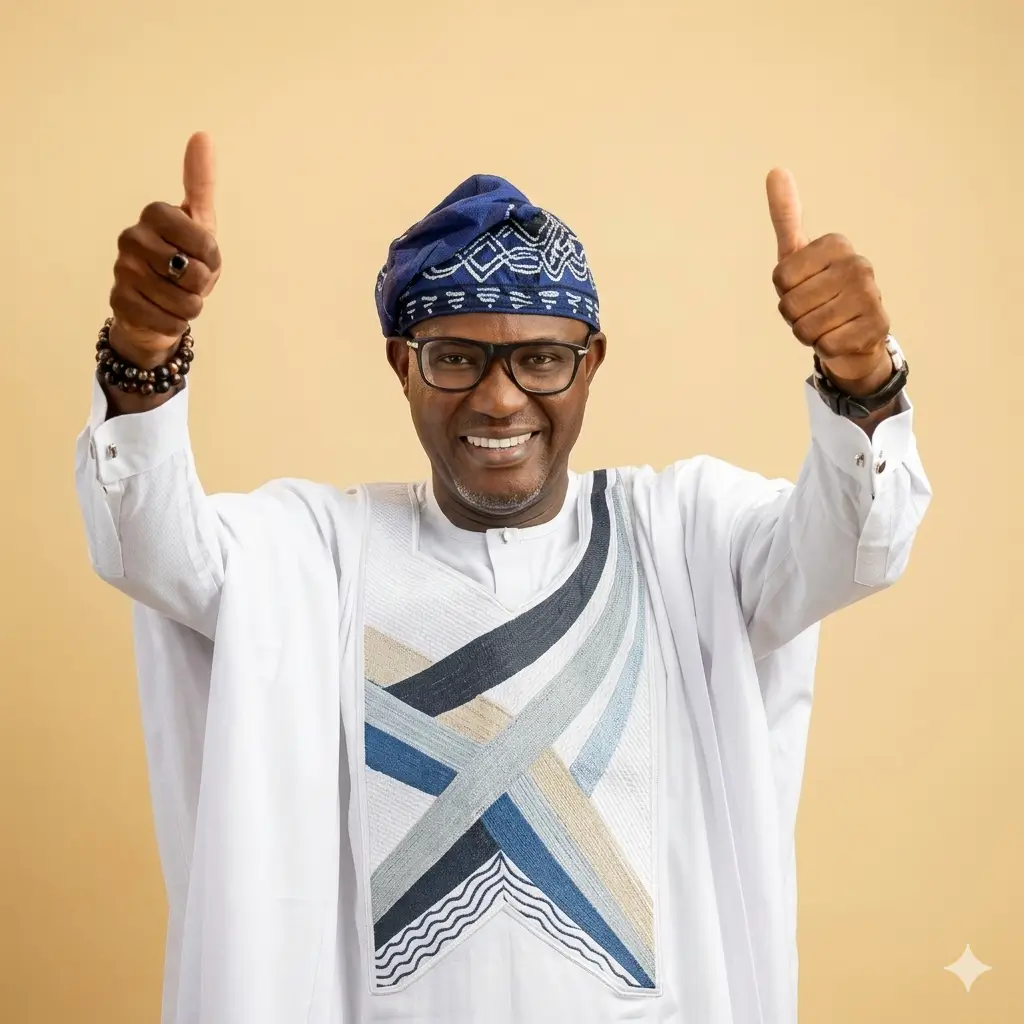
Prince Laja Adeoye has emerged as the consensus governorship candidate of the Allied People’s Movement (APM) for the 2027 Lagos governorship election, unveiling an ambitious “Reset Lagos Agenda 2027” aimed at challenging the long-standing dominance of the ruling All Progressives Congress in the state.
Adeoye, a real estate entrepreneur and candidate backed by the PDP-APM coalition, was affirmed during the party’s governorship primary election held in Yaba, Lagos, under the supervision of officials of the Independent National Electoral Commission.
Declaring the outcome, Chairman of the APM Governorship Primary Electoral Committee, Mr Godwin Williamson, said the candidate emerged through consensus after endorsement by delegates and stakeholders from the state’s 20 local government areas.
READ ALSO


“Having fulfilled all constitutional and procedural requirements of the party and the Electoral Act, and following the consensus endorsement by stakeholders and delegates, I hereby officially declare Prince Laja Adeoye as the duly elected and returned gubernatorial candidate of the APM for the 2027 Lagos State Governorship Election,” Williamson said.
The emergence of Adeoye comes days after the PDP-APM coalition formally unveiled its “Àtunto Èkó 1.0: Re-Engineering Lagos for Inclusive Prosperity” blueprint, a policy document the alliance says will serve as its roadmap for governance if elected in 2027.
Speaking during the unveiling in Lagos, Chairman of the PDP-APM Coalition, Barrister Amos Fawole, described the alliance as a political rescue movement formed to provide Lagosians with an alternative platform built on accountability, inclusive governance and economic recovery.
“We gather not as political parties, but as people united by the realisation that Lagos and Nigeria need rescue from economic decline. Promised prosperity has been replaced by hardship,” Fawole said.
In his acceptance speech after the primary, Adeoye said Lagos residents had “suffered enough” and pledged to return the state “to its rightful owners.”
“APM is not just another party; it is a powerful movement forged through hard work, immense sacrifices, and an unyielding determination to rescue Lagos from misrule,” he declared.
The governorship hopeful promised sweeping reforms covering infrastructure, housing, healthcare, transportation, security and job creation.
According to him, the “Reset Lagos Agenda” will focus heavily on economic revitalisation through investment-friendly policies, industrial expansion and public-private partnerships designed to reduce dependence on borrowing.
“Under Àtunto Èkó 1.0, we will aggressively remove all bottlenecks to investment, create Public Private Partnership enterprises and adopt alternative project funding approaches to stimulate the Lagos economy,” he said.
Adeoye also pledged to invest in agribusiness, independent power projects and industrial hubs across the IBILE divisions of Lagos to create employment opportunities for young people.
“Our youths will no longer be idle; they will be empowered, skilled and employed,” he added.
On infrastructure, the candidate promised to tackle flooding and revive major projects such as the Fourth Mainland Bridge, which he described as a recurring promise of successive administrations.
“Flooding will become a thing of the past when we come into power. The Fourth Mainland Bridge has remained a recurring campaign promise without becoming reality. An APM government will embark on the project in earnest,” he said.
The coalition also promised affordable mass housing and reintegration programmes for indigenous Lagosians displaced by urban development projects.
The alliance’s secretary, Otunba Olaifa Sunday, said the coalition was formed partly to prevent Nigeria from drifting into what he described as a one-party state.
“We cannot have a one-party state and move the country forward. Nigerians deserve choices,” he said.
Other coalition leaders at the event stressed the need for transparent budgeting, women participation in politics, youth inclusion and improved social welfare systems.
Lagos, Nigeria’s commercial capital and one of Africa’s largest economies, has remained under the control of the APC and its political predecessors since the return to democracy in 1999.
Analysts say opposition coalitions ahead of the 2027 elections may reshape political alignments in the state as parties seek to challenge the ruling establishment with broader alliances and reform-focused campaigns.