



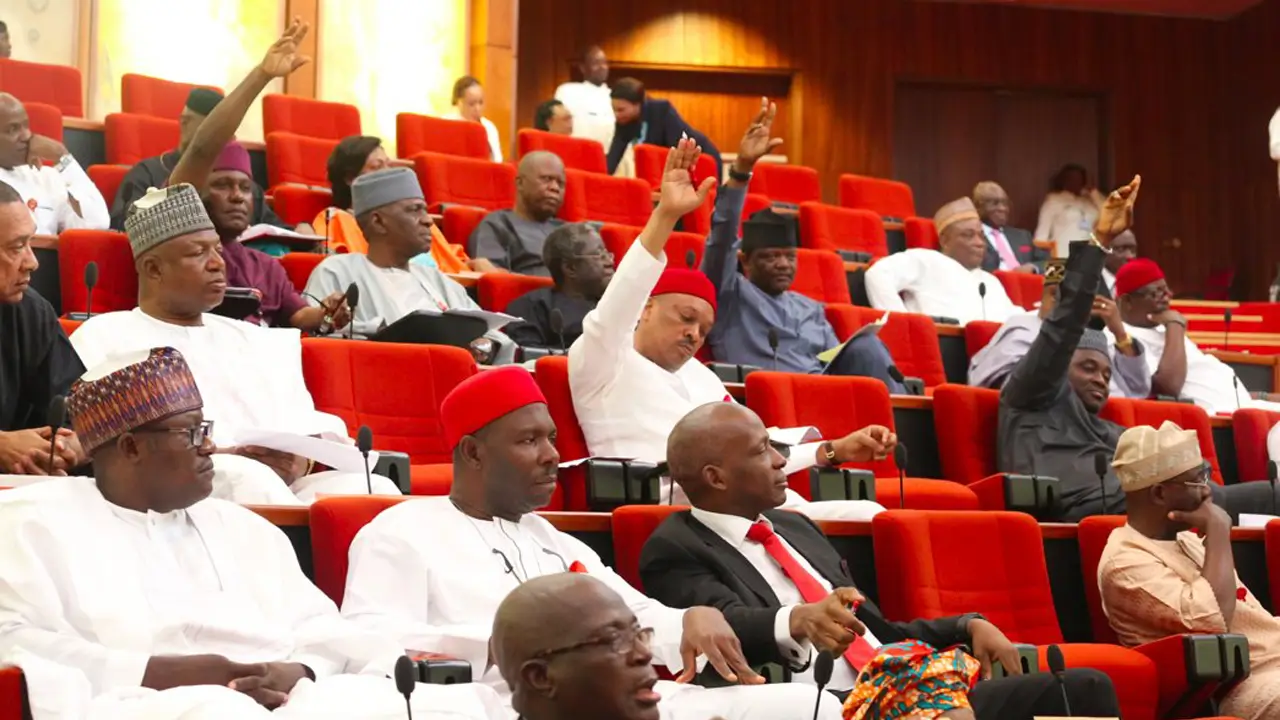
The Nigerian Senate is expected to take a decisive step toward the creation of state police this week as lawmakers move to consider constitutional amendments aimed at restructuring the country’s security architecture.
Senate Leader Opeyemi Bamidele disclosed on Monday that the National Assembly had resolved to fast-track the proposal, describing the current legislative week as crucial to one of Nigeria’s most significant security reforms since the return to democracy in 1999.
According to Bamidele, the Senate Committee on Constitution Review has reached an advanced stage and intends to isolate the state police proposal from other constitutional amendment bills to ensure speedy consideration.




“We came to the conclusion that we are going to pass the constitutional amendment in respect of state police because there is no need for any further delay,” he said.
The proposed amendment seeks to alter the 1999 Constitution and empower states to establish their own police formations alongside the Nigeria Police Force.
Bamidele said extensive consultations had been held with President Bola Ahmed Tinubu, the Office of the Attorney-General of the Federation, the Chief of Staff to the President, Femi Gbajabiamila, and security agencies.
He revealed that there is broad support for the initiative across the federation.

“Our position is very clear on state police. We are standing with Nigerians on the issue. All strata of the federation have made it clear that there cannot be a better time to establish state police than now,” he said.
Once approved by the National Assembly, the proposal will be transmitted to the 36 State Houses of Assembly for ratification. At least two-thirds of the state legislatures must endorse the amendment before it can be forwarded to President Tinubu for assent.
The renewed push comes amid worsening insecurity across the country, with incidents of kidnapping, banditry, communal clashes and terrorist attacks continuing to raise concerns among citizens and political leaders.
Calls for decentralised policing have intensified over the years, with supporters arguing that state police would improve intelligence gathering, enhance rapid response and strengthen community-based security operations.
The idea is not entirely new. Delegates at the 2014 National Conference had recommended state policing as part of broader constitutional reforms.
In the absence of a constitutional framework, several regions have established local security outfits such as Amotekun in the South-West and Ebube Agu in the South-East to complement federal security agencies.
Despite growing support, critics have continued to express fears that state police could be abused by governors for political purposes if adequate safeguards are not put in place.
Senate President Godswill Akpabio had earlier explained that the proposed framework would include a National State Police Commission to regulate recruitment, training, discipline and operational standards of state police commands.
If eventually approved by both the National Assembly and state legislatures, the reform would mark a historic shift from Nigeria’s centralized policing structure to a more decentralised system.