The Federal Government has defended its decision to redirect the ₦100bn initially earmarked for 3,000 compressed natural gas-powered buses, saying the revised strategy prioritised vehicle conversions, tricycles and higher-capacity buses to reach more Nigerians.
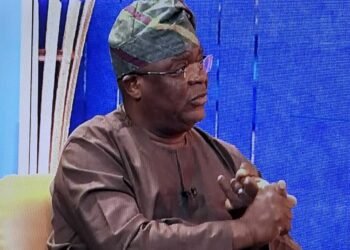
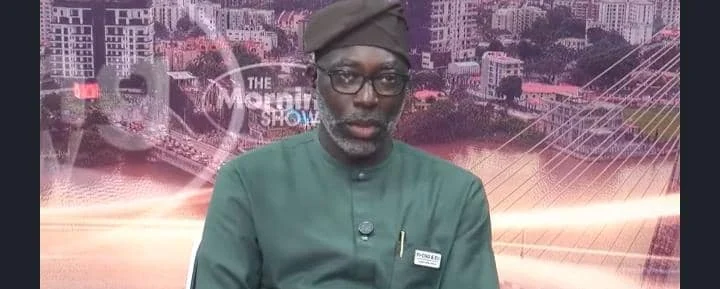
The Chief Operating Officer of the Presidential Initiative on Compressed Natural Gas and Electric Vehicles, Tosin Coker, disclosed this during an interview with ARISE NEWS on Sunday.
Coker said the government reviewed the original plan after the initiative’s steering committee was established in October 2023, concluding that purchasing 3,000 buses alone would not adequately address Nigeria’s transportation needs.



President Bola Tinubu announced the ₦100bn allocation in July 2023 as part of measures to cushion the economic impact of petrol subsidy removal. The subsequent policy shift expanded the intervention beyond bus procurement to include conversion kits, commercial vehicles and other transportation options.
Explaining the decision, Coker said, “that 100 billion was used more, put to better use in what I’ve just said, in the conversion kits, as well as buses, bigger capacity buses, not 20-seater.”
He added that some of the buses procured could accommodate 50 passengers, alongside smaller vehicles.
FG reports over 120,000 vehicle conversions
Coker argued that concentrating exclusively on 3,000 buses would have limited the programme’s reach, particularly in densely populated cities such as Lagos, where public transportation demand remains substantial.
“When the initiative was set up, that moved to not just buses, because we realised it’s not just buses that move people around,” he said.

According to him, the programme initially focused on converting commercial vehicles, working with transport unions and operators to provide free conversions during its early phase.
He said the initiative recorded more than 25,000 conversions during that period, alongside support for tricycles and the procurement of buses.
Providing an update on implementation, Coker disclosed that more than 650 buses had been introduced nationwide, while the vehicle conversion programme had recorded over 120,000 conversions, primarily involving commercial transportation.
However, he acknowledged that the number of CNG-powered buses and tricycles on Nigerian roads remained insufficient to meet the country’s public transportation needs.
Coker said the government was working to increase the deployment of compressed natural gas and electric vehicles in the coming weeks and months, with the objective of lowering transportation costs.
Conversion financing, state participation
Coker also called on state governments to take greater responsibility for public transportation, arguing that the Federal Government could not independently meet the needs of the entire country.
“The states themselves can and should do more,” he said, adding that the federal initiative would provide support and demonstrate what could be achieved through alternative-fuel transportation.
His comments come as the Federal Government pursues its National Affordable CNG Transit Programme, which targets reductions in commuting costs through collaboration among federal authorities, state governments and transport operators.
In September, Tinubu said the government and state governors had agreed to pursue measurable reductions in transportation costs from October 1, 2026. The programme includes interventions across selected transport corridors.
Coker said the initiative was also working with the Nigerian Consumer Credit Corporation and other financing providers to make vehicle conversions more accessible through instalment payment arrangements spanning three, six or 12 months.
He put conversion costs at about ₦350,000 and above, depending on the vehicle and the complexity of the installation.
Coker maintained that private-sector participation would be essential to expanding the industry, while the government would focus on supporting infrastructure, training, standards and safety.
The revised strategy, however, leaves a central question for the government: whether the expanded programme will translate into sustained, measurable reductions in transport fares for commuters struggling with high living costs.