


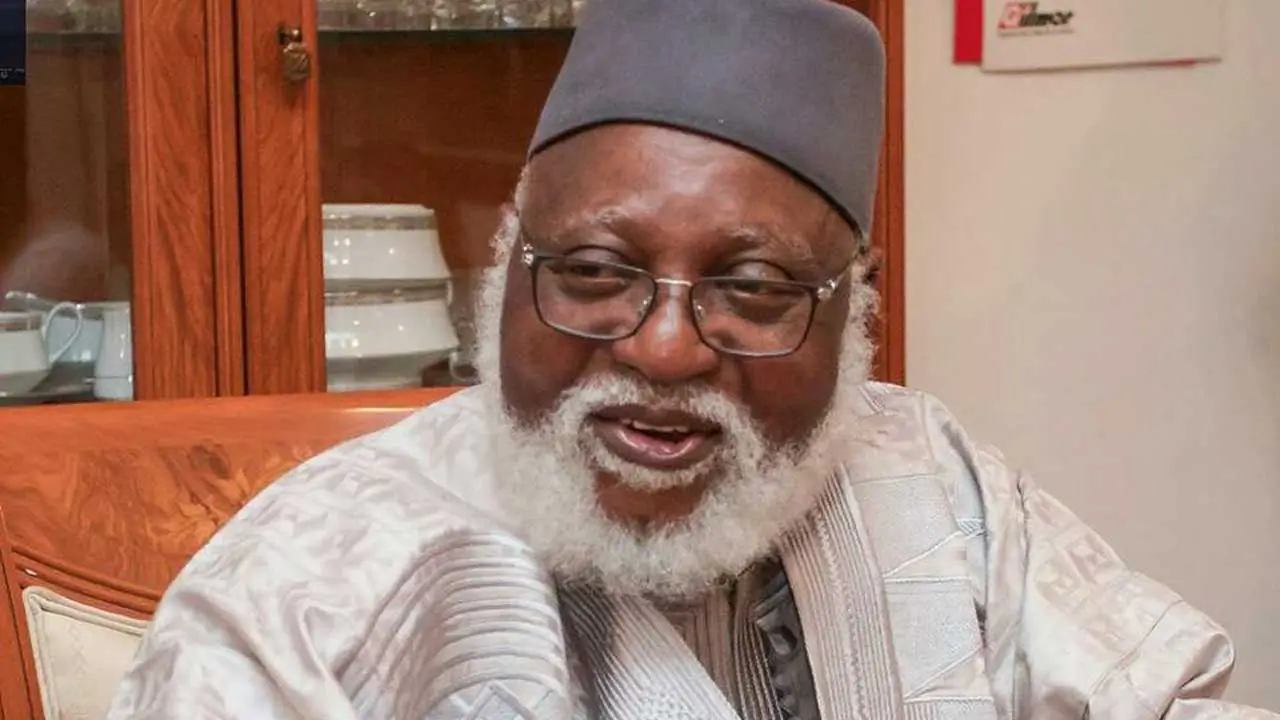
Former Head of State Gen. Abdulsalami Abubakar (retd.) has disclosed startling new details about the final hours of Gen. Sani Abacha, saying events surrounding the former military ruler’s death in June 1998 left him with a lingering suspicion that “something was fishy.”
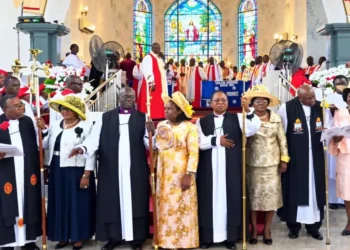
The revelations are contained in Abdulsalami’s newly released autobiography, Call of Duty, unveiled on Saturday in Abuja during activities marking his 84th birthday.
In the book, the former Head of State recounts how he and the late Chief of Army Staff, Lt.-Gen. Ishaya Bamaiyi, were unknowingly locked inside a waiting room at the Presidential Villa for nearly an hour on the morning Abacha died, while critical decisions appeared to be unfolding elsewhere.




Abacha, who seized power in November 1993 and ruled Nigeria for nearly five years, died suddenly on June 8, 1998, in circumstances that have remained the subject of speculation for nearly three decades.
According to Abdulsalami, the day began with uncertainty over his own future in the military.
He wrote that he had received information suggesting he might be retired from service after 35 years and feared he would be assigned to represent Nigeria at an ECOWAS summit in Togo.
Shortly afterward, however, another call came directing him to report immediately to the Presidential Villa because Abacha wanted to see him.
Because of the urgency, he said he left home wearing a tracksuit and slippers instead of his military uniform.
What followed, he recalled, appeared unusual.
After arriving at the Villa, he was directed to a waiting room rather than being ushered directly to Abacha as was customary. Moments later, Bamaiyi joined him.
The two senior officers waited for close to an hour before realising they had been locked inside the room.
“I asked Bamaiyi if he was aware that we had been locked inside. Something kept telling me that something was wrong but I could not place a finger on it,” Abdulsalami wrote.

The door was eventually opened by then Inspector-General of Police, Ibrahim Coomassie, who informed them that Abacha had died.
Abdulsalami said he was stunned by the news and insisted on seeing the body himself.
“When we got to the residence, I asked to see Abacha’s body. I entered the room, removed the covering and prayed for him,” he recalled.
The former military leader also alleged that a powerful “inner caucus” within Abacha’s administration appeared more concerned with succession arrangements than burial preparations.
According to him, discussions about who should become the next Head of State had begun before many members of the Provisional Ruling Council were formally informed of Abacha’s death.
He claimed that while senior officers travelled to Kano for Abacha’s burial, some individuals in Abuja were allegedly working to install a preferred successor.
Abdulsalami said intelligence reaching loyal military officers suggested plans were underway to swear in then Chief of Naval Staff, Admiral Mike Akhigbe.
The transition, however, took a different turn.
As Chief of Defence Staff and the most senior serving military officer at the time, Abdulsalami presided over meetings of the Provisional Ruling Council following Abacha’s death.
He said competing interests emerged, with some officers backing Bamaiyi while others supported different candidates.
Eventually, a vote was conducted among members of the military hierarchy.
“I won the vote. That was how I became the 11th Nigerian Head of State,” he wrote.
Abacha’s death marked a turning point in Nigeria’s political history. Within weeks, Abdulsalami initiated a transition programme that led to the release of political prisoners, the restoration of political activities and the return to democratic rule.
The process culminated in the election of Olusegun Obasanjo and the handover of power on May 29, 1999.
The new revelations are likely to reignite public debate over one of the most controversial moments in Nigeria’s modern history, particularly as Abdulsalami’s account raises fresh questions about what transpired inside the Presidential Villa during the final hours of the Abacha era.