



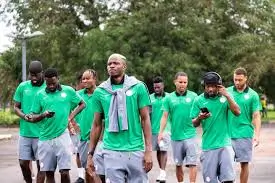
Nigeria’s failure to qualify for the 2026 FIFA World Cup remains one of the biggest disappointments in recent Super Eagles history. For a country blessed with elite talent across Europe’s top leagues, missing football’s biggest stage was less a reflection of ability and more an indictment of instability, poor planning and administrative shortcomings.
Yet, beneath the frustration lies an opportunity.
With four years until the 2030 FIFA World Cup, Nigeria already possesses the foundations of a squad capable of competing with the best nations in the world. What remains uncertain is whether the structures around the team can finally match the quality on the pitch.



Modern World Cup champions offer a clear blueprint. Germany rebuilt after Euro 2000 and lifted the trophy in 2014. France combined youth and tactical discipline to triumph in 2018. Argentina’s 2022 success revolved around a collective identity that extended beyond Lionel Messi.
The lesson is simple: great teams win World Cups, not collections of talented individuals.
Nigeria certainly has individuals.
Recent performances at the Africa Cup of Nations and in Europe’s major leagues underline the depth available to the Super Eagles. Victor Osimhen remains one of world football’s most feared strikers, while Ademola Lookman has established himself among Africa’s most decisive attackers following his historic Europa League heroics with Atalanta.
By 2030, both players will be in their early thirties, an age at which elite forwards often combine experience with peak decision-making.
Behind them, the talent pool appears equally promising.
Goalkeeper Stanley Nwabali is expected to enter his prime years, while Maduka Okoye and highly-rated Arthur Okonkwo provide competition and depth. In defence, Calvin Bassey remains a cornerstone figure, with emerging prospects expected to strengthen a backline that has occasionally struggled with concentration during major qualifiers.
The midfield may prove Nigeria’s greatest asset.
Wilfred Ndidi’s leadership and tactical discipline will still be valuable, but younger players such as Raphael Onyedika and Fisayo Dele-Bashiru are expected to assume increasingly important roles. Ebenezer Akinsanmiro, regarded by many observers as one of Nigeria’s brightest young midfield prospects, could emerge as the creative heartbeat of the next generation.
The challenge, however, extends beyond player development.
Nigeria’s failed qualification campaign exposed deep structural weaknesses. Coaching changes disrupted continuity, while recurring disputes over allowances and welfare issues created distractions at critical moments.
For the Nigeria Football Federation, the road to 2030 rests on four major pillars: stability, administrative credibility, team cohesion and player development.
The Super Eagles need a long-term coaching project with a clearly defined football identity. Constant managerial changes have repeatedly prevented Nigeria from building momentum across qualification cycles.
Players also require an environment free from avoidable distractions. Welfare concerns, payment disputes and organisational lapses have undermined preparations too often.
Equally important is continuity. Building a squad capable of challenging the world’s elite requires years of shared experience, tactical familiarity and trust.
Finally, Nigeria must strengthen the pathway between the domestic league and the national team while helping young players make career decisions that prioritise long-term growth.
History suggests the ingredients are available.
Nigeria reached the knockout stage of the World Cup in 1994, 1998 and 2014. The country has consistently produced footballers capable of competing at the highest level.
The question is no longer whether Nigeria has enough talent to return to the World Cup.
The real question is whether the structures around the team can finally catch up with the talent on the pitch.