



Africa must urgently accelerate investment in fish farming to avoid a widening food supply gap as its population grows, the United Nations Food and Agriculture Organization has warned, even as global aquaculture production reaches a historic milestone.
The warning was issued on Tuesday by Manuel Barange, Director of Fisheries and Aquaculture at the FAO, during the launch of the latest State of World Fisheries and Aquaculture report at the 11th Our Ocean Conference in Mombasa, Kenya.
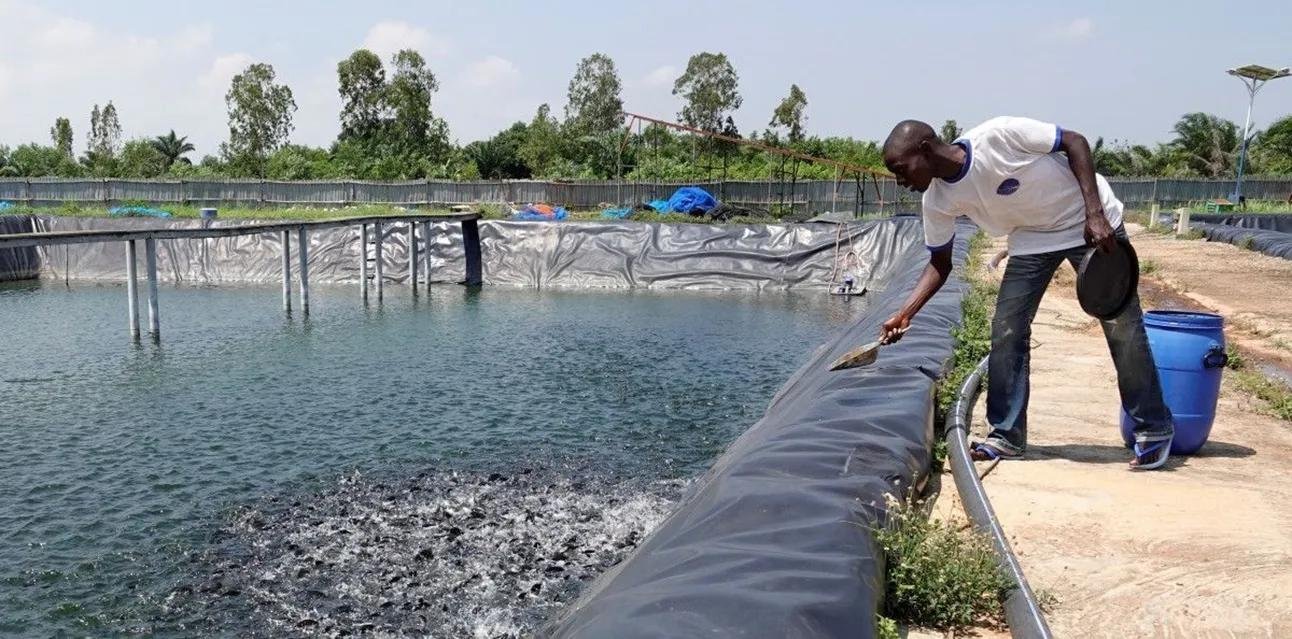
According to the report, global aquaculture production exceeded 100 million tonnes for the first time in 2024, cementing fish farming’s position as the world’s fastest-growing food production sector. The industry has already overtaken capture fisheries as the leading source of aquatic animal food production globally.



The FAO also estimated that international trade in fish and seafood is now worth about $184 billion annually.
Despite the rapid global growth, Africa continues to lag behind other regions. The report found that only 18 per cent of fish produced on the continent comes from aquaculture, compared with roughly half in many other parts of the world.
Barange said Sub-Saharan Africa would need to increase fish production by about 68 per cent by 2050 to keep pace with population growth and rising food demand.
“It’s an opportunity waiting to be exploited, but it’s whether the timing is sufficiently fast to catch up with that demand,” he said.
“Aquaculture can actually be a game-changer. If we manage to develop aquaculture in Africa, there are a lot of opportunities.”
He urged African governments to establish stronger regulatory frameworks and investment incentives capable of attracting private sector participation in fish farming.
The FAO report noted that more than 700 aquatic species are currently raised commercially worldwide, helping to diversify food supply and reduce pressure on wild fish stocks.
Climate change remains a major challenge for the sector, with rising temperatures and shifting marine ecosystems affecting fish populations and production levels across the globe.
The report also raised concerns over overfishing, noting that only 62 percent of global fisheries are currently operating at biologically sustainable levels.
The 11th edition of the Our Ocean Conference opened in Mombasa on Tuesday, bringing together government officials, investors, environmental groups, and researchers to discuss marine conservation, sustainable fisheries, climate resilience, and the blue economy.
Since its launch in 2014, organizers say the conference has generated more than 2,900 commitments valued at over $169 billion toward ocean conservation, sustainable fisheries, climate adaptation, maritime security, and pollution reduction.