The Borno State Government has defended the reintegration of repentant Boko Haram members into society, insisting that ex-fighters who pass through the state’s deradicalization program are unlikely to return to terrorism because they take an oath with the Quran before release.
The State Commissioner for Women Affairs and Social Development, Zuwaira Gambo, disclosed this during an interview aired on News Central Television on Monday amid growing national outrage over the Federal Government’s rehabilitation and reintegration policy for former insurgents.
Gambo said the final phase of what she described as the “Borno model” involves swearing by the Quran—a process she argued carries serious spiritual and social consequences for anyone who returns to violent extremism.




“When they come to us through all the processes of the Borno model, the last thing they do is they take an oath with the Quran. Once you swear by the Quran, you know the implication,” she said.
She added that former insurgents who attempt to rejoin terror groups after surrendering often become targets within insurgent circles themselves.

“People assume that they will go back to the bush; well, they may, but they are dead on arrival.” The law of the jungle takes care of that. The moment you step out and surrender to constituted authority, you become an infidel,” the commissioner stated.
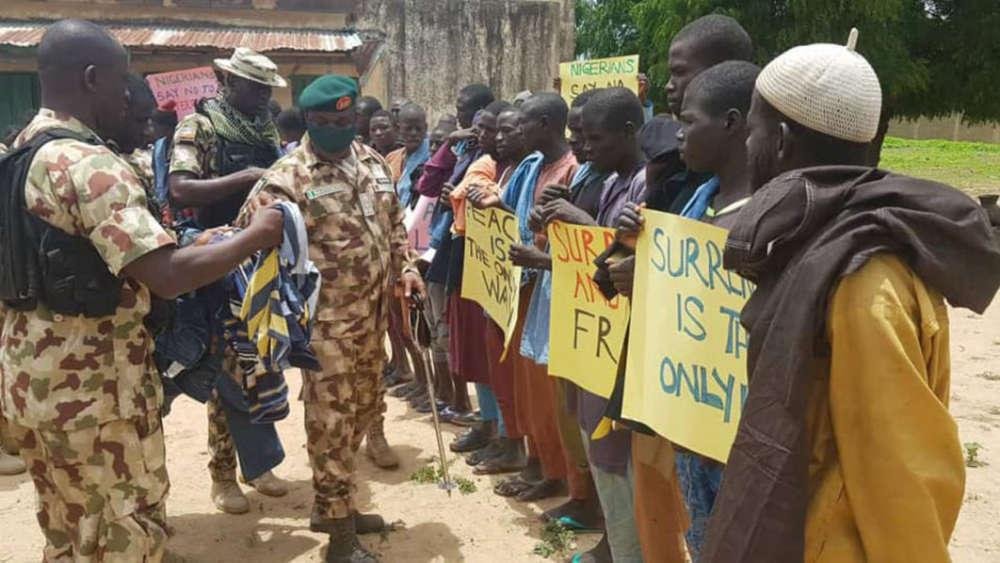
Her comments come weeks after the federal government graduated 744 former terrorists and victims of violent extremism under Operation Safe Corridor, the country’s de-radicalization, rehabilitation, and reintegration program.

The program, launched in 2016 as part of Nigeria’s non-kinetic counter-insurgency strategy, is designed to rehabilitate low-risk former insurgents through counseling, vocational training, religious reorientation, and civic education before returning them to society.
Of the 744 graduates announced in April, 597 were from Borno State, while others came from Yobe, Adamawa, Kano, and several other states. The batch also included eight foreign nationals from neighboring countries around the Lake Chad Basin.
The reintegration exercise has continued to spark criticism from lawyers, civil society groups, and victims’ advocates who argue that the program lacks transparency and adequate justice for communities affected by insurgency.
The President of the Nigerian Bar Association, Afam Osigwe, had earlier warned that reintegrating former terrorists without addressing the pain of victims could deepen public distrust.
“Reintegrating persons who may have unleashed violence or burned properties or committed other criminal activities into communities without addressing the hurt of the victims would appear as compensating perpetrators while overlooking the victims,” he said.
Also reacting, Amnesty International Nigeria Country Director Isa Sanusi said international law supports reintegration for surrendered fighters but insisted the Nigerian process must be more transparent.
“There are serious concerns that some of those called repentant sometimes go back to what they do. The government must be transparent about who they are and their level of involvement,” Sanusi said.
Despite the defense mounted by the Borno government, Gambo admitted that funding remains one of the biggest challenges affecting the rehabilitation program.
“The challenge, of course, has to do with funding, because you bring a lot of people on board, but how are you going to feed them, clothe them, and provide them with access to education?” she said.
Military authorities have repeatedly defended Operation Safe Corridor, insisting the program is not an amnesty initiative but part of a broader strategy aimed at weakening insurgent recruitment and encouraging defections from terror groups.