


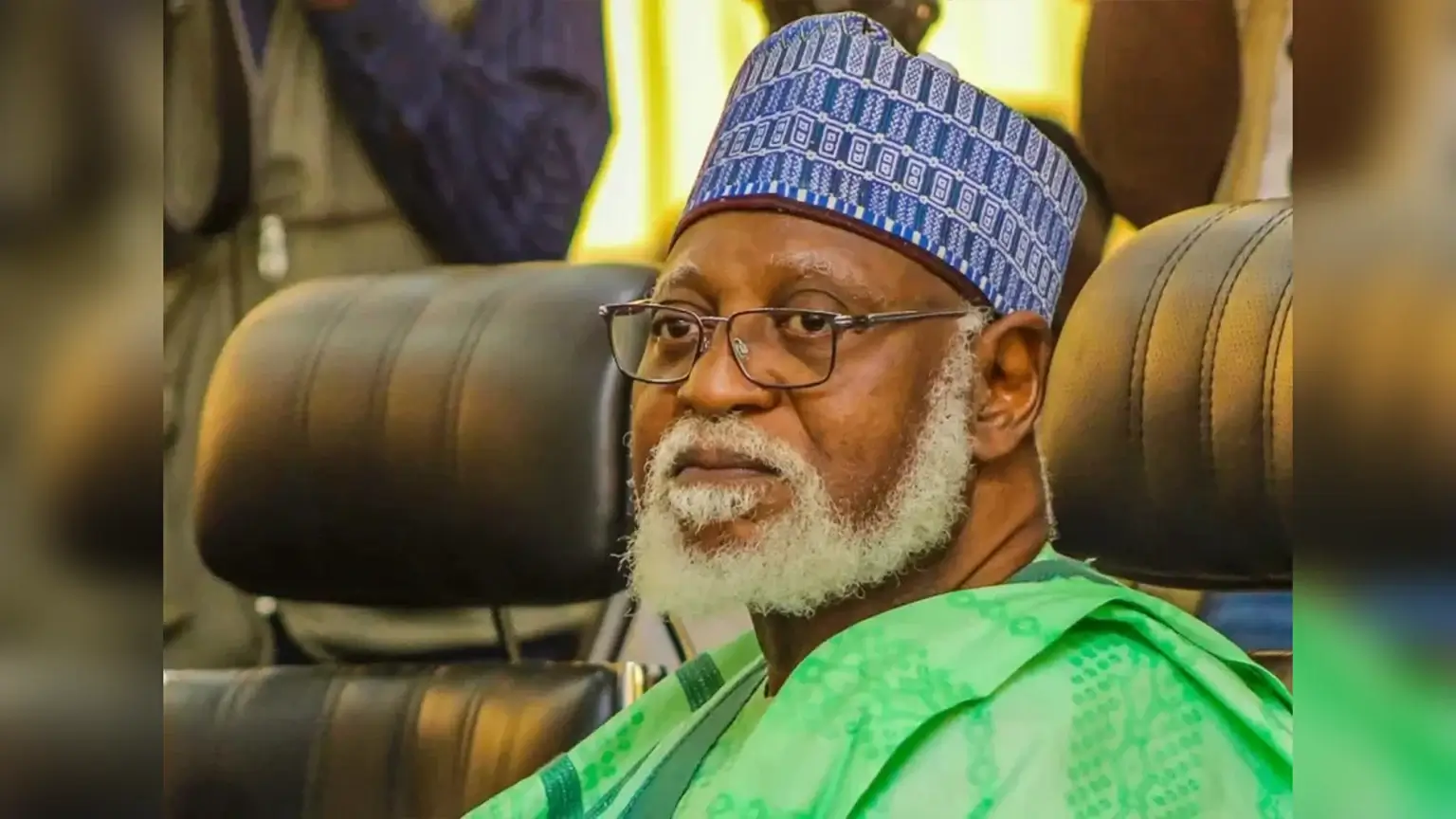
Former Head of State, Gen. Abdulsalami Abubakar (retd.), has reignited debate over one of Nigeria’s most controversial political deaths, insisting that Chief Moshood Kashimawo Olawale (MKO) Abiola was not poisoned and died from natural causes while meeting senior United States diplomats in Abuja.
Abdulsalami made the disclosure in his newly released autobiography, Call of Duty, unveiled in Abuja during events marking his 84th birthday.
The retired general said claims that the presumed winner of the annulled June 12, 1993 presidential election was poisoned had no basis, stressing that an international autopsy conducted after Abiola’s death on July 7, 1998 found no evidence of foul play.




According to him, the examination was carried out at the request of Abiola’s family and involved pathologists from Nigeria, the United States, Britain and Canada.
“I do not believe Abiola was poisoned. The family requested an autopsy and we assembled American, British, Nigerian and Canadian pathologists to conduct it. The autopsy report attributed his death to natural causes,” Abdulsalami wrote.

The former military ruler explained that Abiola collapsed during a meeting with a visiting American delegation led by then U.S. Undersecretary of State for Political Affairs, Tom Pickering, and Assistant Secretary of State for African Affairs, Susan Rice.
Abiola had been detained since 1994 after declaring himself president following the annulment of the June 12 election, widely regarded as Nigeria’s freest poll.
Abdulsalami disclosed that the late businessman and politician had long battled health complications, including hypertension and heart-related ailments.
He referenced a 1994 radiological report prepared by Colonel O. Awofeso, then Chief Consultant Radiologist at the Nigerian Army Defence Hospital in Sokoto, which reportedly showed that Abiola had an enlarged heart associated with hypertensive cardiac disease.
The former Head of State also cited Rice’s memoir, Tough Love: My Story of the Things Worth Fighting For, in which she recounted how Abiola suddenly began coughing during the meeting.
According to the account, the coughing intensified within minutes. Abiola reportedly complained of feeling hot and requested stronger air conditioning before his condition deteriorated.
Abdulsalami further quoted Pickering as saying that Abiola experienced breathing difficulties, briefly left the room, and returned visibly distressed before collapsing.
A doctor was summoned and reportedly diagnosed a heart attack. Abiola was rushed to a medical facility but could not be revived despite efforts by doctors.
Recalling how he received the news, Abdulsalami said his Chief Security Officer, Abdulrasheed Aliyu, informed him by telephone that Abiola had died.
“My head went blank,” he wrote.
The revelation comes nearly three decades after Abiola’s death triggered widespread speculation and conspiracy theories, fuelled by the fact that it occurred barely a month after the sudden death of military ruler Gen. Sani Abacha.
Many pro-democracy activists and supporters had long suspected foul play, arguing that powerful interests wanted to prevent Abiola’s release and possible inauguration as president.
Abdulsalami, who succeeded Abacha in June 1998, said allowing American diplomats access to Abiola before his death helped dispel suggestions that the government concealed information about his health.
The former leader also used the memoir to dismiss allegations that he received $500 million following Abacha’s death, describing the claim as “pure fantasy” and lacking any factual basis.
Abiola remains a central figure in Nigeria’s democratic history. In 2018, the Federal Government officially recognised June 12 as Nigeria’s Democracy Day and posthumously honoured Abiola with the nation’s highest national award reserved for presidents.