



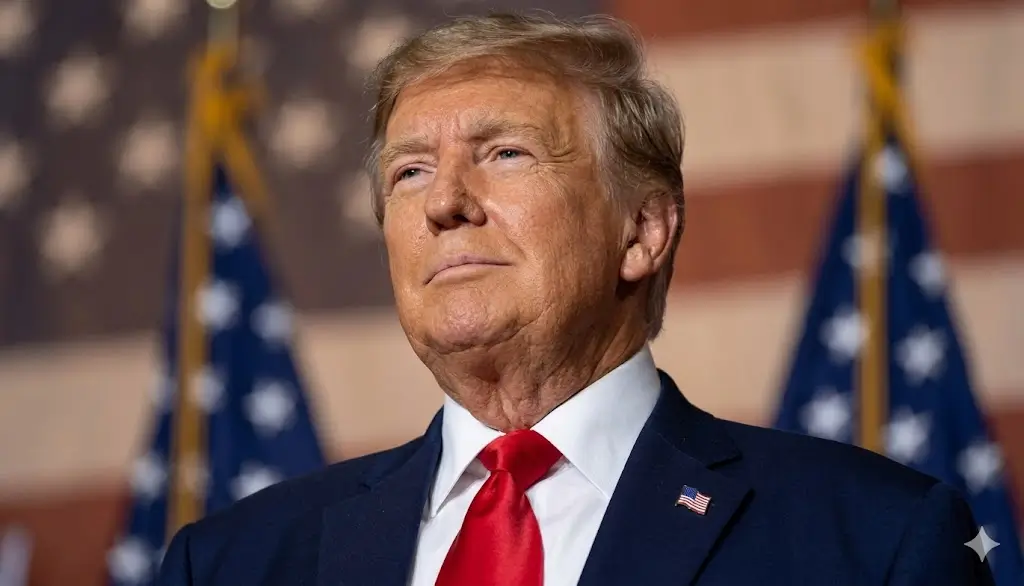
United States President Donald Trump has announced that a proposed peace agreement aimed at ending months of conflict involving Iran could be signed on Sunday, a move he says would immediately reopen the strategic Strait of Hormuz to international shipping.
The announcement, made on Trump’s Truth Social platform on Saturday, marks the strongest indication yet that negotiations involving Washington, Tehran and regional mediators may be approaching a breakthrough. However, conflicting signals from Iranian officials suggest that key details remain unresolved.
“The Deal is scheduled to get signed tomorrow, and immediately after it is signed, the Hormuz Strait is OPEN TO ALL,” Trump wrote.




The Strait of Hormuz remains one of the world’s most important energy corridors, with a significant portion of global oil exports passing through the narrow waterway. Disruptions linked to the conflict have rattled energy markets and heightened concerns about global supply chains.
Trump also claimed the proposed agreement would permanently prevent Iran from acquiring nuclear weapons and said future discussions would address Tehran’s stockpile of enriched uranium.
“At the appropriate time, when all is calm, we will go in and get the Nuclear Dust,” Trump said, adding that the material would eventually be neutralised and destroyed.
The US president struck an unusually optimistic tone toward Tehran, saying Washington looked forward to building a different relationship with Iran and the wider Middle East after years of hostility.
Yet only hours before Trump’s announcement, Iran’s Foreign Ministry cast doubt on the timeline.
Foreign Ministry spokesman Esmaeil Baghaei said reports suggesting the memorandum of understanding would be signed on Sunday were inaccurate, although he acknowledged that an agreement could still be reached within days.
“We will have to wait and see about the exact date of the signing of the memorandum of understanding, although it will not be tomorrow,” Baghaei said. “The possibility of this happening in the coming days cannot be ruled out.”
The apparent disagreement highlights the fragile nature of negotiations that have repeatedly appeared close to completion before stalling.
Pakistan has played a central mediating role in recent talks, with officials expressing optimism that an electronic signing could take place within 24 hours. Technical negotiations on Iran’s nuclear programme are expected to follow if the initial agreement is concluded.
One of the major sticking points remains Iran’s uranium enrichment programme. Tehran has consistently maintained that it retains the sovereign right to enrich uranium for peaceful purposes, while Washington insists that any long-term settlement must ensure Iran cannot develop a nuclear weapon.
Trump also issued a warning, suggesting the United States retains military options should diplomacy fail.

“Hopefully, this process will all work out quickly, easily, and smoothly. If it doesn’t, we have the ultimate alternative, hopefully never to be used again,” he said.
The latest development comes after months of fighting, diplomatic pressure and repeated claims by Trump that a deal was imminent. Analysts say the reopening of the Strait of Hormuz would be one of the most significant outcomes of any agreement, potentially easing tensions in global oil markets and reducing fears of further escalation across the Middle East.
Whether Sunday’s signing proceeds as announced remains uncertain, but both Washington and Tehran now appear closer to a formal understanding than at any point since the conflict began.