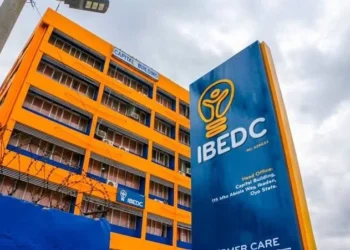
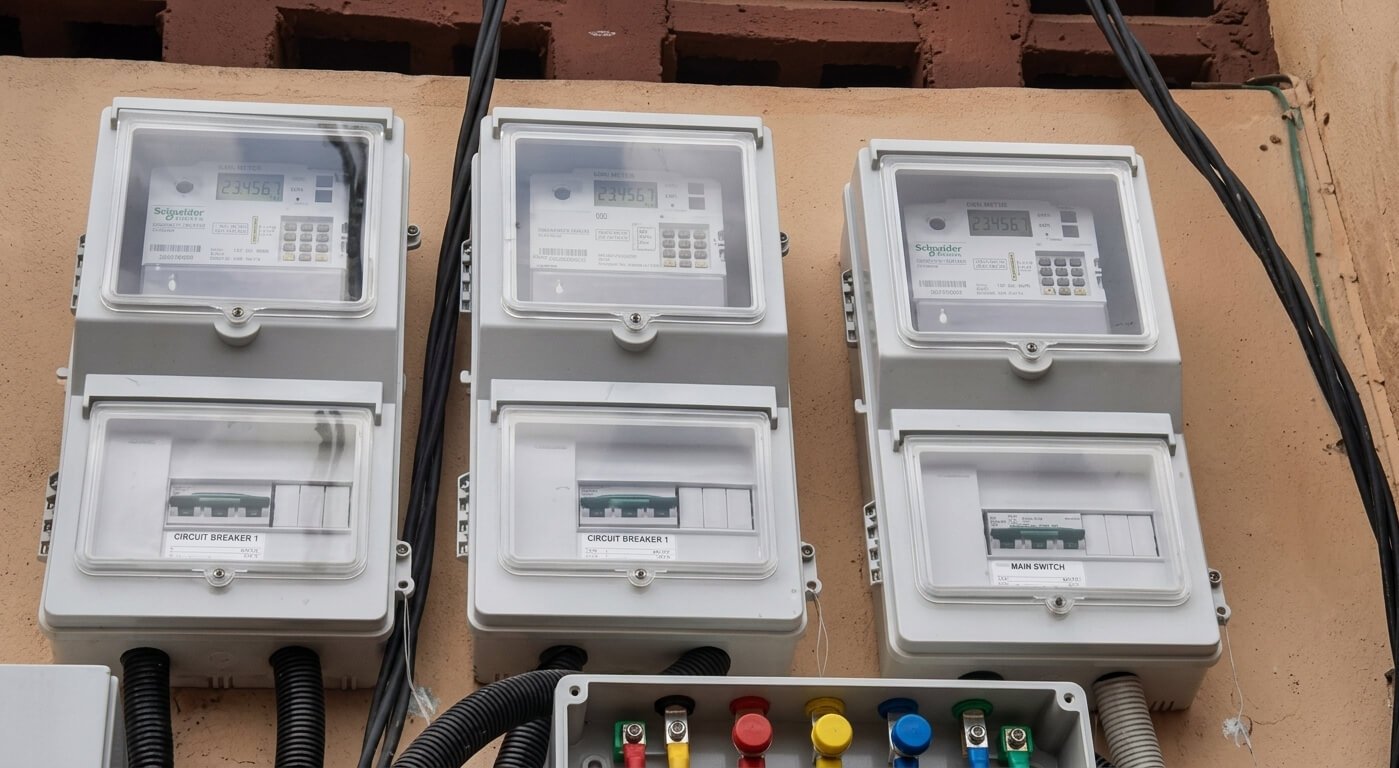
The Federal Government has disclosed that 668,000 electricity meters have been deployed and installed on customers’ premises under Phase 1 of the $500m World Bank-backed Distribution Sector Recovery Programme.
The move is part of efforts to close Nigeria’s electricity metering gap and reduce the controversial practice of estimated billing.

The disclosure followed the second 2026 meeting of the National Council on Privatisation, chaired by Vice-President Kashim Shettima at the Presidential Villa, Abuja.

Briefing journalists after the meeting, the Director-General of the Bureau of Public Enterprises, Ayodeji Ariyo Gbeleyi, said 1,033,000 meters had been delivered under the programme, while 668,000 had so far been installed for customers.
“On various issues, we provided updates on meter deployment under Phase 1 of the World Bank-financed Distribution Sector Recovery Programme. So far, we have deployed and installed 668,000 meters on customers’ premises,” Gbeleyi said.
The $500m DISREP programme is designed to improve the technical and financial performance of Nigeria’s electricity distribution companies, with large-scale metering forming a major part of the intervention.
The latest rollout comes as the government intensifies efforts to replace estimated billing with bills based on actual electricity consumption.
The Bureau of Public Enterprises had earlier stated that meters supplied under DISREP were free, including installation, and warned electricity customers against paying DisCos or their agents for the programme.
The government’s latest figure also indicates an acceleration in the rollout. Earlier reporting based on the World Bank’s implementation assessment put installations at about 482,000 as of June 15.
There is, however, a numerical discrepancy in the government’s statement. Officials described the 668,000 installations as 60 per cent of the 1,033,000 meters delivered, although the two figures produce a rate of approximately 64.7 per cent.
The National Council on Privatisation also reviewed the implementation of the Electricity Act and the emergence of state-level electricity regulators.
Gbeleyi said about 17 states had established State Electricity Regulatory Commissions since April 2024.
Akwa Ibom became the latest state to establish its own electricity regulatory commission in July, deepening the shift towards decentralised regulation of electricity markets.
The development follows the Electricity Act 2023, which allows states to establish regulatory authorities for electricity activities within their territories.
Under the new framework, state regulators are responsible for intrastate electricity markets, while the Nigerian Electricity Regulatory Commission retains oversight of federal and interstate electricity activities.
Gbeleyi acknowledged that some aspects of the law require adjustment.
“Some fine-tuning is required here and there in the implementation of that Act,” he said.
The council consequently directed the Attorney-General of the Federation, Minister of Power, Special Adviser to the President on Power, NERC, BPE and other stakeholders to engage on proposed amendments to streamline the implementation of the Electricity Act.
Power Minister Joseph Olasunkanmi Tegbe said the government was working collaboratively to deliver better value to Nigerians.
“We are working concertedly and in a very collaborative manner to ensure that we give value,” Tegbe said.
Tegbe was sworn in as Minister of Power in June after his confirmation by the Senate. His appointment came as the administration seeks to deepen reforms aimed at improving generation, transmission, distribution and investment in the electricity sector.
For electricity consumers, the success of the metering programme will ultimately be measured not only by the number of meters installed but by whether accurate billing becomes standard and disputes over estimated consumption decline.