
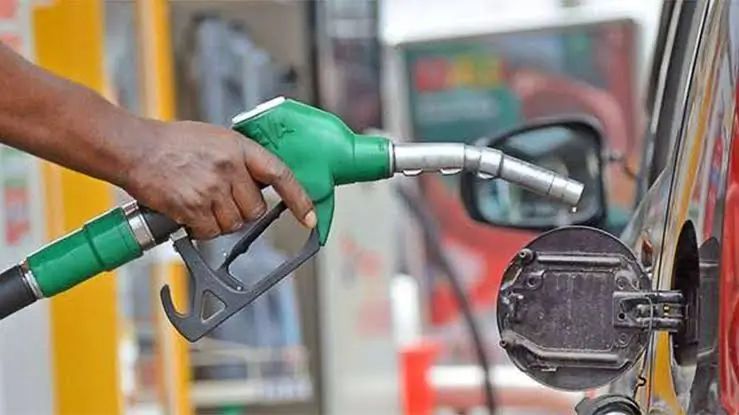
FCCPC: Nigeria’s consumer protection regulator has raised fresh concerns over the failure of fuel prices to decline significantly despite a steep drop in global crude oil prices, warning that consumers may not be benefiting fairly from market liberalisation.
The Federal Competition and Consumer Protection Commission (FCCPC) said findings from its ongoing surveillance of the downstream petroleum sector indicate that local refiners, depot operators, marketers and filling station owners have only implemented marginal reductions in prices despite the substantial easing in international crude oil benchmarks.
In a statement issued on Sunday by the FCCPC Director of Corporate Affairs, Ondaje Ijagwu, the commission said prevailing gantry and retail prices do not reflect the scale of the decline recorded in the global crude market.




According to the commission, evidence gathered so far suggests possible unfair treatment of consumers within the deregulated petroleum market.
“The Federal Competition and Consumer Protection Commission has expressed concern over findings from an ongoing surveillance of the downstream petroleum market suggesting undue exploitation of consumers,” the statement said.
“A review of the gantry prices of local refiners, marketers, depot operators and retail outlet operators revealed token reductions in prices that are not commensurate with the steep fall in crude prices in the global market.”
The Executive Vice Chairman and Chief Executive Officer of the FCCPC, Tunji Bello, said operators in the sector appear to respond quickly whenever international oil prices rise but often delay passing on cost reductions to consumers when crude prices decline.

“To be clear, the Commission does not regulate or approve petroleum prices in a deregulated downstream market. Our responsibility under the Federal Competition and Consumer Protection Act, 2018, is to promote competitive markets, prevent anti-competitive conduct, and protect consumers from unfair, deceptive and exploitative business practices,” Bello stated.
“We are concerned that while dealers often respond swiftly by hiking pump prices whenever crude prices rise, it is curious that it is taking forever for consumers to benefit significantly when crude prices fall. Competitive markets must work fairly in both directions.”
The FCCPC’s intervention comes against the backdrop of recent developments in the international oil market.
Crude oil prices, which surged to nearly $120 per barrel earlier in the year amid fears of supply disruptions linked to tensions in the Middle East, have fallen sharply in recent weeks to around $73 per barrel following easing geopolitical tensions, including a ceasefire arrangement involving the United States and Iran and renewed stability around the Strait of Hormuz.
The earlier increase in crude prices triggered immediate adjustments in domestic fuel costs, pushing petrol prices in many parts of Nigeria to between N1,350 and N1,500 per litre, while diesel prices approached N2,000 per litre.
Industry data indicate that petrol sold between N800 and N900 per litre earlier in the year before successive increases associated with foreign exchange volatility and higher crude prices.
Despite the recent decline in international oil prices, petrol is still retailing at an average of about N1,200 per litre nationwide, while some domestic refiners reportedly maintain ex-depot prices ranging between N1,025 and N1,075 per litre.
The FCCPC acknowledged that local fuel pricing remains influenced by several variables including exchange rate fluctuations, logistics expenses, financing costs, refining charges and distribution margins.
However, Bello maintained that market competition should ordinarily result in more noticeable reductions at filling stations.
“Market liberalisation does not diminish businesses’ obligations to compete fairly or consumers’ right to fair treatment,” he said.
“Where credible evidence indicates conduct that undermines competition, exploits consumers or otherwise contravenes the Federal Competition and Consumer Protection Act, the Commission will investigate and take appropriate enforcement action.”
The development is expected to intensify debate over the effectiveness of Nigeria’s deregulated petroleum market, nearly three years after fuel subsidy removal reshaped pricing dynamics.
Consumer advocates have repeatedly accused marketers of adjusting pump prices upward almost immediately during periods of rising crude prices while delaying reductions when market conditions improve.
The FCCPC has urged Nigerians to report suspected cases of price manipulation, anti-competitive practices and other forms of unfair conduct through its official complaint channels.