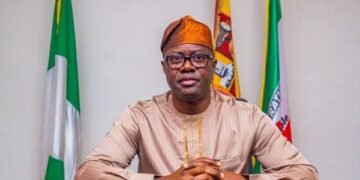



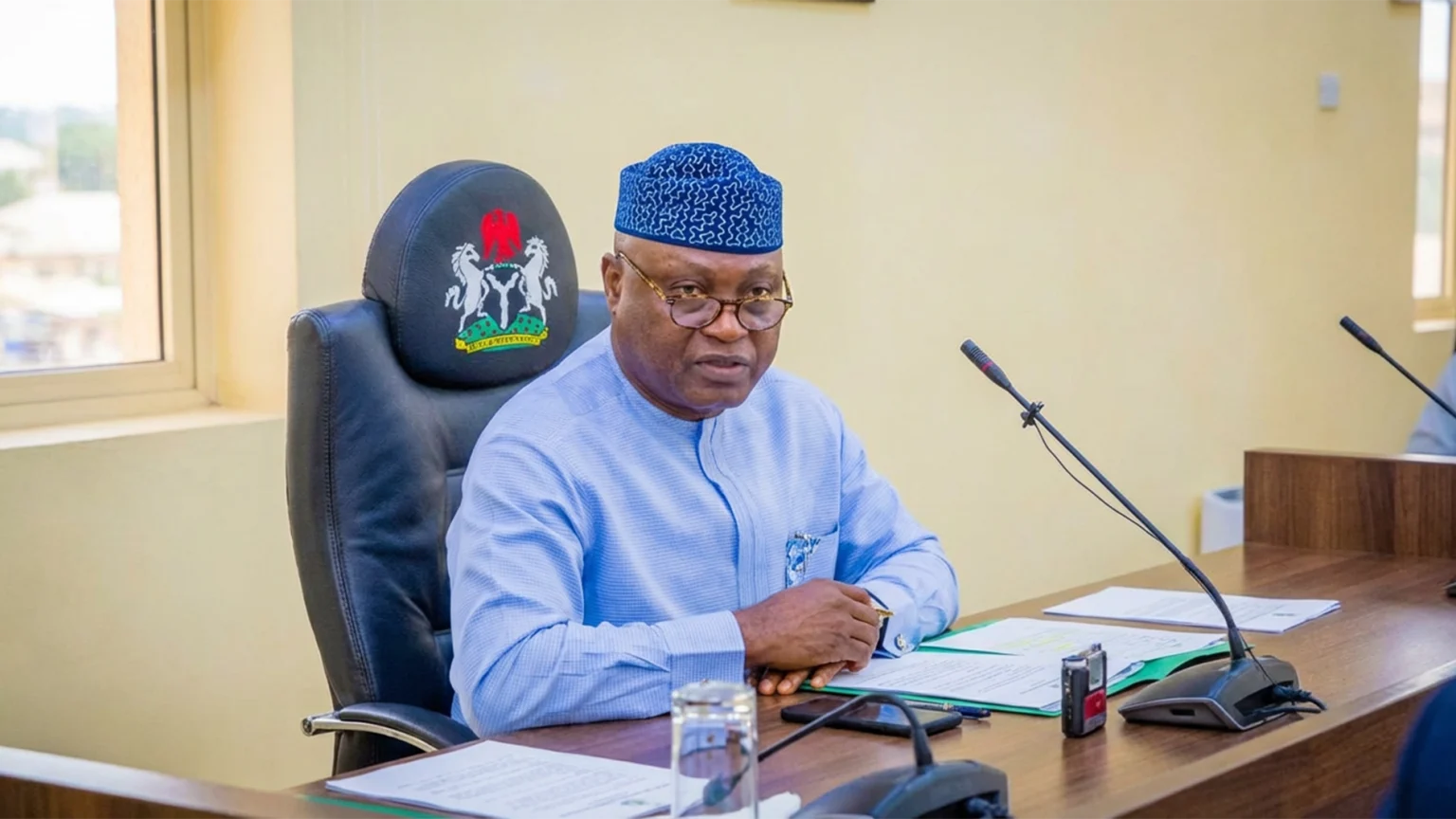
Ekiti State Governor Biodun Oyebanji has said his administration will prioritise industrialisation, agricultural processing and support for small businesses during his second term, shifting greater attention towards economic productivity after four years of infrastructure development.
Oyebanji disclosed this while speaking with journalists in Ado-Ekiti on Saturday, a day after his inauguration for a second term on October 16, 2026.

The governor, who was re-elected in the June 20 governorship election, said his administration would consolidate existing infrastructure investments while creating opportunities for farmers, artisans, entrepreneurs and prospective investors.




According to him, the first term focused on laying the foundation for economic growth through road construction, electricity access and improvements to rural and township infrastructure.
He said the government expected to have constructed nearly 400 kilometres of roads by the end of 2026, while internally generated revenue had also grown over the past three to four years.
“The next phase is to ensure that these investments in infrastructure translate into greater productivity and economic prosperity,” Oyebanji said.
He added that the government wanted more agricultural produce grown in Ekiti to be processed locally into finished products capable of generating greater economic value.
The governor said industrialisation and support for small businesses would become central to his administration’s shared prosperity agenda.
Small businesses, affordable funding
Oyebanji said the government would work towards providing an environment that attracts investors while helping small-scale entrepreneurs access affordable financing.
He specifically mentioned welders, tailors, hairdressers, barbers and other artisans who require capital to expand their businesses.
The governor said infrastructure development would continue, but the administration would give greater attention to turning public investments into productive economic activity.
He also identified reliable markets for farmers’ produce as a priority, saying farmers needed dependable off-takers who could purchase their output and supply it to companies involved in processing and manufacturing.
The approach, he said, would help strengthen the connection between agriculture and industry, potentially creating jobs and expanding opportunities for local businesses.
Oyebanji said productivity would be a central objective of his second term and noted that the direction was reflected in the 2027 budget proposal presented to the Ekiti State House of Assembly.
The governor presented a proposed ₦490.74bn budget for the 2027 fiscal year on October 8. The proposal, titled Budget of Sustained Progress and Prosperity, is intended to consolidate existing programmes while supporting economic development and job creation.
Ekiti airport operations targeted
The governor also identified improved operations at the Ekiti Agro-Allied International Cargo Airport as part of his investment and industrialisation plans.
He said the administration wanted the airport to operate around the clock instead of closing at 6pm, while addressing challenges that could prevent aircraft from operating during adverse weather conditions.
Oyebanji disclosed that an Instrument Landing System had been installed and that a certification team was assessing it.
The system is designed to assist aircraft approaches and landings by providing guidance to pilots, particularly when visibility is reduced. However, the installation of the equipment does not by itself establish that the airport has received all necessary approvals for the proposed operating arrangements.
The governor said improved airport operations would support investment, trade and the movement of agricultural products.
Township roads and water supply
Oyebanji said his administration was also reactivating work on nearly 80 kilometres of township roads as Ado-Ekiti continues to expand into new areas.
He added that the government was developing a master plan to improve road connectivity across the state.
On water supply, the governor announced plans to replace ageing pipes as part of a broader intervention to address persistent supply challenges.
He said community water consumers’ committees had also been established to help improve the management and effectiveness of local water systems.
The commitments form part of the administration’s second-term agenda, which combines infrastructure, agriculture, electricity, healthcare and economic opportunities.
Oyebanji’s stated priority is to make infrastructure spending translate into greater production, stronger small businesses and more local value addition. The impact will depend on implementation, access to affordable finance, investor participation and the ability of local producers to connect with processing companies and markets.