
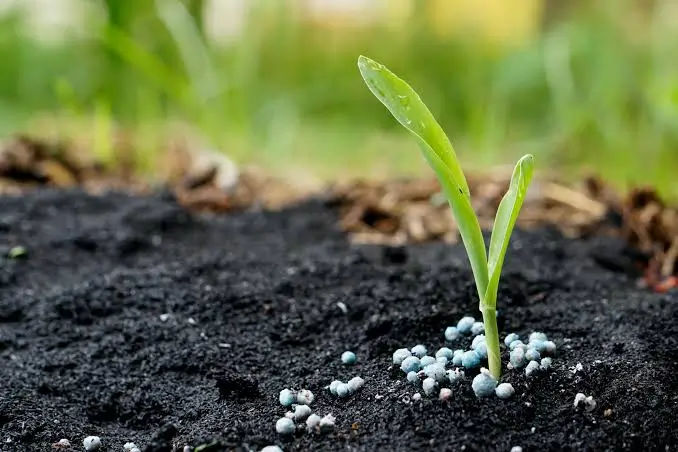
The Federal Government has reaffirmed its commitment to reducing Nigeria’s dependence on imported fertilisers, saying expanded local production remains critical to achieving food security, lowering farming costs and strengthening domestic agricultural productivity.
The position was reiterated during a nationwide inspection of fertiliser production and blending facilities undertaken by a presidential fact-finding delegation led by the Senior Special Assistant to the President on Digital Communications, Engagement and New Media Strategy, O’Tega Ogra.
The inspection tour covered major fertiliser plants in Lagos, Kaduna, Rivers and other participating states under the restructured Presidential Fertiliser Initiative being coordinated through the Ministry of Finance Incorporated.




Conducted between June 18 and June 21, 2026, the exercise assessed production capacity, quality assurance systems, operational efficiency and the impact of government interventions aimed at ensuring affordable and high-quality fertiliser supplies for Nigerian farmers.
Speaking in Kaduna during the inspection, Ogra described local fertiliser production as a strategic national priority amid rising agricultural input costs and global supply uncertainties.
He noted that Nigeria possesses a large proportion of the raw materials needed for fertiliser manufacturing and should maximise local resources to reduce reliance on imports.
“When we have about 80 per cent of the raw materials in Nigeria and can produce fertilisers, why import them? If we have locally produced fertilisers with proper quality control, the standard of farming will improve, crop yields will increase, and we will strengthen food security and food sovereignty in our country,” Ogra said.
According to him, investment in local fertiliser production will protect farmers from international price fluctuations, improve agricultural output, stimulate industrial growth and create employment opportunities.
The Federal Government has continued efforts to reposition the Presidential Fertiliser Initiative by promoting local blending and encouraging the utilisation of indigenous raw materials while importing only essential components such as phosphate.
At OCP Africa’s Kaduna Blending Plant, the delegation inspected specialised blending operations and quality control laboratories.
General Manager of the plant, Peter Amahwe, stressed that maintaining product quality remains vital to safeguarding farmers’ investments.

“At the end of the day, what is key is that when the farmer is paying for these nutrients, he knows that the nutrients he is paying for are exactly what he is getting. The labour, seeds and every other investment depend on that quality. If the fertiliser is compromised, the farmer’s entire production plan is affected,” he said.
Amahwe explained that the company carries out extensive laboratory analysis to produce customised fertiliser blends for crops including maize, rice, cocoa and ginger.
The delegation also visited Barbedos Fertilisers & Blending Company Limited in Kaduna, where officials inspected facilities with a blending capacity of about 90 metric tonnes per hour.
Production Manager of the company, Nasser Ismail, said local blending has significantly lowered production costs while creating direct and indirect employment opportunities.
“Our primary objective is to produce high-quality fertiliser blends specifically tailored to meet the distinct soil and crop requirements of Nigerian farmers. By blending locally, we are reducing costs, creating hundreds of direct and indirect jobs for young people and supporting President Bola Tinubu’s Renewed Hope Agenda,” he stated.
He added that the company uses moisture-resistant BOPP-coated packaging technology to preserve fertiliser quality during transportation and storage.
As Nigeria seeks to improve food availability and curb rising food prices, officials believe increased domestic fertiliser production will remain a key pillar in strengthening agricultural productivity and long-term food security.As Nigeria seeks to improve food availability and curb rising food prices, officials believe increased domestic fertiliser production will remain a key pillar in strengthening agricultural productivity and long-term food security. has reaffirmed its commitment to reducing Nigeria’s dependence on imported fertilisers, saying expanded local production remains critical to achieving food security, lowering farming costs and strengthening domestic agricultural productivity.