The Federal Government has insisted that the Nigerian National Petroleum Company (NNPC) Limited’s temporary petrol discount does not amount to a return of fuel subsidy, saying the arrangement will be funded by reduced retail profit margins rather than public revenue.
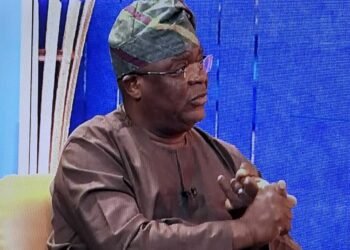
The Minister of Finance and Coordinating Minister of the Economy, Taiwo Oyedele, gave the clarification in a statement issued on Friday, October 9, amid questions over the government’s decision to ease the impact of rising petrol prices.
The discount follows an announcement by the Presidency that NNPC Retail would suspend its retail profit margin and sell petrol at cost for 30 days to cushion households and transport operators against global oil-price shocks.




According to Oyedele, the arrangement differs from the petrol subsidy regime abolished by President Bola Tinubu’s administration in May 2023 because the government is not paying part of the price consumers would otherwise bear.
“Some commentators have described the discount as a return of fuel subsidy. That is not correct. Here, plainly, is what the discount is and what it is not,” the minister said.
He explained that NNPC Retail would absorb the temporary price reduction by giving up its usual retail margin rather than drawing money from the federal budget or the Federation Account.
“A margin discount means the retailer chooses to take a smaller margin, or no margin at all for a period, and passes the saving to the customer. The cost of the discount is borne by the retailer alone,” Oyedele said.
He distinguished this from a subsidy, under which the government uses public revenue to cover part of the cost of petrol.
“That is the regime this administration ended in 2023, and it is not coming back,” he added.
How the NNPC discount will work
Under the arrangement announced by the Presidency on Thursday, NNPC Retail is expected to sell petrol without adding its usual retail profit margin during the 30-day period.
For instance, if the company’s landing cost is ₦1,300 per litre, the product would be sold at that price rather than having an additional retail margin applied.
The Presidency said the measure, approved by President Bola Tinubu, was intended to provide temporary relief to vulnerable households and commercial transport operators facing higher fuel costs.
Oyedele said NNPC Retail buys petrol from the Dangote Petroleum Refinery and other suppliers at market prices and on commercial terms before adding its retail margin.
Under the discount arrangement, the company reduces that margin, lowering the amount charged to customers without requiring the government to compensate it for the difference.
The minister also cautioned that selling crude oil below market prices could amount to a subsidy if the resulting financial shortfall were ultimately borne by public revenue.

FG says lower margins could boost NNPC profits
Oyedele argued that sacrificing part of the profit earned on each litre of petrol would not necessarily reduce NNPC Retail’s overall profitability or the dividends it pays to the Federation.
He said increased sales volumes and stronger customer loyalty could offset the lower margin, potentially improving the company’s longer-term commercial performance.
“A smaller margin or temporary zero margin on each litre can be more than offset by selling more litres over time. And a discount builds customer loyalty that lasts well beyond the discount period itself,” he said.
The minister added that the arrangement could benefit both consumers and the government if higher sales volumes translated into stronger earnings.
However, the extent of any financial benefit would depend on sales volumes, operating costs and the duration of the discount.
Smuggling concerns and other relief measures
Addressing concerns that cheaper petrol could encourage cross-border smuggling, Oyedele said NNPC Retail’s margin represented less than five per cent of the pump price.
He argued that removing a margin of that size would not significantly widen the price difference between Nigeria and neighbouring countries, where petrol prices were said to be 20 to 40 per cent higher.
The minister maintained that the temporary arrangement would therefore not recreate the incentives associated with Nigeria’s former subsidy system.
He also highlighted other measures aimed at easing the cost of fuel and transportation, including expanding compressed natural gas deployment, waiving taxes and duties on petrol, and removing illegal levies that increase transportation expenses.
The government has presented these measures as part of its broader response to rising global oil prices without reversing the subsidy reforms introduced in 2023.
The 30-day discount nevertheless leaves questions about the relief consumers can expect, its practical implementation across NNPC stations and what happens when the temporary arrangement expires.
While the government insists that no public money is involved, the policy’s broader impact will depend on how effectively the reduced margin translates into lower pump prices for motorists and transport operators