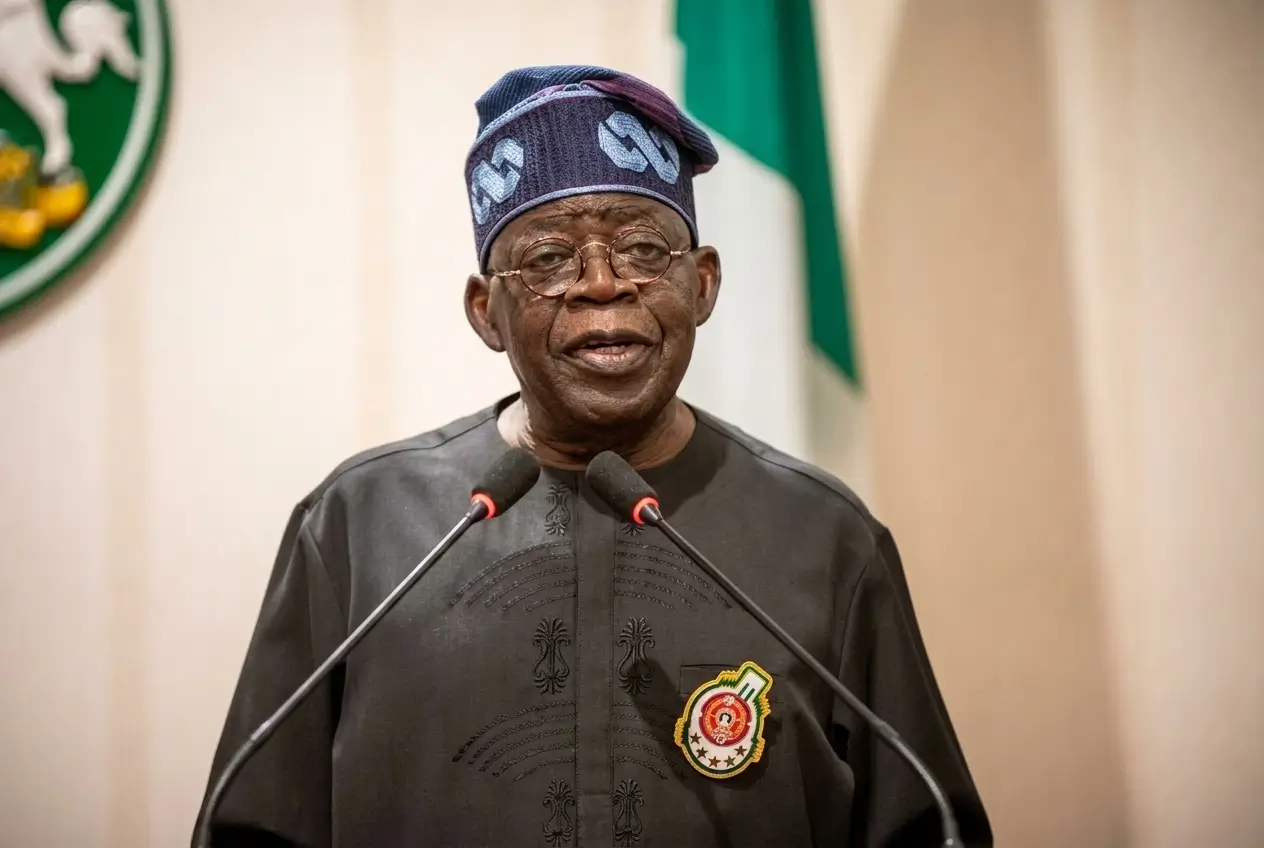
An energy expert, Dan Kunle, has warned President Bola Tinubu against committing more public funds to Nigeria’s struggling government-owned refineries, saying the Federal Government must first establish whether further rehabilitation is commercially justified.
Kunle made the call in an open letter to Tinubu on Wednesday, daysNNPC after the President renewed his commitment to reviving the Port Harcourt, Warri and Kaduna refineries.
Tinubu had told the leadership of the Nigeria Union of Petroleum and Natural Gas Workers that the refineries would “come back to work”, but stressed that their success would be measured by profitability rather than simply producing smoke and flames.




“Ordinary flame and smoke of a refinery doesn’t mean it’s working until it’s profitable and yields the value for which it is built,” the President said.
Kunle, however, questioned the wisdom of another rehabilitation cycle without a comprehensive audit of previous interventions.
His warning comes against the backdrop of a blunt assessment by the Group Chief Executive Officer of the Nigerian National Petroleum Company Limited, Bashir Bayo Ojulari, who said the state-owned refineries had been operating at a “monumental loss” to Nigeria.
Ojulari said NNPC management halted the facilities after an operational review showed that significant spending on crude, contractors and operations was not producing commensurate value.
According to him, refinery utilisation had remained around 50 to 55 per cent in the period under review, while the company had no clear path to recovering the money being spent.
The NNPC chief specifically cited the Port Harcourt refinery, saying the value of the products being produced did not justify the cost of crude and other inputs.
The financial history of the facilities has intensified the debate.
In March 2021, the Federal Executive Council approved $1.5bn for the rehabilitation of the Port Harcourt refinery. Months later, another $1.484bn was approved for the rehabilitation of the Warri and Kaduna refineries.
NNPC’s 2024 annual report also showed that Project Yield, a seven-year N1.5tn financing arrangement linked to the Port Harcourt refinery rehabilitation, had drawn N1.4tn by December 31, 2024.
For Kunle, the problem goes beyond the physical condition of the refineries.
He argued that crude supply pipelines, product evacuation networks, storage facilities and terminals must also be addressed if the plants are expected to operate sustainably.
The expert described the situation as a “stranded system” and urged the government to consider transferring the facilities to the Bureau of Public Enterprises for possible private-sector management.
He also called for a forensic reconciliation of funds already committed to the refineries before any new spending is approved.
“Past expenditures must not become the justification for more future expenditures,” Kunle warned.
The argument has not gone unchallenged.

Petroleum marketers have backed Tinubu’s determination to revive the facilities, saying Nigeria needs multiple sources of refined petroleum products rather than relying on a single major refinery.
PETROAN President Billy Gillis-Harry has similarly argued that the revival should not be judged by commissioning ceremonies or visible activity but by throughput, availability, margins and return on capital.
That position partly aligns with Tinubu’s own warning that refinery success must ultimately be measured by profitability.
The immediate challenge for the Federal Government, therefore, is to reconcile its determination to restore strategic national assets with the commercial concerns raised by NNPC’s own management.
After years of rehabilitation promises and heavy expenditure, Nigerians are now likely to judge the next phase not by another restart ceremony, but by whether the refineries can consistently process crude, produce competitive products and stop draining public resources.