The Oyo State Government has scrapped its traditional monthly environmental sanitation exercise and replaced it with a daily monitoring and enforcement system aimed at improving cleanliness and public health across the state.
The new policy, announced by the Commissioner for Environment and Natural Resources, Ademola Aderinto, marks a major shift in the state’s sanitation strategy, with authorities now placing responsibility on residents to maintain clean surroundings every day.
Speaking in Ibadan during a press briefing to mark his first 100 days in office, Aderinto said the government was adopting a more proactive environmental model in response to growing sanitation concerns and waste management challenges.




According to him, environmental cleanliness can no longer be treated as a once-a-month activity.

“We are now enforcing daily environmental sanitation. Our officers are on the field every day to ensure compliance. Cleanliness must become a daily responsibility,” he said.
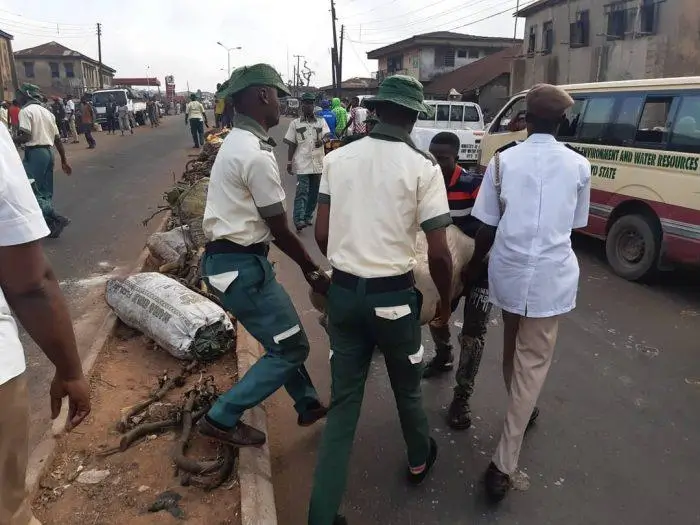
Under the new framework, environmental health officers will carry out routine inspections and enforcement across communities, markets, roadsides and public facilities.
To strengthen implementation, the ministry has re-engaged 930 environmental personnel, including vanguards, sweepers and waste packers, to expand sanitation coverage and enforcement.
The state government has also acquired two new compactor trucks to improve waste evacuation and speed up refuse collection across key urban centres.
Aderinto said the workforce had been strategically deployed to improve efficiency, with sweepers now working twice daily to maintain cleaner roads and public spaces.

In a move to improve staff welfare, the commissioner disclosed that sanitation workers had been enrolled in the Oyo State Health Insurance Scheme.
The ministry also launched the Oyo Soro Soke Environmental Whistleblower Platform, a digital initiative that allows residents to report environmental offences through mobile applications and WhatsApp.
Officials say the platform is expected to strengthen community participation and improve response to sanitation violations.
Beyond enforcement, the ministry has introduced a waste segregation system across government offices as part of efforts to modernise waste management and encourage recycling.
It also commenced Public-Private Partnership arrangements for the construction of modern public toilets across strategic locations in the state, in line with efforts to tackle open defecation.
Aderinto said the ministry’s first 100 days in office had also seen increased public advisories on flooding, heat waves, cholera outbreaks and Lassa fever prevention.
He added that the ministry had intensified environmental inspections, strengthened disease prevention measures, regulated charcoal production and carried out tree planting activities to commemorate World Earth Day.
The commissioner said the government remains committed to sustaining the reforms and improving environmental conditions across Oyo.
The development forms part of Governor Seyi Makinde’s broader environmental and public health agenda, with officials expressing optimism that the new daily sanitation model will improve compliance and reduce environmental risks.
“The future of our environment in Oyo State is bright. What we have achieved in 100 days is only the beginning,” Aderinto said.